Smart eyes for space, and much more
February 25, 2026
For Space Jobs: the unique perspective of David Schledewitz, PhD student at the University of Trento and Fondazione Bruno Kessler
In his research, David Schledewitz works on space “eyes” — and, appropriately, there’s a spark in his own as he talks about his curious childhood and a scientific path he built step by step across Europe, with determination and genuine enthusiasm. Born and raised in Germany, David studied experimental physics and worked at CERN before arriving in Trento for a pre-doctoral program, then staying on for the National Doctorate in Space Science and Technology. Today he works between the University of Trento and Fondazione Bruno Kessler, where he develops and tests advanced sensors for space missions on small satellites. In this interview he tells us about his experience, from high-tech laboratories to life in Italy and the ever-present thrill of building “eyes” to look beyond.
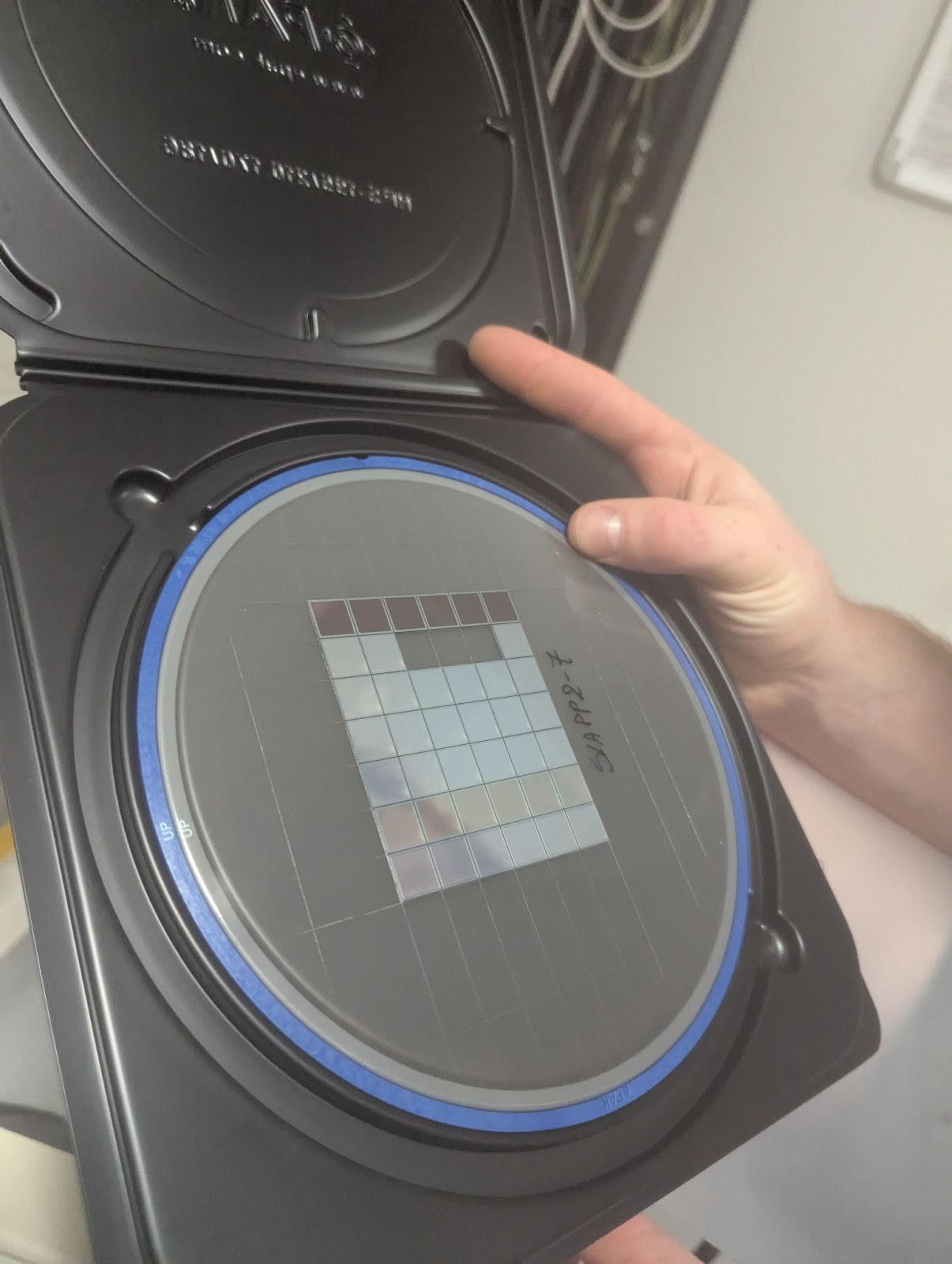
The space “eyes”, or the LGAD sensor
David, what do you do in your doctoral project?
I work on the development and characterization of high-performance sensors for future space experiments, particularly for CubeSats, meaning very small, compact satellites. These tools require extreme tracking and timing capabilities. Their limited size makes everything more challenging: we need highly miniaturized, precise, and energy-efficient technology.
I am currently working on two types of sensors — two types of “technological eyes” — which must pass a long series of tests to be considered “space-ready”: they have to operate at temperatures between -70 C and +80 C, withstand launch vibrations, and ensure energy efficiency and operational safety while in orbit.
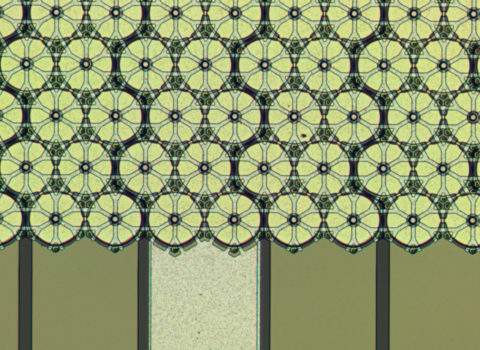
The first is called LGAD, or Low Gain Avalanche Diode, and it is a pixel sensor with a kind of internal amplifier (an avalanche mechanism) that generates a stronger and faster signal with very low power consumption. It has already been used at CERN, but has never been tested in space.
The second is based on silicon photomultipliers (SiPM), a very promising technology also used in medical applications, for example in PET, positron emission tomography.
Are you developing technologies that not only go into space but can also have applications on Earth?
Absolutely. Absolutely. Working in space means pushing the limits of technology on Earth as well. For example, my work can also have applications in autonomous vehicles, robotics, and any field where “intelligent,” efficient, and reliable sensors are needed. Today everything needs an “eye” — from phones to cars — and what we are developing are sophisticated, robust, precise eyes. Cool eyes: eyes that can see far.
Yours is the story of one of the many research “migrants”: from Germany you came to Italy. What guides your path and what would you recommend to a young person who has yet to choose their direction?
Not being afraid to step out of your comfort zone. Studying, living alone, changing countries — it changes you profoundly. I never thought I would study physics, but here I am. I had no researchers or scholars in my family, but I had a teacher and a friend, two important people who sparked something in me. Everything changed. It is crucial to have someone open your eyes and teach you that asking for help is not a sign of weakness, but a sign of intelligence.
Right after earning my master’s degree, I worked at CERN in Geneva as a particle physicist. But then I felt the need for something new, something that excited me even more. A professor I was working with told me about a satellite-related project in Trento that immediately captivated me: the idea of building something with my own hands that could one day go into space deeply moved me. It’s a difficult feeling to explain: as if something that seemed very far away as a child suddenly became real.
Today you work between universities and research foundations. What kind of environment have you found?
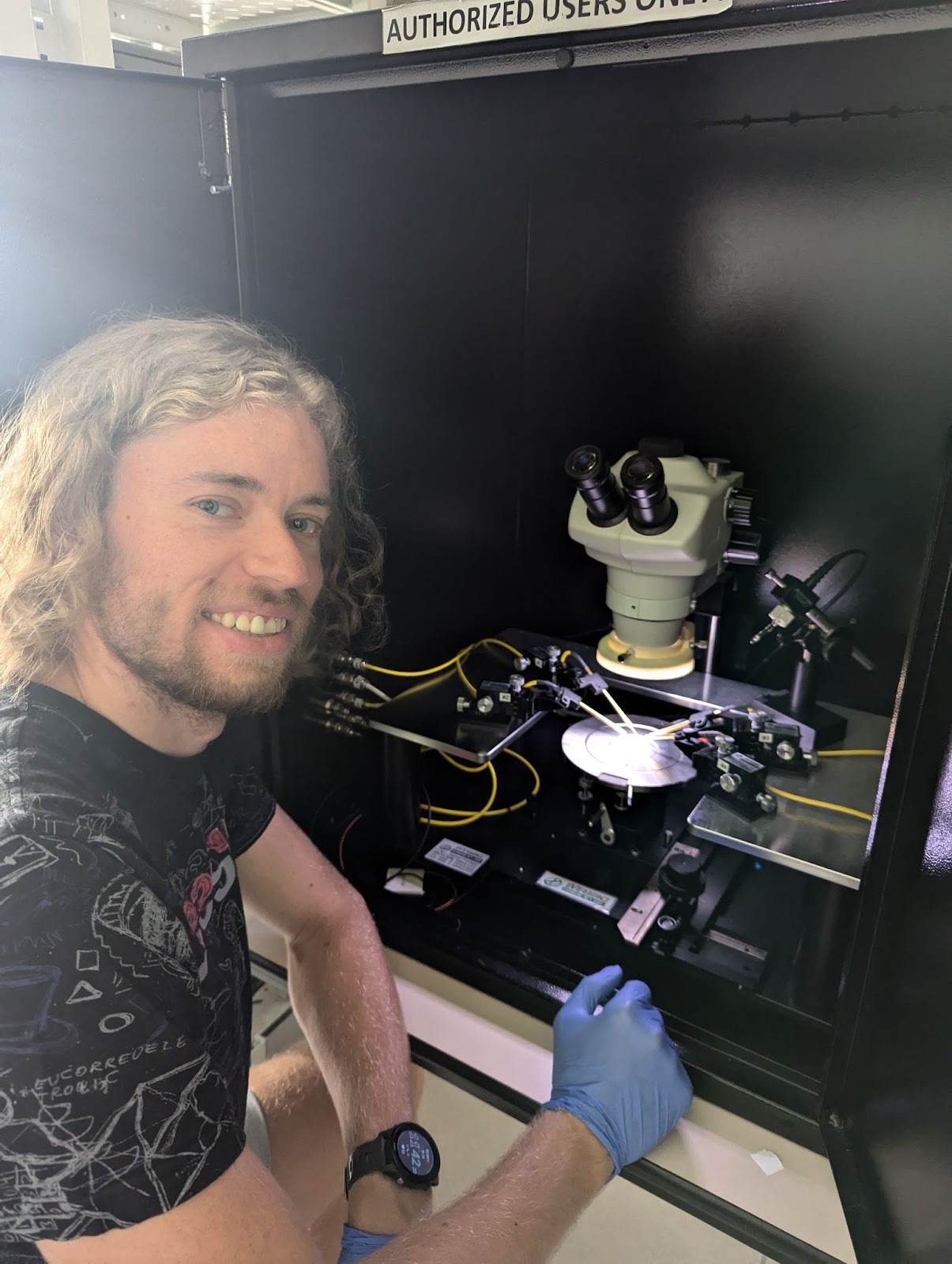
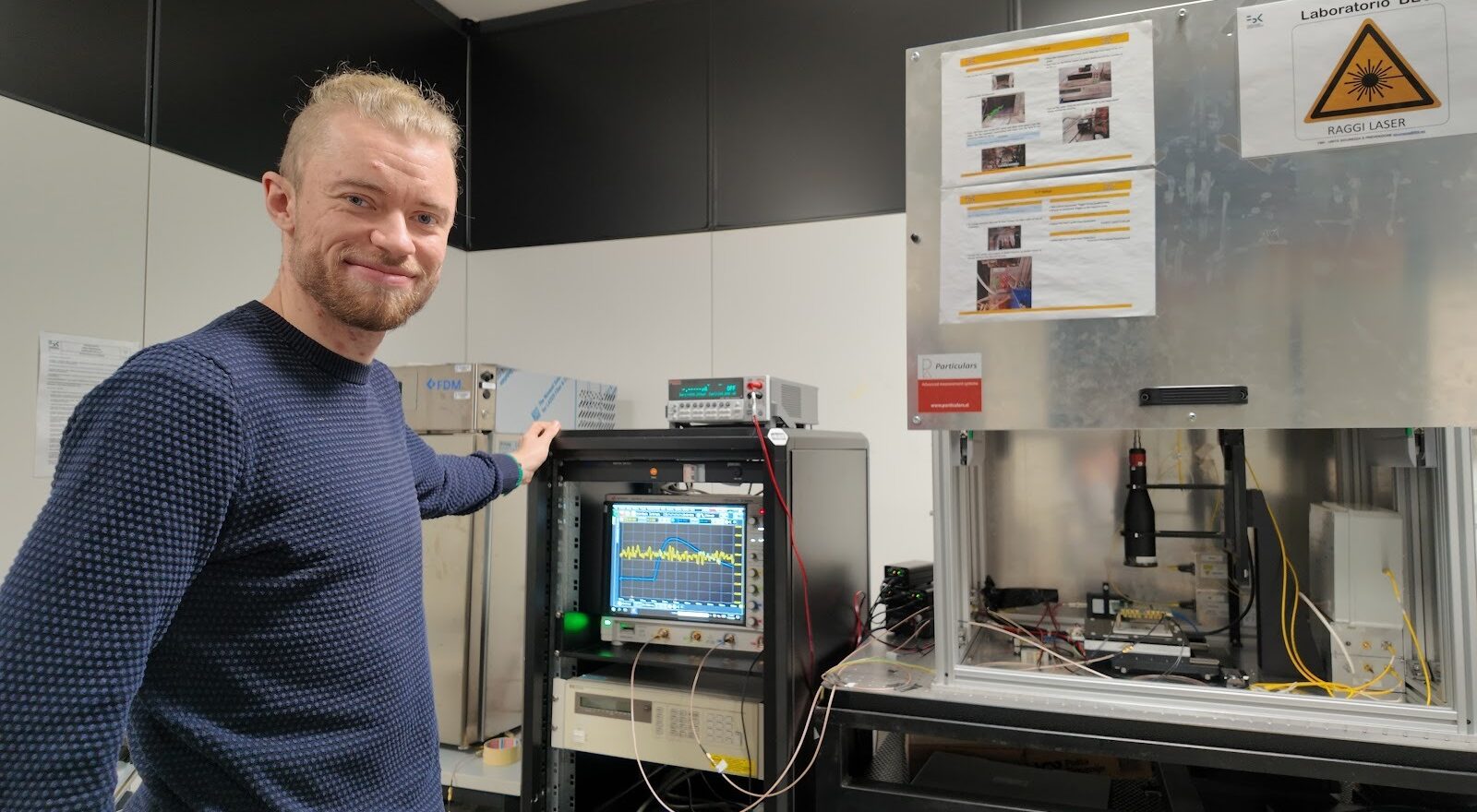
David in the Bruno Kessler Foundation laboratory during the characterisation of sensors used as “space eyes”
I feel very fortunate. At the University of Trento I found trust and recognition: I was able to grow as a researcher, learn, and become independent. At Fondazione Bruno Kessler I have access to extraordinary laboratories: advanced 3D printers, in-house designed sensors, a small particle accelerator. It is a productive and collaborative environment, halfway between academia and industry.
It’s ideal for my personality. I need to feel motivated to work well, and here I do. The freedom to explore, to build, to make mistakes: all of this is part of research, and it makes every day different.
The SST doctorate is very special: national, multidisciplinary, multicultural. What is it giving you?
So much. First of all, a network. At SST Days I met people with very different backgrounds: physicists, engineers, but also lawyers, experts in space diplomacy, biologists. I didn’t even know “space law” existed — but it does. Space is complex. It’s like a bubble, a world of its own, requiring skills from many different fields.
I think this PhD is building something new: a community. And in a young field like space science, that is essential. No university has all the expertise on its own. We need collaboration, openness, exchange. And the SST doctorate makes all of this possible.
And for you, what is science?
For me, science is born from curiosity. You don’t need to be a genius — you need the desire to understand. As a child I asked questions about everything: why does a geyser erupt? Why does the sky change color? As I grew up, I realized I didn’t want to stop asking. Science is this: a way of asking questions about the world, even when the answers are not yet there.
The author/s
Related articles