



AI for weather and climate: between forecasts, adaptation, and sustainability
November 6, 2025
The second edition of the Artificial Intelligence for Weather and Climate Autumn School, organized by Fondazione Bruno Kessler in Trento from October 27 to 30, concluded with great satisfaction and enthusiasm.
From nowcasting – very short-term weather forecasts – to downscaling – increasing the spatial resolution of climate projections – to high-performance computing and reducing computational costs.
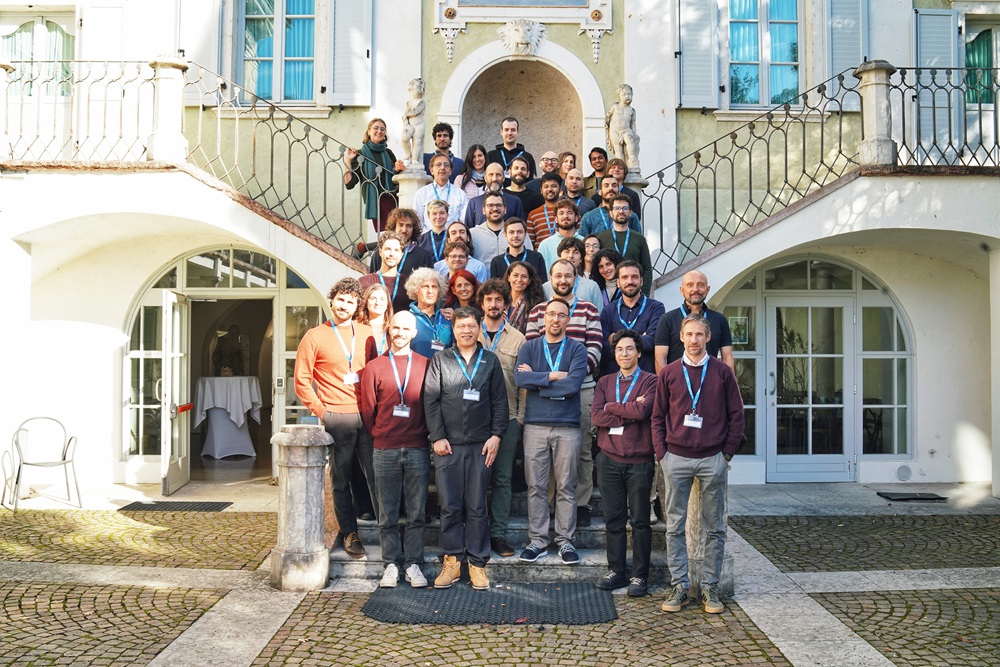
These were just some of the topics covered during the latest edition of the Autumn School of Artificial Intelligence Applied to Weather Forecasting and Climate Studies (AIWCAS 2025) promoted by FondazioneBruno Kessler. Hosted at Villa Tambosi, the school brought together 25 high-profile students selected from over 80 applications from public bodies, universities, research institutions, and both national and international professional organizations. The result confirms the growing interest in using artificial intelligence to improve the quality, speed, and sustainability of weather forecasts and climate information.
“In recent years, we have witnessed a real revolution,” explains Gabriele Franch, senior researcher with the DSIP (Data Science for Industry and Physics) Unit at FBK’s Center for Digital Industry and scientific coordinator of the school. “Thanks to artificial intelligence, we can now obtain predictions in just a few minutes that once required hours of computation, improving timeliness while reducing the energy and environmental costs of calculation. For citizens, this means more up-to-date information and better estimates of uncertainty, which are crucial during extreme weather events. This is particularly important for very short-term forecasts, technically known as nowcasting.”
FBK has been collaborating for years with the Trentino Civil Protection on the development of AI-based nowcasting systems. These technologies make it possible to generate sub-kilometer forecasts (up to 500 meters in resolution) up to an hour in advance, automating the distribution of targeted weather warnings in cases of heavy rainfall, strong winds, or other extreme weather conditions. “It represents a paradigm shift for operational meteorology,” adds Franch. “The goal is to provide increasingly rapid and accurate predictive tools capable of supporting timely decisions in critical situations.”
Four days of advanced training and discussion: the program included nine hours of practical workshops, four keynote speeches, three theoretical sessions, and a lightning talk session where participants presented their research projects.
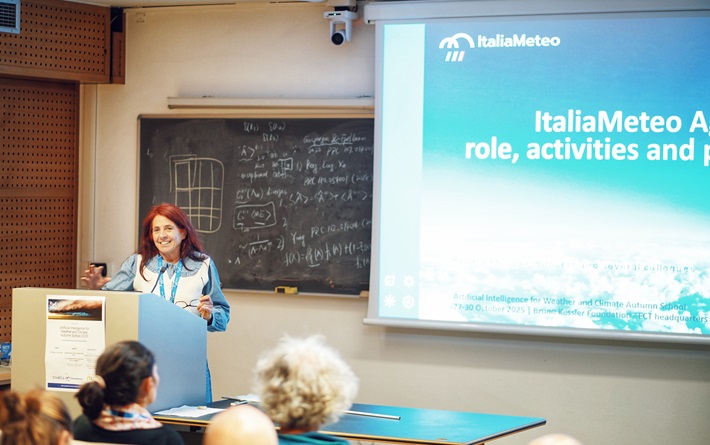
Among the distinguished national and international guests were Umberto Modigliani, Deputy Director of the Forecasting Department at the European Centre for Medium-Range Weather Forecasts (ECMWF), and Renata Pelosini, Forecasting Manager at the ItaliaMeteo Agency, with which FBK recently signed a collaboration agreement. Both offered high-level insights into the growing role of artificial intelligence in weather forecasting and warning systems, from the European to the national level, complemented by contributions from Cineca, MeteoSwiss, and the Danish Meteorological Institute.
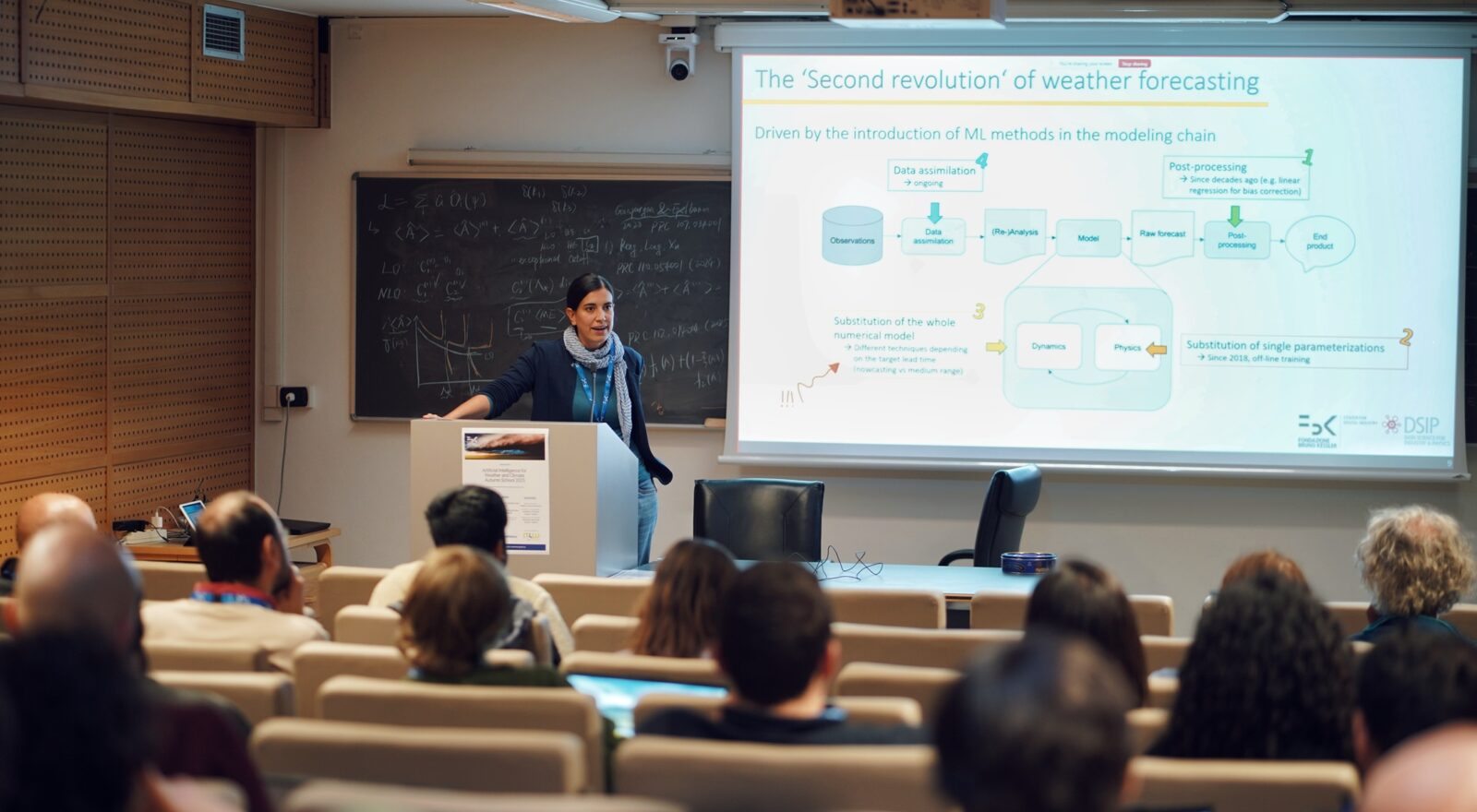
While artificial intelligence accelerates short-term forecasting, it also plays an equally crucial role in studying the future climate. As explained by Elena Tomasi, AI researcher for meteorology and climate with the DSIP Unit at FBK’s Center for Digital Industry and FBK Science Ambassador: “Numerical climate projections are based on global physical models that provide low-resolution information, typically on hundred-kilometer grids. However, much more detailed data is needed to design effective adaptation strategies for the climate change we are experiencing. AI allows us to ‘refine the grid’ and increase the resolution of simulations – a process known as downscaling – more efficiently and sustainably than traditional numerical modeling. Thanks to these techniques, we can generate more accurate and localized information without incurring prohibitive computational costs, making climate data more useful for those involved in impact assessments and adaptation planning,” concludes Tomasi.
AIWCAS 2025 once again proved to be an excellent training opportunity and a meeting point between research, institutions, and industry professionals. The school reaffirmed the need for the national system to equip itself with prediction models based on artificial intelligence. This is precisely the direction in which Fondazione Bruno Kessler and the ItaliaMeteo Agency are working, with the goal of releasing the first models in 2026.
The author/s
Related articles