




Artificial intelligence for space software quality
April 10, 2026
A new research project involves FBK in the development of advanced AI-based testing techniques for European Space Agency systems
From the development of space missions to ground operations, software is a fundamental component of the European Space Agency’s infrastructure.
Ensuring its proper operation requires rigorous verification processes, now made even more complex by the increasing complexity of these systems. In this context, artificial intelligence is opening up new possibilities.
Fondazione Bruno Kessler is participating in a new research project, “AI for Automation of Mission Operations Systems Testing and Validation,” which aims to innovate testing and validation processes for software used in space operations by introducing advanced techniques based on artificial intelligence and generative AI. The goal is to make testing more efficient and systematic, particularly in managing complex scenarios, without compromising human oversight and responsibility.
The project, with a total duration of 14 months, was officially launched at the end of November and is part of initiatives promoted by ESA through the Artificial Intelligence for Automation Roadmap (A²I). The European consortium is led by Starion and includes industrial and research partners active in the space sector. The research focuses on three strategic use cases related to automating testing processes for ground-segment software systems in space missions. Within this framework, FBK contributes to the development of new AI-based testing techniques capable not only of automatically generating more complex test cases but also of making them interpretable. The solutions leverage existing information—such as system requirements, previous tests, code repositories, and error reports—helping to support and accelerate activities that have traditionally required continuous expert intervention.
“Artificial intelligence allows us to generate a much higher number of test cases and, at the same time, to explain why they are created and what system behavior is expected. This represents an important evolution compared to traditional approaches, in which most tasks related to defining and interpreting tests require extensive, repetitive manual work,”Angelo Susi, head of the SE unit, explained.
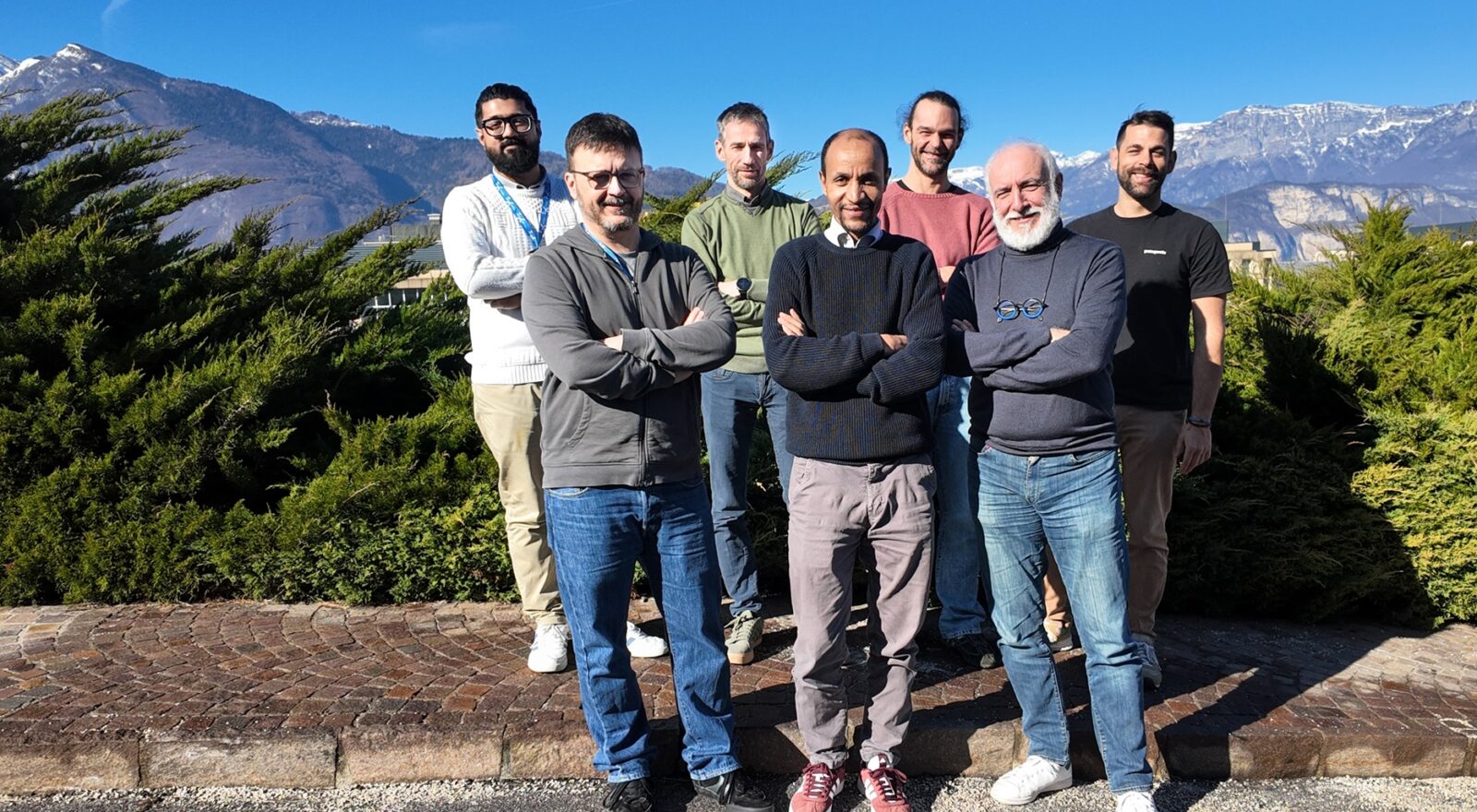
FBK’s contribution involves its Center for Digital Industry and is based on collaboration between the Data Science for Industry and Physics (DSIP) and Software Engineering (SE) units, which bring expertise in data analysis, artificial intelligence, large language models, and software engineering applied to critical domains.
“The collaboration between the two units allows us to approach testing as a unified process, in which automated data analysis is integrated with established software engineering methodologies. This approach enhances FBK’s capabilities and strengthens our contribution to improving the quality of software systems in highly critical domains,”Andrea Di Luca, researcher with the DSIP unit, stressed.
A central element of the project is the use of agent-based systems built on generative AI, designed to coordinate automation across the entire testing process, from test case definition to results evaluation. Even in this context, automation does not replace the human role: experts remain an integral part of the process and can intervene to assess the quality of system-generated explanations and validate test outcomes. This balance between intelligent automation and human oversight makes it possible to combine AI’s ability to rapidly explore complex scenarios with the reliability of expert judgment.
Alessandro Cimatti, Director of the Center for Digital Industry, explains that “the project, awarded through a competitive European Space Agency call, represents an important opportunity for applied research. It strengthens the role of the Foundation and the Center in developing advanced solutions to improve the quality of digital systems in critical domains, including aerospace, railways, and process control.”
The author/s
Related articles