Explore! Explore! Explore!
September 23, 2025
An interview with Massimo Di Gregorio: From Gordon Gekko to Oppenheimer, an international workplace brings together a vast array of personalities. Cultural intelligence enables us to recognize each person’s uniqueness and turn diversity into a strategic advantage for any team.
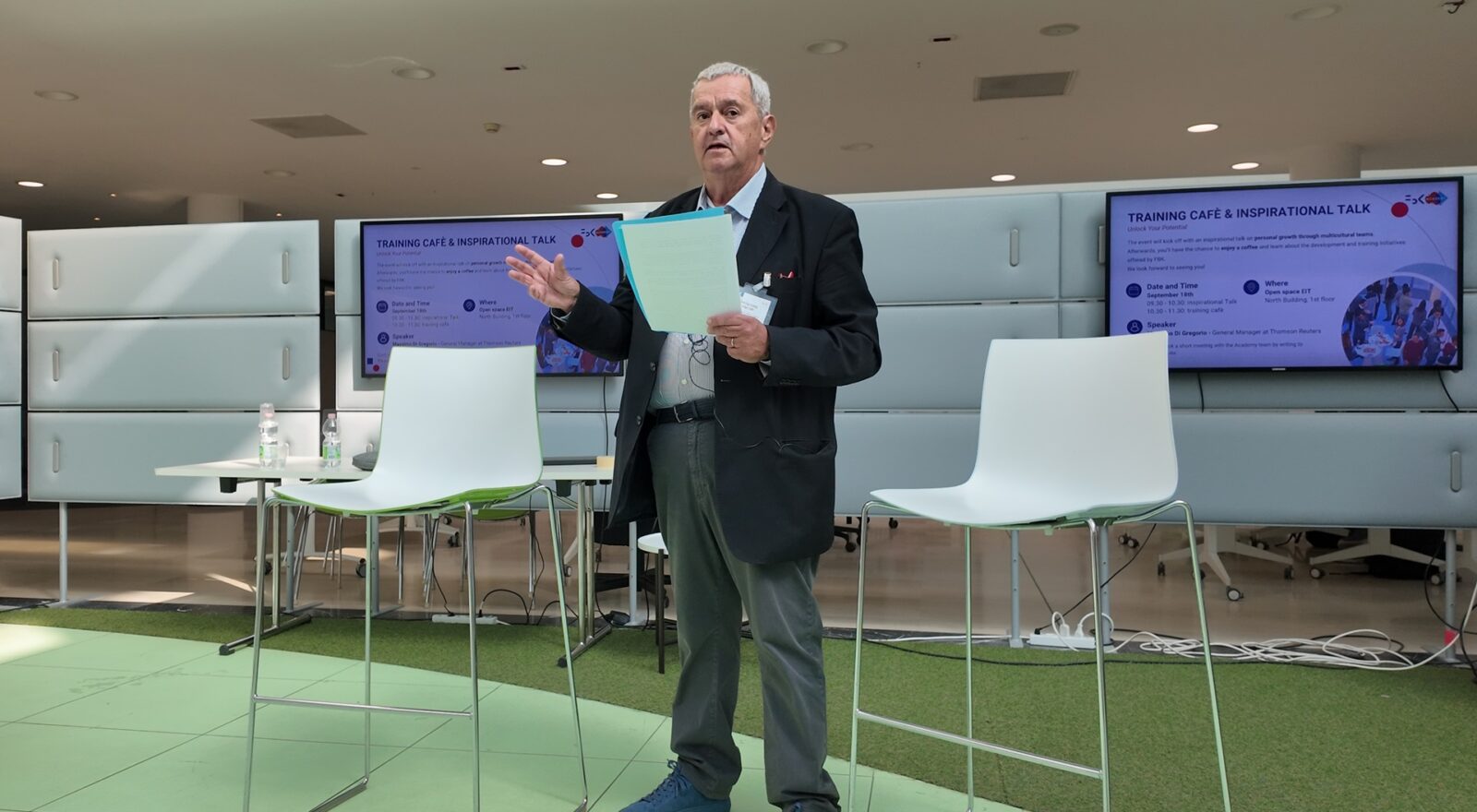
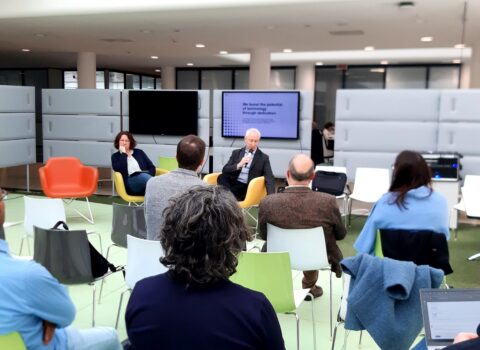
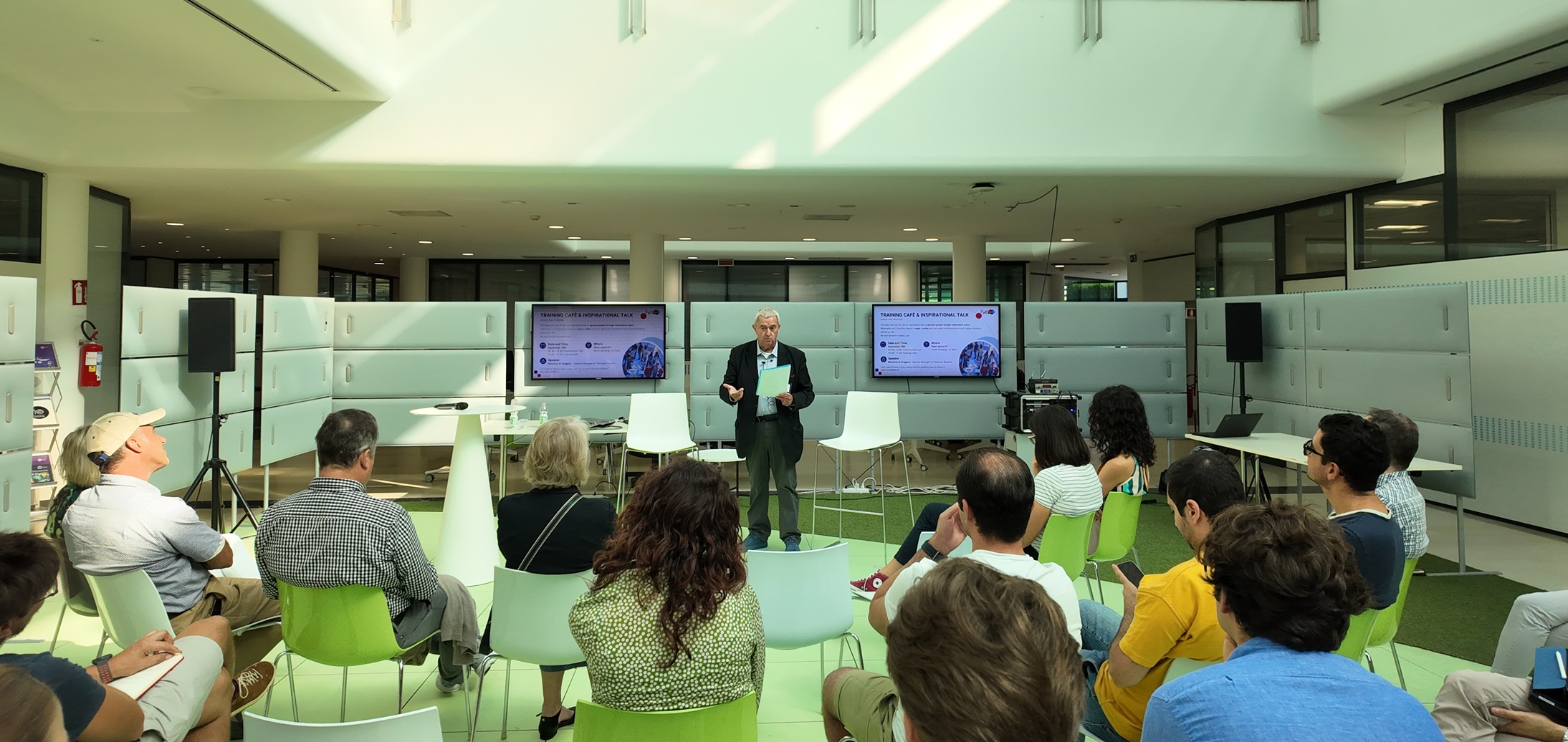
The Inspirational Talks series at Fondazione Bruno Kessler (FBK) is a space dedicated to the FBK talent community, where distinguished speakers from diverse disciplines and backgrounds share their personal and professional journeys. These sessions take place in an informal setting that encourages open exchange among peers. To launch the new cycle of talks, on Thursday, September 18, 2025, Massimo Di Gregorio—former General Manager at Thomson Reuters—was invited to speak. We interviewed him afterward to reflect on his talk and highlight some key takeaways.
“Do I want to be an individual contributor or part of a team—perhaps even lead one? What sector do I want to work in? Where do I want to live? Questions like these capture the essence of a decades-long professional journey. In hindsight, they become a call for younger generations to discover their passion—even if it takes time. Along the way, it’s important to seek mentors who can guide the process, keeping in mind that mentorship is a two-way street. It requires a proactive mindset.
Giancarlo Sciascia (GS): You shared your experience with the FBK research community. In an environment that heavily values hard skills, why did you choose to focus on soft skills?
Massimo Di Gregorio (MDG): Technical skills—our so-called hard skills—are foundational. They give us the tools to understand and operate. But it’s soft skills like communication, teamwork, adaptability, and emotional intelligence that make collaboration effective. The concept is simple, but powerful: know that you’re not managing just yourself. Success depends on understanding and valuing the differences in others. And culture goes beyond nationality. Certain critical skills must be actively cultivated, the same ones that form the basis of the Talent Development Program adopted by FBK:
- Cultural Awareness: Understand different norms, values, and communication styles to improve intercultural sensitivity and reduce misunderstandings.
- Adaptability: Stay open to new perspectives and flexible in problem-solving.
- Communication Skills: Communicate clearly and respectfully, considering both language and non-verbal cues.
- Intercultural Competence: Practice active listening, ask questions, and build trust through openness.
- Network Expansion: Work with people from diverse backgrounds to spark new ideas, methodologies, and opportunities.
- Emotional Intelligence: Be empathetic and patient; recognize how people express ideas and emotions differently.
- Broader Perspectives: Exposure to different viewpoints fuels creativity and innovation.
- Reflection and Learning: Continuously reflect on experiences, learn from challenges, and celebrate achievements.
GS: You have led teams in different international contexts. What were the biggest challenges when working with multicultural teams—and how did you turn them into opportunities?
MDG: Managing multicultural teams demands serious preparation. When I was General Manager for CTI at Reuters, I was responsible for three regions—CIS, Turkey, and Israel—each extremely distinct. Instead of managing them separately, I encouraged collaboration by creating a multilingual call center. It was a success that proved diversity isn’t just a nice theory—it’s a real asset with tangible results.
GS: Beyond nationality, you’ve emphasized the importance of corporate and intercompany cultures. Can you give us an example?
MDG: Absolutely. Corporate culture is pervasive. For instance, Reuters has strong editorial roots and a global reputation for impartiality. This culture applies everywhere. That’s why we never used the word “terrorist”—because someone viewed as a terrorist in one place might be considered a freedom fighter in another (like Nelson Mandela once was).
When Thomson acquired Reuters in 2008, I had to manage four very different business units. That’s where I encountered intercompany culture. In the financial sector (my background), people tend to be outgoing and aggressive—think Gordon Gekko from Wall Street. In contrast, those in the scientific division (IP&S) are more introspective and focused—more like Oppenheimer, to borrow again from cinematic references. I learned to value these different mindsets, actively encouraging them. I acknowledged my own knowledge gaps and asked for help, which strengthened the team and supported my successor’s development.
GS: You said: “There are no wrong questions, only wrong answers.” What did you mean by that?
MDG: Being authentic sometimes takes courage. Expressing your ideas—even when they go against the majority—matters, as long as it’s done with respect and sound reasoning. There will be moments in your career when your unique viewpoint makes all the difference for the organization.
GS: Is there a practice you’d highlight for its impact on intergenerational collaboration?
MDG: Yes—Reverse Mentoring, a practice we used at Thomson Reuters. It flips the traditional roles: juniors mentor seniors. This helps break down hierarchies, encourages knowledge sharing, and brings out leadership potential in younger professionals. It also promotes creativity and highlights tacit knowledge—the kind you gain through lived experience. It’s a collaborative, reflective process that benefits everyone involved.
GS: Finally, when talking about long-term development, you mentioned four key principles: discovering your potential, following your passion, expressing your uniqueness, and exploring. What’s your main advice for those navigating the research ecosystem?
MDG: The first step is to discover your potential, and that begins with preparation. As tennis legend Arthur Ashe once said: “An important key to success is self-esteem. An important key to self-esteem is preparation.” But above all—EXPLORE. I learned in a leadership course: “DEEP CHANGE OR SLOW DEATH”. Early in my career, I left a secure job at state-owned ENI for the much smaller Reuters. That was a deep change. Later, I took a role as European Marketing Manager in Geneva—away from my passion. Exploration is crucial. Every experience, even a misstep, becomes a “dot” that only makes sense when you look back, as Steve Jobs once said. Getting out of my comfort zone and continuing to explore helped me develop key soft skills and ultimately find the right path: managing people and developing talent across Switzerland, Turkey, Russia, China, and Dubai.
Coming Up Stay tuned for the next Inspirational Talks at FBK: October: Stefano Paleari – November: Luca De Biase
default
The author/s
RELATED VIDEO
-
Intervista a Massimo Di Gregorio
Related articles