


Remote heart monitoring: fewer hospitalizations for heart failure with TreC Cardiologia
August 20, 2025
A study conducted in Trentino by Fondazione Bruno Kessler (FBK), in collaboration with the Trento Province Healthcare System (APSS), has been published in the Journal of Cardiovascular Development and Disease (JCDD).
This is important news for those suffering from heart failure and for the future of healthcare: the study shows that the innovative organizational model used by APSS in Trento, which relies on a mobile app for remote patient monitoring (TreC Cardiologia), has significantly reduced both hospital admissions and follow-up visits.
The research, titled Remote Heart Failure Patients Telemonitoring: Results of the TreC Heart Failure Study, was carried out in collaboration between the Cardiology Unit of the Santa Maria del Carmine Hospital in Rovereto and Fondazione Bruno Kessler, within the framework of TrentinoSalute4.0 – the “Center of Competence on Digital Health”, a joint effort by the Autonomous Province of Trento, APSS, and FBK.
This solution represents a new model of care: rather than seeing all patients regularly in person, for several years now, nurses and cardiologists have been able to focus in-person visits on the most complex cases or those requiring close monitoring (e.g., after surgery or hospitalization). Stable patients, instead, are monitored remotely from the comfort of their homes. According to the study’s authors, this reorganization – made possible by technology and the new care model – played a key role in the positive results observed.
“This research and the internationally published results confirm that investing in digital innovation and new organizational models is not just a technological choice, but a path that delivers real benefits to people’s lives. The TreC Cardiologia project proves that future healthcare can be more accessible and responsive to patients’ needs, even remotely. Fewer hospital visits and admissions mean more resources for complex cases, but above all, greater peace of mind for patients and their families. We thank the healthcare professionals, researchers, and institutions who believed in this new model of care. This is the direction we want to pursue: an innovative, equitable, and patient-centred healthcare system,”said Mario Tonina, Councillor for Health and Social Policies of the Autonomous Province of Trento.
A Success story for patients and the healthcare system
The study monitored 211 patients with heart failure over the course of a year after they were “prescribed” the TreC Cardio App, adopting the new telemedicine-based organizational model and comparing data with the previous year.
The benefits are clear:
- Fewer hospitalizations: The percentage of patients hospitalized for heart failure dropped from 25.6% to just 4.7% after telemonitoring was introduced. This means that previously, nearly 1 in 4 patients were hospitalized, while under the new model only 1 in 20 required hospitalization for the same reason.
- Fewer outpatient visits: The average number of follow-up visits also decreased. This not only reduces the burden on patients, who travel less, but also frees up critical hospital resources.
- Improved therapy: Remote monitoring helped doctors optimize drug therapies, enabling more patients to receive the most effective medication combinations.
These benefits were seen across different types of heart failure, although with some variation. For instance, patients with the most severe form experienced a marked reduction in hospitalizations, while others saw a decrease in outpatient visits.
Why is remote monitoring important?
Current medical guidelines suggest that remote monitoring is beneficial. In a mountainous region like Trentino, where many towns are far from major hospitals, the ability to follow patients from home is particularly valuable.
“Heart failure is a chronic condition where the heart struggles to pump blood effectively. Although periods of stability may occur, the condition can worsen suddenly, increasing the need for check-ups or even lengthy hospital stays. We’re currently running a project, funded by the Autonomous Province of Trento and carried out in collaboration with APSS and FBK, focused on developing AI algorithms to predict the risk of worsening heart failure in Trentino patients,” Dr. Annachiara Benini said.
“The study began in 2018, during the creation of a care pathway for heart failure patients. We found that, out of 500,000 residents in Trentino, about 8,000 had been diagnosed with heart failure, yet only 800 were being followed by the cardiology units in Trento and Rovereto. That’s when the project began – to follow more patients using the TreC Cardiologia App, now integrated into TreC+. We collected data comparing the periods before and after implementing the new model, which included not just the app, but also the establishment of a dedicated nurse-led clinic,” said Dr. Massimiliano Maines, the study’s lead author.

What results have you achieved? “In Rovereto, we went from following about 300 heart failure patients to over 800, 600 of whom were provided with the TreC+ App (including TreC Cardio). Hospitalizations and visits both decreased. Most notably, hospitalizations dropped especially for the most serious cases, while visits were reduced for more stable patients,”Dr. Maines went on.
Does this affect patients’ quality of life and healthcare costs? “The study suggests that the organizational shift to a nurse-led model, supported by medical specialists, was the independent factor behind the results. Given limited resources, our innovative approach allowed us to monitor more patients and give more attention to those with greater needs, while reducing follow-ups for stable cases,” Dr. Maines said. “The idea wasn’t to stop seeing patients, but to dedicate more time to those with problems and monitor the others effectively from home.”
“These preliminary results highlight the huge potential of digital health in managing chronic diseases, particularly heart failure – a leading cause of hospitalization. Telecardiology can improve care quality, optimize resources, and enhance patient outcomes. The results are not only due to the technology used but also to a new organizational model, where interventions are targeted based on need, limiting unnecessary travel. In this system, doctors, nurses, and health technicians work in harmony with well-defined roles, which helps optimize resources. In this regard, the decades of experience at Rovereto Cardiology in telemedicine certainly contributed to the success of the study,” said Dr. Maurizio Del Greco, Director of Cardiology in Rovereto.
What are the benefits for remote healthcare teams?“This system benefits both patients and health providers. Having patients’ clinical and instrumental data available through the platform allows for direct communication via chat. Therapies can be adjusted, treatment plans sent, and follow-up reminders issued – all through the app. We no longer send paper documents; everything goes directly to the patient’s phone,” said Giancarlo Tomasi, nursing manager at the Cardiology Unit in Rovereto, who monitors patients using the TreC Cardiologia dashboard.
And the benefits for patients?“Quality of life has definitely improved. Within a single app, patients have access to all clinical and instrumental data through the chat, and they can also use TreC+ to access all digital services for APSS from anywhere,” Tomasi added.
How does the TreC Cardiologia app work?
Developed by Fondazione Bruno Kessler with support from APSS’s Technology Department, the TreC Cardio App (now part of TreC+)is simple for patients to use and effective for healthcare providers. It enables flexible, needs-based remote monitoring.
- What the patient does: Use the app to regularly input key data like weight, heart rate, and blood pressure. Patients can also confirm medication intake and communicate with their assigned nurse via chat.
- What the healthcare team does: behind the scenes, a team of specialized nurses remotely monitors the data sent by patients via computer. If anomalies are detected (e.g., weight gain suggesting fluid retention), nurses and cardiologists can promptly intervene by adjusting medications, scheduling a virtual visit, or requesting an in-person check-up.

The Monitoring App
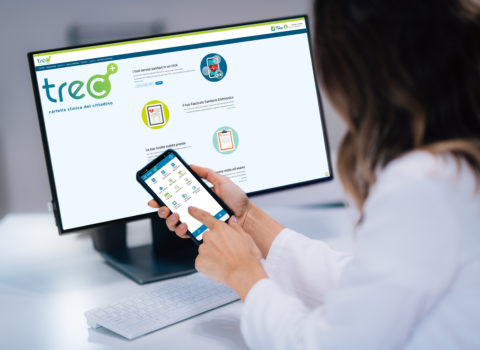
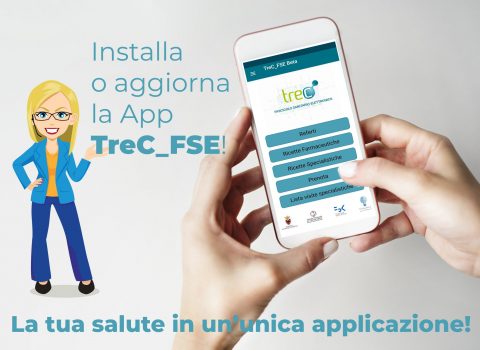
TreC Cardiologia is a smartphone app and web platform (dashboard) developed in Trentino by TrentinoSalute4.0 (APSS, PAT, FBK). The system enables doctors and nurses from the cardiology units in Trento and Rovereto to monitor and communicate with patients remotely, eliminating the need for in-person visits. The app was introduced for the remote monitoring of heart failure in Rovereto in March 2021, and later adopted by the Cardiology Department in Trento. The app allows patients to share health status, symptoms, and medications through a digital diary. Communication with healthcare professionals can take place via chat or video call. Originally designed for cardiology care, the app has been continuously improved. Since 2024, it has been integrated into TreC+, the unified digital health platform of the Autonomous Province of Trento, which provides access to the Electronic Health Records (ESF) and other APSS digital services.
The scientific journal
The study was published in the Journal of Cardiovascular Development and Disease, an international, peer-reviewed journal focusing on cardiovascular conditions. Peer review by experts in the field ensures the scientific quality and validity of published research. Publication in such a journal is a mark of the study’s contribution to cardiovascular research.
Publication in a journal recognized by the international scientific community is an indicator of the validity of the study and its contribution to cardiovascular research.
Future prospects
The results of this Trentino study highlight the significant potential of telemonitoring—and telemedicine more broadly—in delivering effective solutions and high-quality care models. They also provide a preview of what is envisioned in the Provincial Telemedicine Plan, offering valuable insights into the possible impact of telemedicine on healthcare. The study shows that in a real-world setting like Trentino, the combined use of advanced technology (such as the FBK/TrentinoSalute4.0 app) and the smart reorganization of healthcare professionals’ work (both doctors and nurses) can meaningfully enhance the quality of life for patients with heart failure while also improving the efficiency of the healthcare system.
Contatti:
Ufficio stampa TS4.0 []
Ufficio comunicazione esterna APSS []
The author/s
Related articles