Kabuki syndrome, the key role of chromatin
August 18, 2026
At the root of this rare genetic disorder, which affects one in every 30,000 people, is a deficiency in a protein that helps protect cells from mechanical stress. FBK is part of the international research team coordinated by Alessio Zippo with the University of Trento. The study, published in The EMBO Journal, opens up new treatment avenues
Growth delays, muscle hypotonia, craniofacial abnormalities, cognitive impairment, and heart disease: these are some of the manifestations of Kabuki syndrome, a rare genetic disorder that affects one in every 30,000 births. The disease is caused by mutations in a gene (KMT2D) that encodes a protein called MLL4, which is involved in the organization of chromatin, the complex of DNA and proteins contained in the cell nucleus. A promising new development in the study of the disease and its causes comes from research led by the University of Trento, which reveals a previously unknown mechanism linking alterations in chromatin to defects in the cellular response to mechanical forces.
The work, the result of a four-year effort and a multidisciplinary approach requiring international collaboration among research centers specializing in genetic diseases, cell biology, and molecular biology, as well as contributions from physicists specializing in photonics, mechanics, and computational modeling, provides a new way of understanding the syndrome, including its potential treatment implications. In fact, it proposes a new paradigm in chromatin biology: for the first time, it identifies the role of chromatin factors, such as the MLL4 protein, in regulating the response of the cell nucleus to mechanical stimuli and in modulating tissue and organ function. The research also demonstrates for the first time that alterations in the mechanics of the nucleus are directly linked to the pathogenesis of Kabuki syndrome, explaining some of the disease’s most common clinical manifestations.
The study grew out of a collaboration among numerous Italian and international research institutions and universities: the University of Trento, with its Departments of CIBIO and Physics; Fondazione Bruno Kessler; the Italian Institute of Technology; the European Institute of Oncology Foundation (IFOM ETS); ETH Zurich; Federico II University of Naples; and the University and Hospital of Montpellier. The results have now been published in the prestigious The EMBO Journal in the article Chromatin condensates tune nuclear mechanosensing and preserve nuclear integrity to prevent cGAS activation.
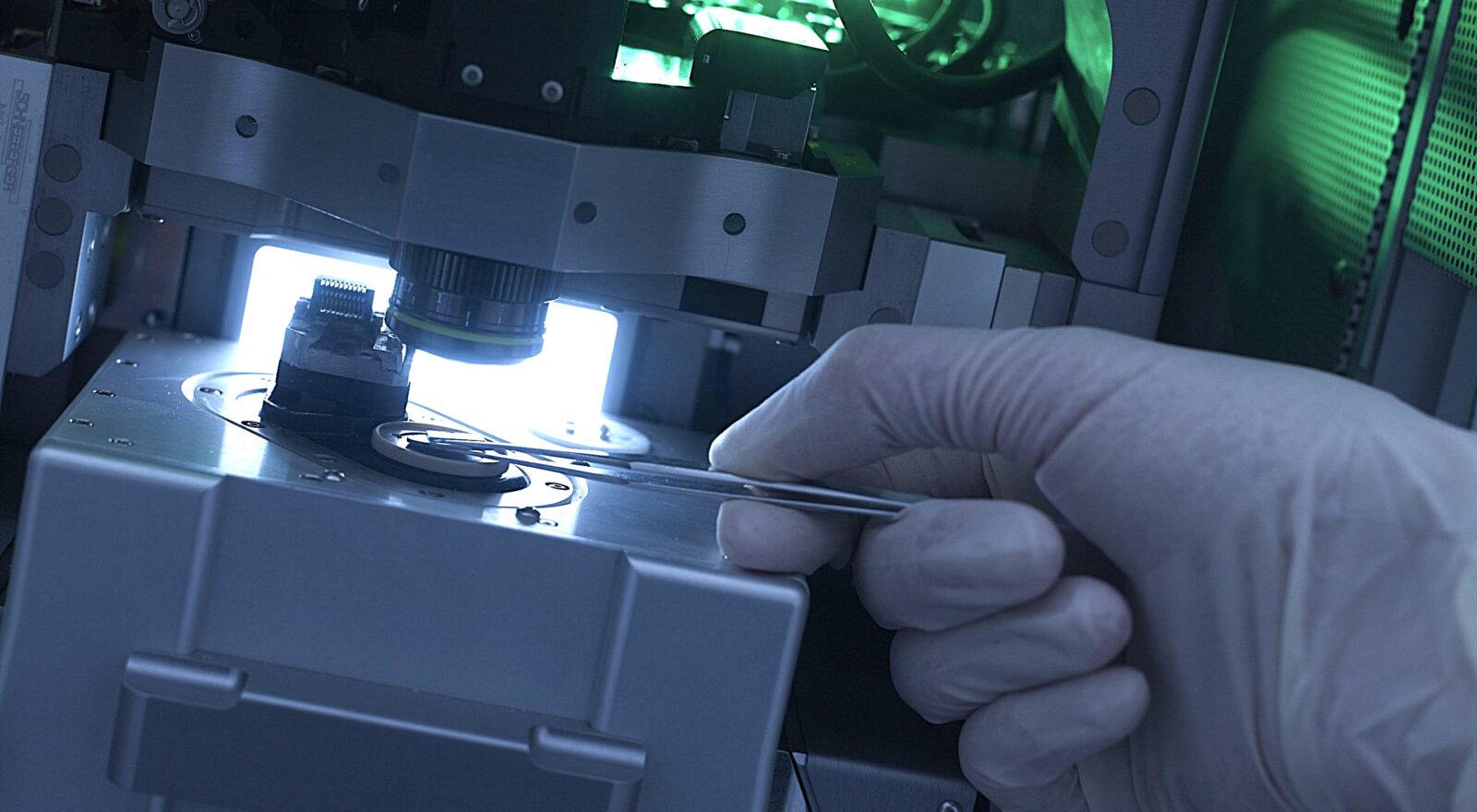
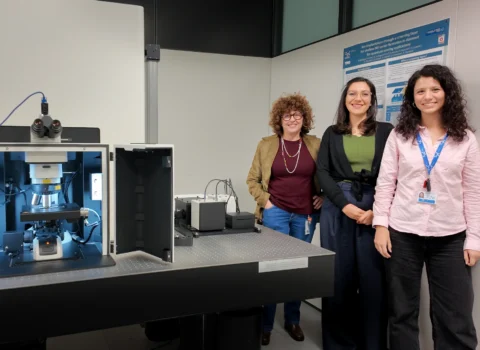
FBK contributed to this work through experiments conducted in the LaBSSAH (Laboratory for the Study of Biomarkers and Structural Analysis for Health) laboratories of the Center for Sensors & Devices. The measurements were carried out by Lorenzo Lunelli, a researcher in the MST unit, using an atomic force microscope, an instrument capable of measuring extremely small forces with exceptional precision—down to one hundred billion times less than the weight of one kilogram—making it possible to determine the stiffness of cell nuclei.
The paper’s first author is Sarah D’Annunzio, followed by her colleagues in Alessio Zippo’s group at CIBIO, together with Raffaello Potestio (Department of Physics). The paper describes cells as the “mechanical engine of our body,” underlying the organization of tissues. “They are subjected to various mechanical stimuli,” explains Alessio Zippo, Associate Professor in the Department of Cellular, Computational and Integrative Biology at the University of Trento. “They are compressed, stretched, and deformed to regulate different functions. To respond to these stresses, the cell nucleus, which houses our genetic material, must adapt without losing its integrity.”
“We have shown,” he continues, “that the MLL4 protein not only regulates gene expression but also helps protect the cell nucleus from the mechanical stresses to which it is subjected in multiple tissues. In short, MLL4 functions as a protective mechanism, a mechanical sensor of signals within the nucleus, allowing it to respond to the stimuli received by the cell while maintaining its integrity and protecting the genome. When this protein is less abundant or altered, as in Kabuki syndrome, the nucleus is more fragile, and cells are more susceptible to rupture of the nuclear envelope that protects the genetic material, triggering the cGAS/STING signaling pathway, which can in turn lead to cell death.”
The researchers showed that, in experimental models of Kabuki syndrome, pharmacological inhibition of this signaling pathway reduces the phenomenon, “suggesting a potential therapeutic strategy for the disease and for other diseases characterized by nuclear fragility, including some types of tumors.” “Inhibitors,” Zippo explains, “act on the signal triggered in response to the breakdown of the nucleus, thereby interrupting this cycle.”
The research was conducted as part of a collaboration supported by the European programs ChromRare (Marie Skłodowska-Curie Actions, coordinated by the University of Trento) and ivBM (EIC Pathfinder, focused on Brillouin microscopy for diagnostics). The work was also made possible through the support of the Italian Kabuki Syndrome Association (AISK) and its French counterpart, ASK.
The paper Chromatin condensates tune nuclear mechanosensing and preserve nuclear integrity to prevent cGAS activation is published in The EMBO Journal with Doi. Details at: https://link.springer.com/article/10.1038/s44318-026-00884-z
Contact researchers: Sarah D’Annunzio, Martina Di Santo, Giulia Vitali, Lucia Santomaso, Daniela Michelatti, Leonardo Morelli, Chiara Bernardis, Maulana Ariefai, Shiza Nasir, Sara Lago, Lorenzo Lunelli, Claudia Testi, Emanuele Pontecorvo, Alessandro Poli, Fabrizio A Pennacchio, Paolo Maiuri, Elodie Sanchez, David Genevieve, Lorenzo Petrolli, Thomas Tarenzi, Roberto Menichetti, Raffaello Potestio, Giancarlo Ruocco, Alessio Zippo. (mr)
University of Trento Press release
For more information:
Press Office and External Relations
Director’s Office of the Communications and External Relations
University of Trento
Ph. +39 0461 281131 – 1136 – 1292 – 1249
[email protected]
Past press releases: pressroom.unitn.it/
The author/s
Related articles