
LT@FBK 2025: new voices for language technologies
October 29, 2025
Sixteen talks, thirteen posters and an exceptional keynote to explore topics of language, speech, translation and misinformation.
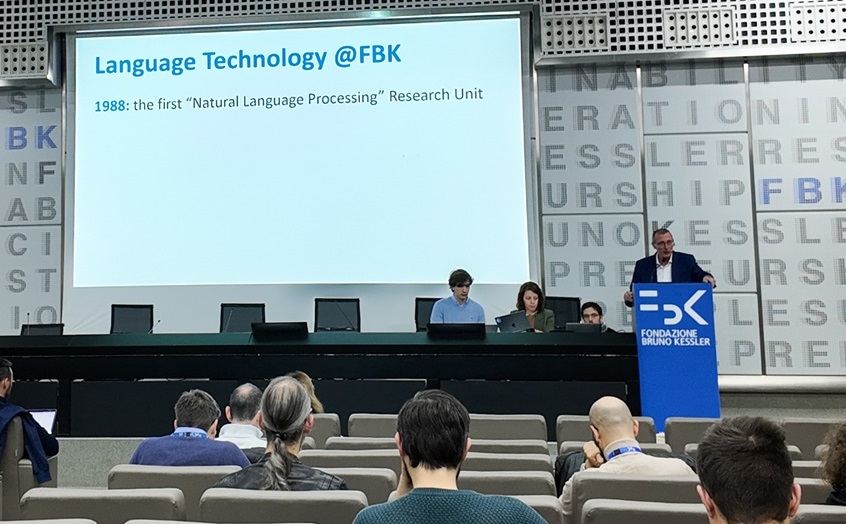
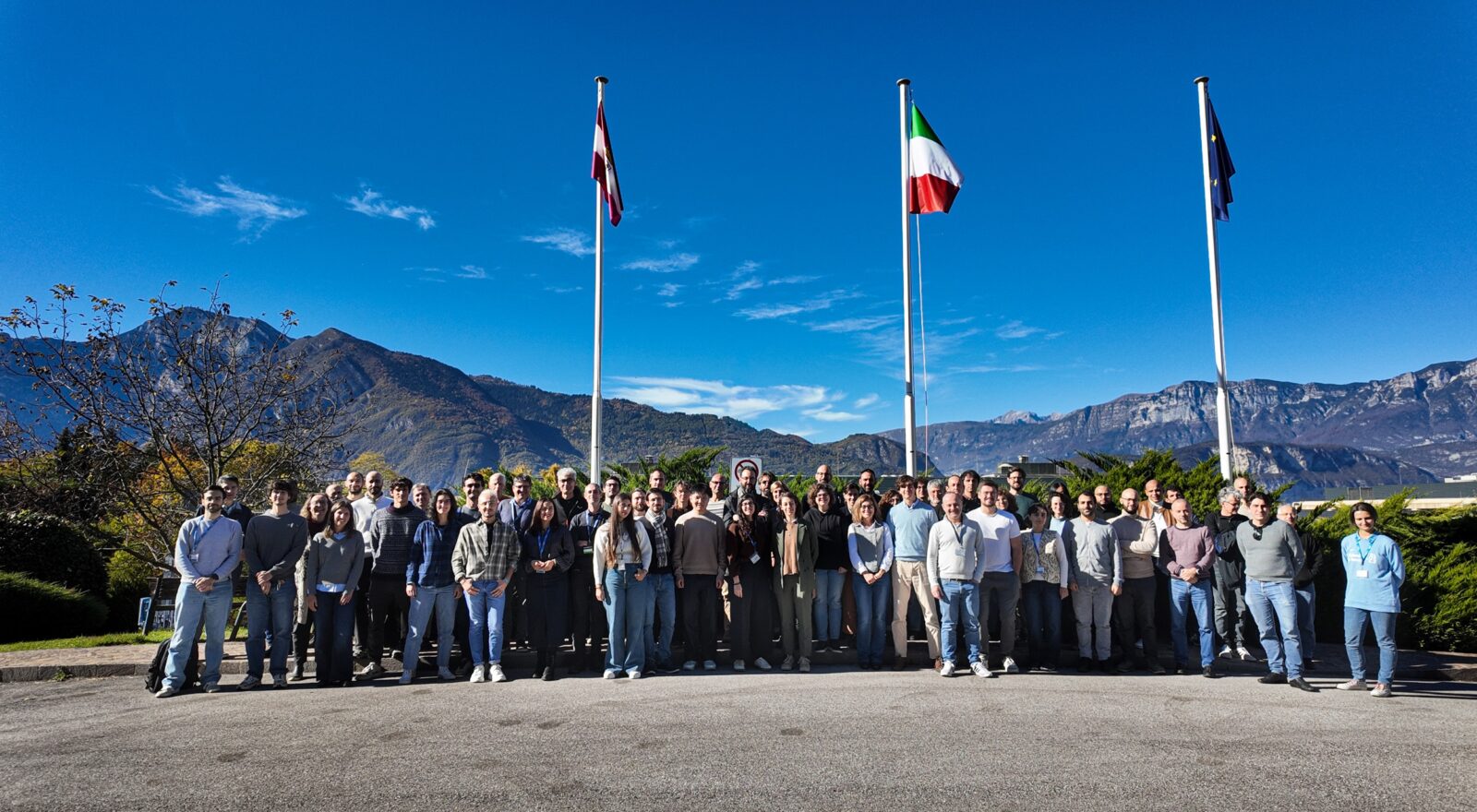
The second edition of LT@FBK, an event dedicated to Language Technologies, was held at Fondazione Bruno Kessler, bringing together researchers working on the development of language and communication technologies. Following the success of the first edition, LT@FBK 2025 reaffirmed the Foundation’s commitment to showcasing the scientific achievements of its research teams working on language-related technologies and to promoting dialogue and collaboration among different units, fostering greater researcher engagement.
LT@FBK was established to provide a space for sharing and exchange among people working in different yet complementary fields,” Alessio Brutti, Head of FBK’s SpeechTek Unit and Science Ambassador explained. “Comparing different experiences and perspectives is essential to grow skills, identify new research directions and generate collaboration opportunities.”
The 2025 edition of the event was curated by an interdisciplinary group composed of Luisa Bentivogli (MT Unit), Pietro Ferrazzi (NLP Unit), Alessio Brutti (SpeechTekUnit), Marco Guerini (LanD Unit), Camilla Casula (DH Unit), Nicolò Penzo (DH Unit – LanD and MobS) and Mauro Dragoni (IDA Unit), representing the various FBK research units dedicated to language technologies.
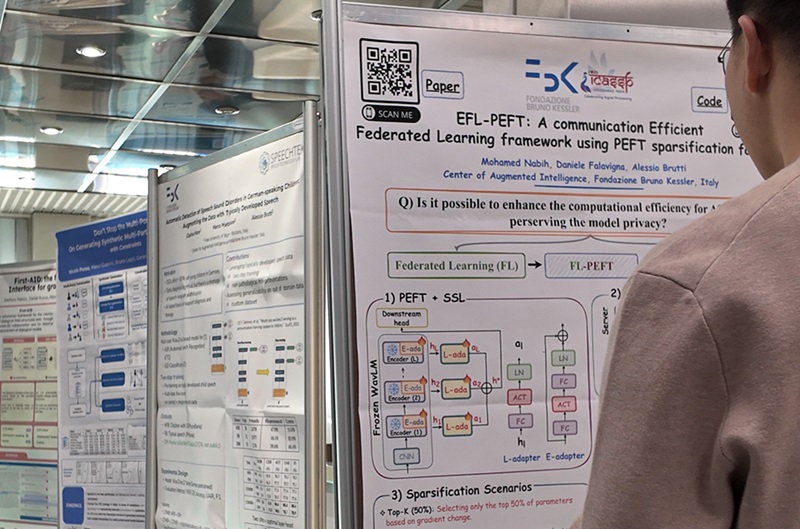
The event featured sixteen presentations illustrating scientific works published during the year at major international conferences or considered of particular interest to the community. In addition, thirteen posters provided an overview of the ongoing activities and results achieved by the various FBK research centers. Among the contributions were numerous works by doctoral students and researchers, offering new perspectives and highlighting emerging research themes.
The keynote talk “From everyday use to real-world impact: exploring LLMs” by Debora Nozza, Professor at Bocconi University and expert in Natural Language Processing and AI fairness, addressed, among other things,
, 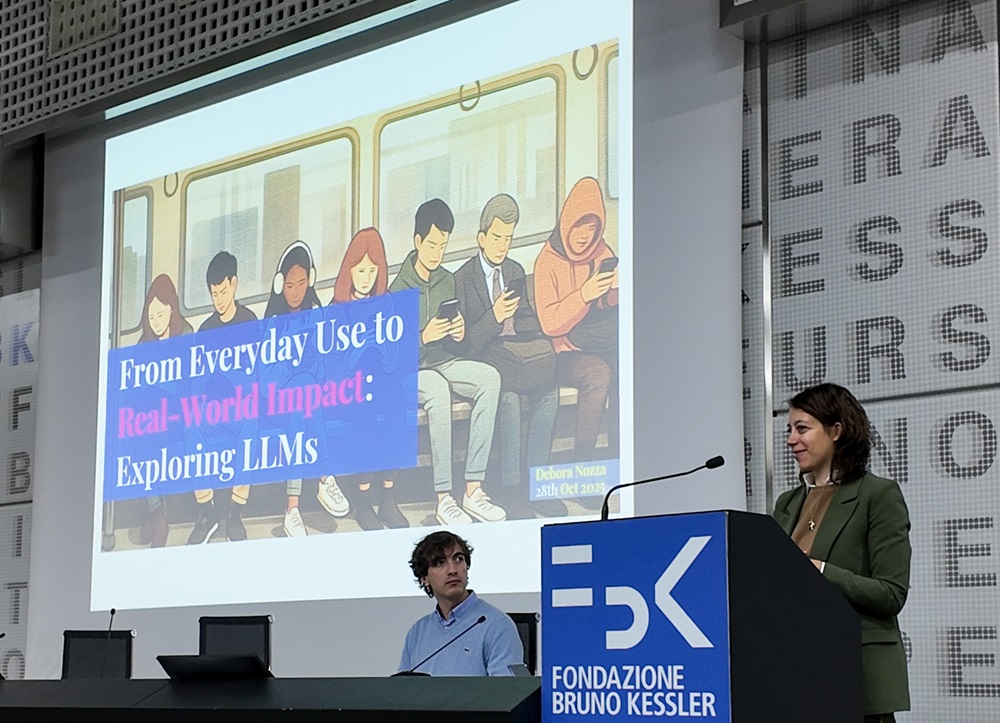 the evolution of the uses of large linguistic models, which over time have been transformed in ways that go far beyond their original purposes. Today, tools like ChatGPT are increasingly used for seeking information and personal advice, surpassing their use for writing and reviewing texts in the latter half of 2025. In the concluding part of her talk, Nozza highlighted the ethical risks associated with these behaviors—from privacy protection to potential emotional dependence—and emphasized the need for the responsible use of artificial intelligence, especially in sensitive areas such as politics, health, and scientific information.
The different sessions offered an in-depth look at the research challenges and directions that are redefining the field of language technologies. The discussion addressed biases and fairness, providing examples of how to design more equitable and representative language models; dialogue systems and chatbots, exploring new approaches to make AI interactions more natural and context-aware; and foundational speech models, with presentations focused on increasingly efficient and adaptable recognition and translation systems. A particularly significant example is the FAMA project, the first family of open-science models for speech recognition and translation, developed by FBK to make scientific results more accessible and reusable.
The conference also offered valuable insights into misinformation, featuring studies on tools and datasets to combat linguistic and multimodal misinformation, as well as on data and benchmarking, emphasizing the importance of high-quality resources and robust evaluation metrics to ensure reliable and sustainable models.
Several of the projects presented were conducted with the support of FAIR – Future Artificial Intelligence Research, the initiative that promotes national research in the field of artificial intelligence. The FAIR program has played a cross-cutting role in developing open, shareable, and collaboration-oriented solutions among research institutions, benefiting both the scientific community and the production sector.
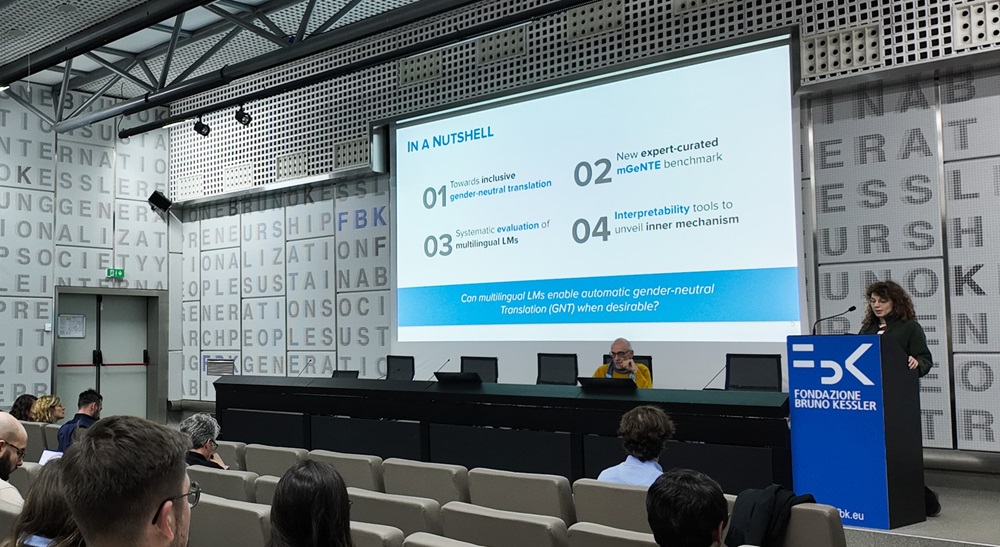
Overall, LT@FBK 2025 provided a dynamic and comprehensive overview of the main ongoing research activities, demonstrating how the interaction of diverse skills and perspectives can create both scientific and practical value. The event reaffirmed its value as an opportunity to strengthen interdisciplinary collaboration and foster a shared vision of the role of research in the field of language-focused artificial intelligence.
The author/s
Related articles