

Will robots be the smartphones of the future?
October 1, 2025
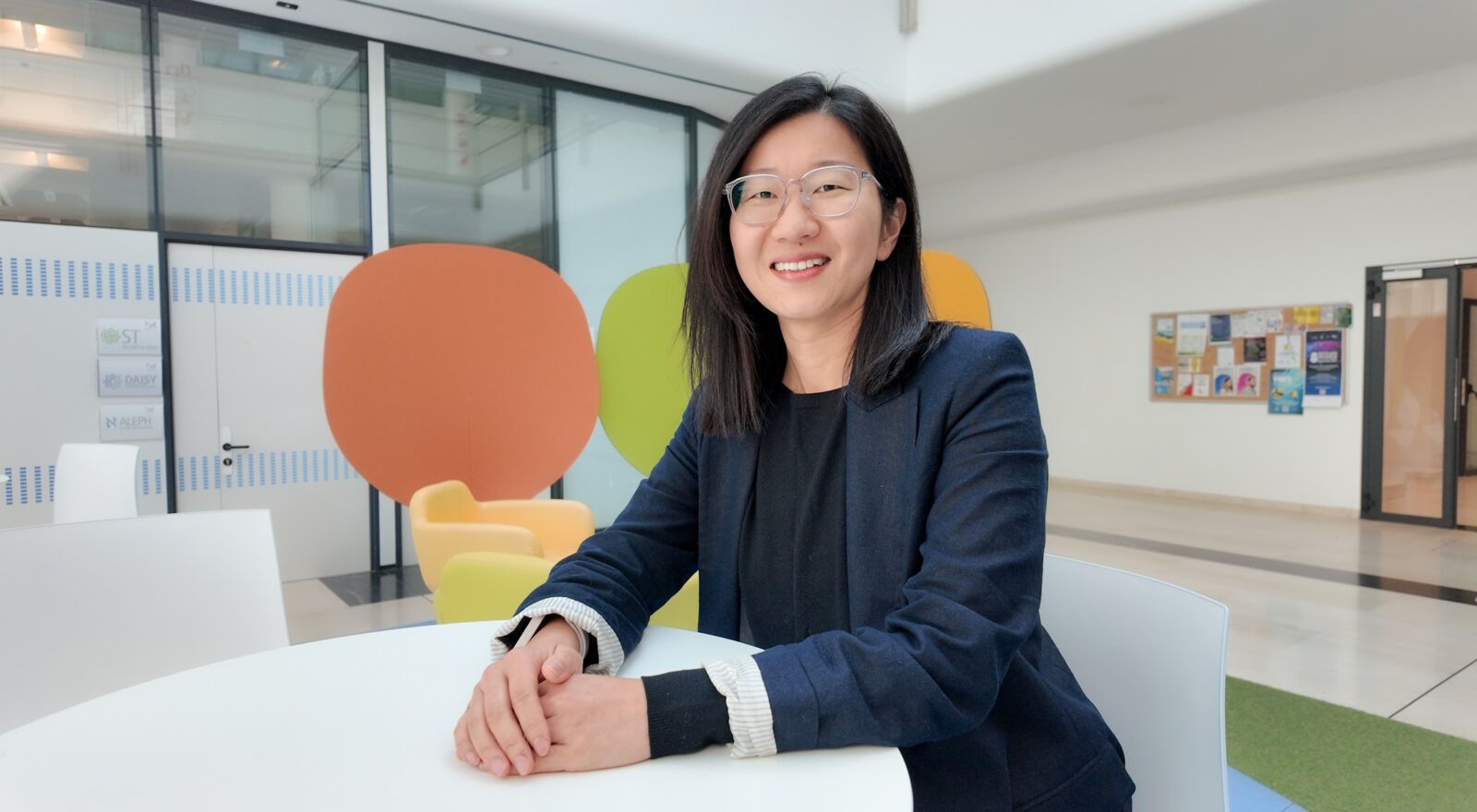
On 5 October, FBK researcher Yiming Wang participated in the Wired Next Fest at the Palazzo del Bene in Rovereto, presenting her talk “Amico Robot” (Robot Friend), where she explored the vision of how humans and robots will coexist in the coming decades. Wang has built her career in computer vision and robotic perception: at Fondazione Bruno Kessler she investigates multimodal models and scene understanding, with applications on assistive robotics.
Yiming Wang’s journey into artificial intelligence and computer vision started in Beijing, where she studied at the Beijing University of Post and Telecommunication. During her Bachelor’s, a final-year project introduced her to computer vision — still a relatively young discipline in 2013 — which immediately captured her interest. Motivated by the direct and rewarding feedback that visual technologies provide, she pursued a PhD at Queen Mary University of London, where she investigated motion control in multi-agent systems, with a particular focus on mobile cameras following moving targets. After completing her PhD, she joined the Italian Institute of Technology in Genoa as a postdoctoral researcher, specializing in robotic perception. Since March 2021, she has been working at Fondazione Bruno Kessler in the Deep Visual Learning (DVL) unit, led by Elisa Ricci, at the Center for Augmented Intelligence. Here, she contributes to European projects on scene understanding for smart cities, while continuing to explore collaborative research on robotic perception and multimodal models.
What were the main difficulties or obstacles you have found as a researcher in the field of AI, and how did you overcome them? Were there times when you had to adapt your career choices in response to these difficulties?
One of the biggest difficulties is that the field evolves so quickly. It can be challenging to identify the right research direction or decide which topics will remain relevant in the long run. Another challenge is access to adequate computing resources, which is crucial for training large models. To overcome these, I try to maintain flexibility, pursue training-efficient methodologies, and collaborate with colleagues who provide complementary expertise.
In the context of technology and AI, how important do you think it is to have more women active in the sector? What differences (in approach, perspective, values) do you think greater gender diversity could bring to AI research?
The community is still very much male-dominated, although initiatives like Women in Computer Vision are starting to create more visibility and support. Having more women in AI is not only about numbers, it brings diversity of thought, values, and problem-solving approaches. Different perspectives can enrich research, making it more balanced and inclusive. Yet, this should not lead to the value of equally hardworking men being overlooked.
Let’s talk about your contribution to Wired Next Fest: “Amico robot”. How do you imagine the relationship between humans and robots will evolve over the next 10 to 20 years?
The question for the research community is: “Will robots be the smartphones of the future?”. If we look at the trajectory of the concept of artificial intelligence from the 40s to the emergence of generative AI today, technology has moved closer to becoming part of everyday tools. In the coming decades, I imagine robots becoming increasingly integrated into daily life—whether in healthcare, education, or household support. The big challenges remain around safety, trust, and robust generalization in the human-centric operating spaces. Many open topics still need to be addressed to ensure robots truly act as companions and not just tools.
Looking ahead, what applications are you focusing on? And what risks do you think are important to address in order to create a “friendly” and beneficial relationship between humans and machines?
I am particularly interested in trustworthy perception and effective interaction. For example, how can we be sure that a robot is “seeing” the right thing? How confident can we be in its interpretation of the environment? This is tightly linked to action planning, so decision-making robots should be able to share their perception and reasoning with humans in a transparent manner, explicitly expressing what they know and what they can do. Improving these aspects will help us build more reliable and collaborative human-robot cohabitation.
One of the central issues in AI today is bias in models and the need for transparency and explainability. From a Deep Visual Learning perspective, what are the most pressing challenges when it comes to ensuring that visual systems are fair and reliable? And how can we promote trust among users?
The first step is to identify the types of bias that may emerge, especially when training models on massive datasets without human supervision. We need rigorous testing to validate how models behave in real-world conditions. Another promising direction is “unlearning” techniques to have them forget erroneous or harmful concepts they may have acquired at large-scale pre-training. At FBK, we are conducting ongoing research in this area, such as AI4Trust with the Complex Human Behaviour Lab (CHuB) led by Riccardo Gallotti. Looking ahead, robust embodied reasoning will be essential, especially for applications in human-centric environments such as healthcare. Robots must handle ambiguous instructions and imperfect situations, and even account for human tendencies to make errors. In this sense, having them behave more “like humans” in terms of problem-solving could improve both trust and usability.
What advice would you give to a young person (or woman) who wants to pursue a career in AI or machine learning today?
The most important thing is to understand yourself and your genuine interest in the field. Don’t be driven only by external rewards such as money, since conducting research in this competitive field can be very stressful, and requires a long-term commitment. You need intrinsic motivation and the belief that what you are doing matters for you and for society. My advice is to be confident, stay curious, and pursue what excites you.
The author/s
-
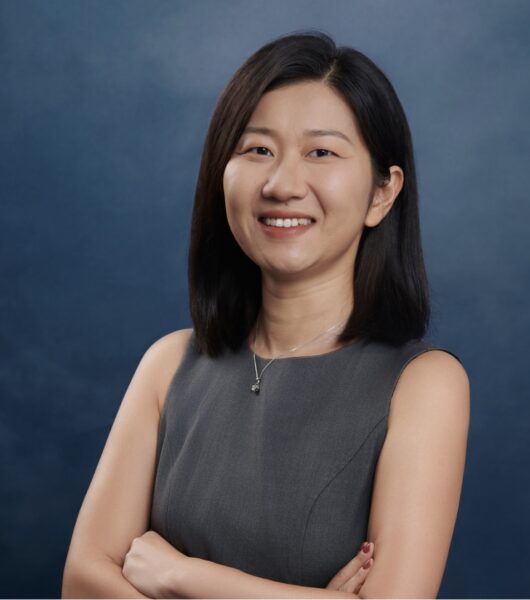 Yiming Wang
Yiming Wang is a researcher in the Deep Visual Learning (DVL) Unit in Fondazione Bruno Kessler (FBK)
MORE INFO
Related articles