

Digitally Divided
May 6, 2026
The impact of technology on beliefs and social polarization explored in a volume emerging from the annual seminar of the FBK Center for Religious Studies, directed by Massimo Leone
Digital platforms can foster dialogue and provide access to diverse perspectives, but they can also accelerate the fragmentation of public discourse, the formation of echo chambers, the radicalization of identities, and the crisis of traditional authorities, including religious ones.
The idea that digital technology does not simply provide new communication tools, but profoundly transforms the ways beliefs are formed, circulated, reinforced, and brought into conflict, lies at the heart of the book “ Digitally Divided. The Impact of Technology on Belief and Societal Polarization, which originated from the annual seminar “(De-)Polarization in Religion and Ethics,” organized by the Center for Religious Studies at Fondazione Bruno Kessler directed by Massimo Leone.
Edited by Massimo Leone and Steven Umbrello (University of Turin) for Springer, the volume launches the Religion and Technology series and brings together international, interdisciplinary contributions on the relationship between digital technologies, religious beliefs, ethical transformations, and social polarization.
“Digitally Divided,” explains Massimo Leone, “is grounded in the conviction that contemporary polarization is not merely political or social, but also shapes the ways societies construct meaning, belief, and belonging. Digital technologies accelerate cultural shifts: they hasten the transition from dialogue to conflict, from plurality to fragmentation, and from the search for meaning to identity-based opposition. For this reason, it is essential to study them not only as tools, but as symbolic environments that transform religion, ethics, and collective life.”
The book addresses these themes from multiple perspectives, including theories of cultural polarization; the transformation of religious minorities in the digital public sphere; the use of religious memes; digital decoloniality; the resemanticization of sacred spaces; biometric surveillance in religious contexts; moral resilience; bioethical issues; and new forms of technological mediation of faith. The central focus is the need to understand how contemporary technologies are reshaping the very conditions of symbolic coexistence, trust, and mutual recognition.
The book includes chapters by scholars from a range of disciplines, including researchers from the FBK Center for Religious Studies: Debora Tonelli, Valeria Fabretti, Boris Rähme, Sara Hejazi, Paolo Costa, and Lucia Galvagni.
The author/s
-
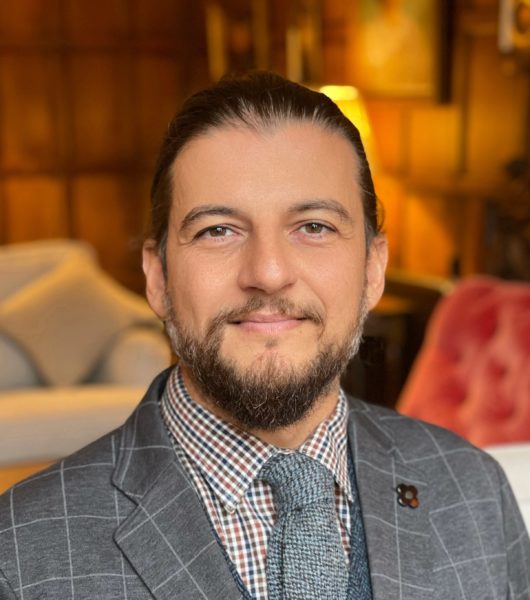 Massimo Leone
Director Center for Religious Studies (ISR), FBK
MORE INFO
Related articles