

Women of the Resistance: Between memory and the future, the 80th anniversary of women’s suffrage, and today’s challenges
June 2, 2026
Remembering the achievement of women’s suffrage means retracing a path to freedom shaped by everyday actions and collective struggles. The latest issue of HLab Magazine brings together reflections from the FBK-ISIG event, connecting the memory of the partisan struggle with today’s movements for equality.
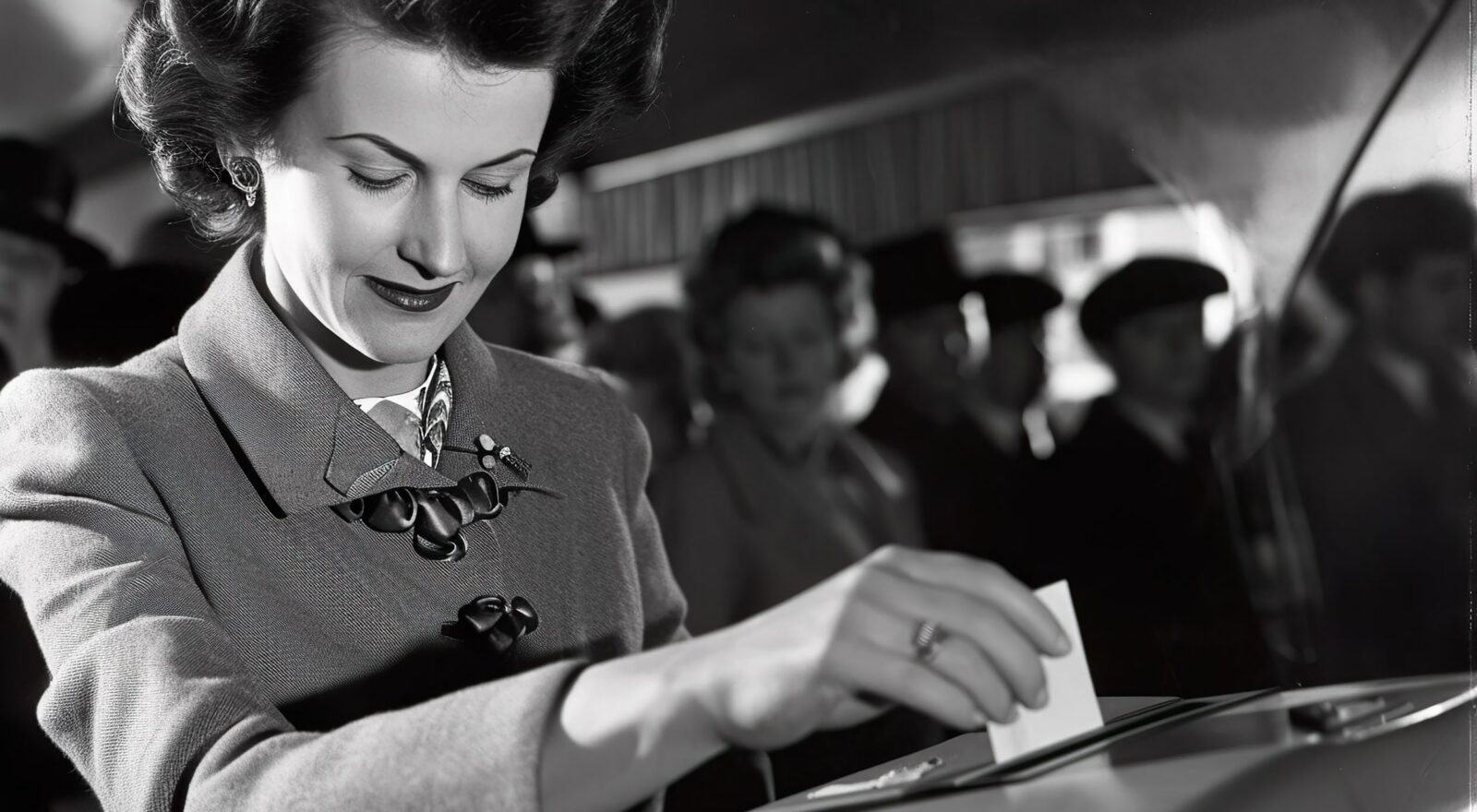
In 1946, women voted for the first time in Italy. Local elections were held between March and April, followed on June 2 by the institutional referendum—choosing between the Monarchy and the Republic—and the election of the Constituent Assembly. For the first time, all women were called to the polls alongside men. Eighty years later, remembering that milestone helps us retrace the key stages of women’s emancipation in Italy. Gaining the right to vote marked one of the first and most significant achievements, but the path toward full gender equality remains long.
At the same time, we should be cautious of teleological narratives of women’s history. The anniversary itself demonstrates this clearly: when the law extending suffrage was enacted, it was not initially specified that women’s electoral rights included not only the right to vote but also the right to run for office. In practice, it was overlooked that women could not only cast ballots but also be elected.
Every achievement was—and still is—the result of long and complex struggles. One of the paths that led to 1946 was undoubtedly the Resistance.
There is the Resistance against fascism and Nazi occupation, but there are also many forms of resistance in the plural: often less visible forms practiced in everyday life, through acts of care, the defense of dignity, and demands for education, work, representation, and freedom. These multiple forms of resistance were at the center of our reflections during the most recent International Day for the Elimination of Violence against Women on November 25.
Public commemorations serve precisely this purpose: to interrupt the pace of daily life and refocus attention on people, struggles, and historical processes that risk fading from collective memory. On March 8, we celebrated International Women’s Day; in February, we marked the International Day of Women and Girls in Science, including in these pages. Anniversaries, commemorative dates, and international observances provide valuable opportunities to remember what everyday life often causes us to overlook.
At the same time, it is important to reflect critically on these anniversaries. I recently addressed this topic in an article connected to the event that, since 2018, has brought together FBK-ISIG, the Trentino Historical Museum Foundation, and, in recent years, the University of Bologna, with the aim of offering the public historically grounded and scientifically rigorous content.
Precisely because anniversaries matter, last year we chose to commemorate the 80th anniversary of Liberation, a moment in which women played a crucial, though often overlooked, role. We approached the history of the Resistance from this perspective, examining women’s contributions not only to the partisan struggle itself, but also to later forms of resistance, including the activism that shaped twentieth-century women’s movements.
The proceedings from the study day held on November 18 at the Caritro Foundation —which funded the initiative—have now been collected in issue 30 of HLab Magazine, The Women of the Resistance. The volume revisits several of the meeting’s central themes: from the women of the Resistance discussed by Benedetta Tobagi, to the Trentino women of the Resistance explored by Lorenzo Gardumi, to the ecofeminist perspectives presented by Lorenza Moretti.
As always, our November initiative—designed for a broad audience and attended by many teachers—aimed to make scholarly research accessible to the public. For this reason, the program also included sessions dedicated to film and audiovisual culture, such as the presentation by Maurizio Cau on Liliana Cavani and the documentary La donna nella Resistenza, as well as the session curated by Alberto Brodesco on representations of women in film.
Anniversaries matter; commemorative dates matter. Reading this issue and learning more about the women of the Resistance and of the postwar years helps us understand why these themes remain central, even far beyond November 25. Once again, we are given the opportunity to pause and reflect on issues that continue to shape our present.
The author/s
Related articles