
Human-Centric AI: The limits of Artificial Intelligence and the value of technology in the service of people
June 23, 2026
Traverso: “Trustworthy artificial intelligence emerges from co-innovation between research and industry, with close attention to society’s needs.”
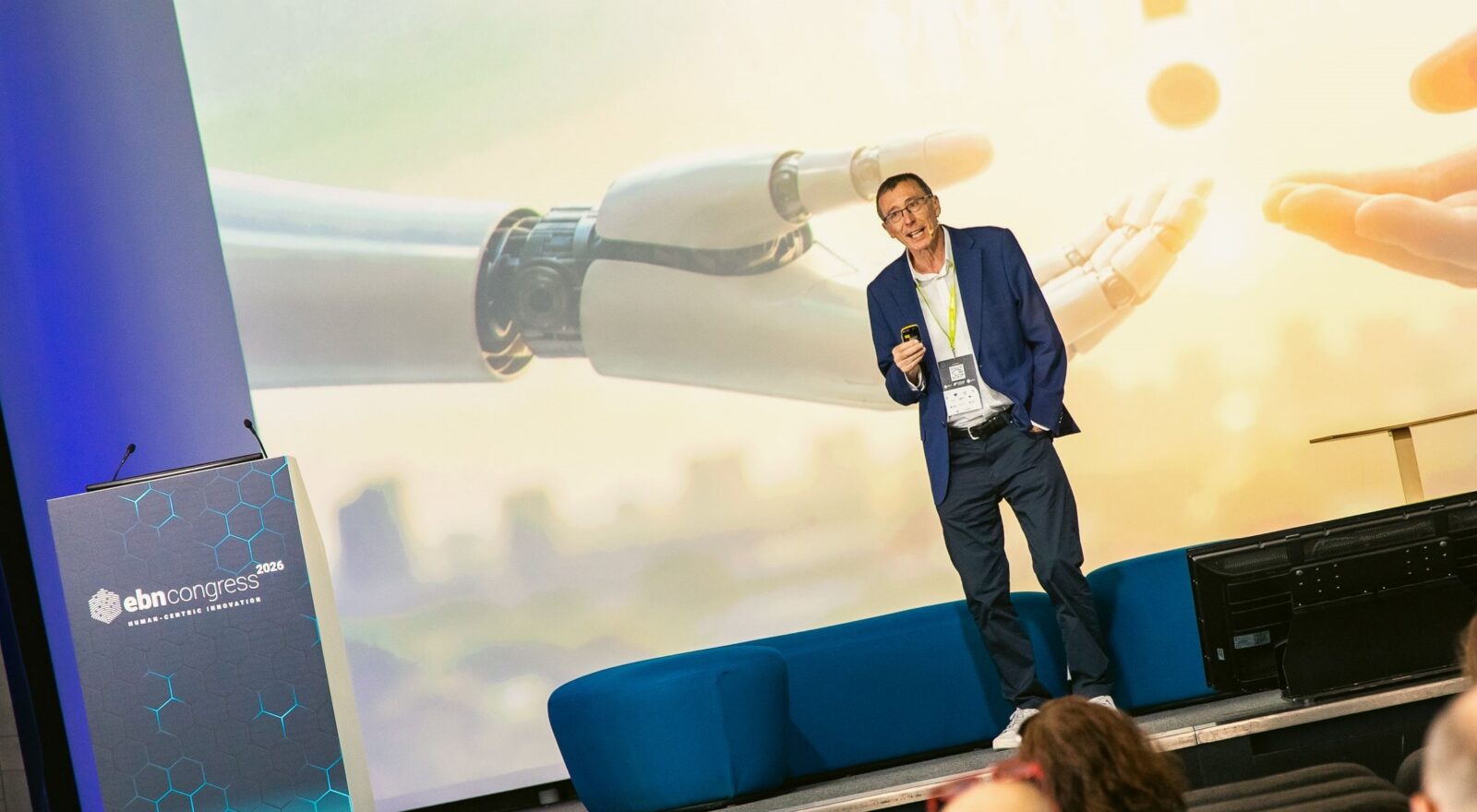
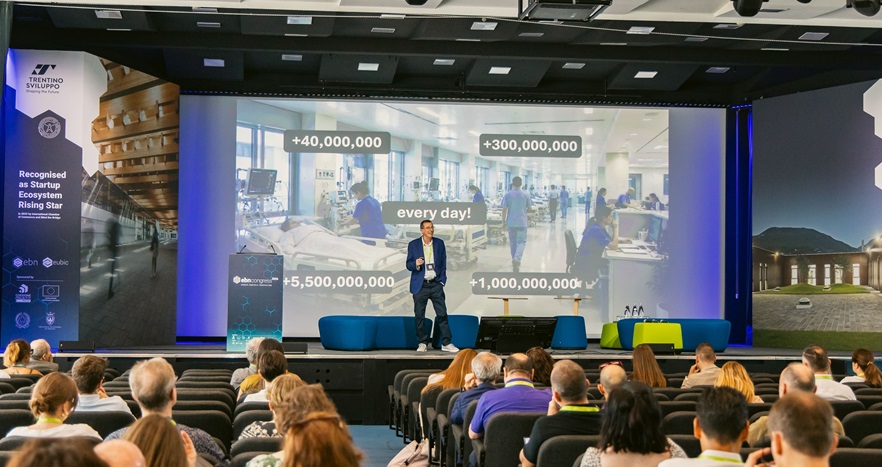
Artificial intelligence has inherent limitations that cannot be ignored. Yet it is precisely by recognizing these limitations that we can build systems that are more reliable, transparent, and genuinely useful to people. This was the focus of the keynote address, “Human-Centric AI. AI We Trust. Building Responsible & Transparent Tech,”delivered by Paolo Traverso, Director of Strategic Planning at Fondazione Bruno Kessler, during EBN Congress 2026—the leading European event for the community of Business and Innovation Centres and organizations supporting innovation, entrepreneurship, and regional development. The congress was organized by Trentino Sviluppo and held in Rovereto and Riva del Garda from June 17–19.
Paolo Traverso began by highlighting some of the weaknesses of today’s artificial intelligence systems. Training data is always incomplete; statistical models operate under conditions of uncertainty; and generative AI systems produce responses based on probability. Neural networks also learn correlations rather than causal relationships. This means they can identify recurring patterns in data, but do not necessarily understand the underlying causes of the phenomena they observe.
This leads directly to the issue of trust. A system that learns without understanding causality cannot be considered completely reliable. As Traverso emphasized, trust in AI cannot be based on the assumption that technology is perfect or independent of human responsibility.
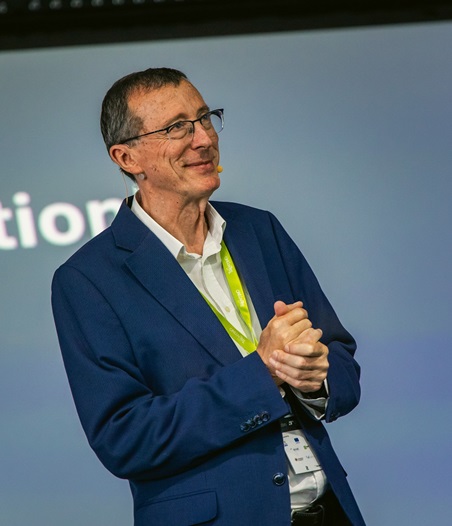
“Neural networks learn correlations, not causation. That’s why we need to understand the limits of artificial intelligence and build systems that help people make better decisions without replacing them,” said Traverso.
At the same time, it is precisely by acknowledging these limitations that AI can be designed and used in a human-centric way—keeping people at the center. Rather than replacing human beings, AI should serve as a tool that enhances human capabilities, improves services, and helps address society’s real needs.
One concrete example is healthcare, particularly the analysis of retinal images to predict diabetes-related risks. The system is not perfect and may generate a small number of false negatives. However, it enables large-scale screening and can reach many people who currently do not have regular access to these tests. According to Traverso, this issue affects millions of people in Italy. In this context, AI does not replace physicians; it supports them, helps them work more effectively, and can improve access to preventive care.
Traverso also highlighted applications in neurodegenerative diseases, referring to systems developed by Fondazione Bruno Kessler between Trento and Rovereto to predict risks associated with Parkinson’s disease, such as patient falls. Here again, the goal is not to delegate decisions to machines, but to integrate predictive tools into everyday clinical practice to support healthcare professionals.
The message is clear: AI is neither inherently good nor bad.
What matters is how the technology is used. Algorithms are not morally good or bad in themselves; the difference lies in how they are designed, applied, and governed.
This is why AI can play an important role in many other fields, as demonstrated by FBK’s numerous projects. In agriculture, it can help predict the water needs of crops such as apples, olive trees, and vineyards more accurately, at a time when water is becoming an increasingly valuable resource. In weather forecasting, it can help anticipate extreme weather events and natural disasters. In industry, it can support the optimization of production processes and the reduction of waste—one of the key challenges for the future.
Traverso also pointed to a critical direction for future research: moving from correlation to causation. Understanding causes, not just statistical regularities, is one of the essential steps toward building more robust and trustworthy systems. This perspective also encompasses Agentic AI—systems capable of greater autonomy, continuous adaptation to changing environments, and responses to unforeseen situations. The real challenge will be to develop models that can learn a deeper representation of the world and its causal dynamics.
The growing volume of available data, particularly within national healthcare systems, opens up significant opportunities. However, data alone is not enough. Scientific expertise, ethical oversight, governance capabilities, and collaboration among different stakeholders are all essential.
Traverso concluded with a call to action: building stronger networks among research centers, businesses, and the public sector. Trust in artificial intelligence does not arise from technology alone, but from shared processes of research, experimentation, and co-innovation.
This is the context in which Fondazione Bruno Kessler operates. For years, FBK has been developing digital technologies and artificial intelligence systems focused on social impact, service quality, and collaboration with local communities, institutions, and businesses— an approach that combines scientific research, responsibility, and applied innovation.
The author/s
-
 Paolo Traverso
Paolo Traverso is the Director of Strategic Planning at Fondazione Bruno Kessler
MORE INFO
Related articles