

AI, Inclusion and Digital Training: Piazza Copernico’s Innovation
February 25, 2026
Thanks to the services provided by FBK’s Center for Digital Industry, the e-learning company has tested AI solutions to enhance the linguistic inclusivity and accessibility of its training materials
Within the framework of the EDIH SoE InnovAction initiative, FBK’s Center for Digital Industry had launched several collaborations with start-ups and SMEs across Italy, supporting them in their journey toward the so-called Twin Transition—digital and green transformation (more information about the initiative here). Among them, Piazza Copernico benefited from the services provided by FBK to equip itself with in-house digital tools, maintaining control over its processes while ensuring data confidentiality.
Piazza Copernico is a company specialized in the development of online courses and in managing a proprietary cloud-based Learning Management System (LMS) platform. Long committed to Diversity & Inclusion, Piazza Copernico promotes non-discrimination and gender equality, integrating these principles into its instructional design processes and its search for new digital solutions, in compliance with European regulations such as the EU Accessibility Act 2025, which emphasizes not only content accessibility but also linguistic neutrality and inclusiveness.
The Need
As part of its innovation journey, the company identified two particularly relevant areas:
- Linguistic inclusivity: In line with its non-discrimination principles, the company needed to develop automated tools capable of identifying gender-biased or non-inclusive language and suggesting alternative pgrasing that avoids unnecessary gender marking when it is not required by the communicative context.
- Accessibility of training content: To broaden access to its learning materials, Piazza Copernico sought to assess the automation of content acquisition from audiovisual sources, with transcription and simultaneous translation functionalities. The goal was to enhance existing content and redesign it from the perspective of accessibility, inclusion, and interoperability.
The Project
The activities were carried out by the Machine Translation (MT) unit of the Digital Industry Center the InnovAction Twin Transition in the Product – Proof of Concept (PoC) service, under the initiative titled “Inclusive Language Reformulation of Written Texts and Simultaneous Translation of Audiovisual Content.”
The work developed along two main lines. The first focused on developing a system based on Large Language Models for the automatic detection of non-inclusive language in Italian texts and the proposal of inclusive reformulations. The system was designed to support human work, with subsequent manual evaluation conducted directly by Piazza Copernico.
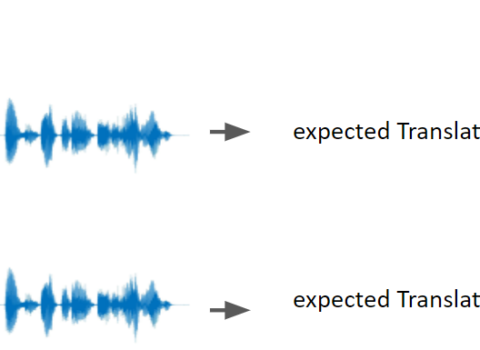
The second line of activity addressed the accessibility of training content through the experimentation of a model for the transcription and simultaneous translation of audio into Italian. The system, based on open-source models, enables audio acquisition via the web and provides real-time transcribed and translated text output.
The Impact
The project enabled Piazza Copernico to acquire AI tools ready for operational experimentation and integration into its digital learning projects. The main benefits include:
- Enhancing existing audiovisual content and reusing underutilized information sources, making them interoperable with other AI systems;
- Supporting the design of more inclusive training materials by reducing the time required for content classification and rewriting, thus providing concrete support to instructional designers;
- Acquiring new digital tools to be permanently integrated into company processes and strengthening internal competencies in the responsible use of Artificial Intelligence.
At the end of the service, Piazza Copernico now has Artificial Intelligence models available for operational experimentation, with a clear usage model for integration into company projects. The collaboration with FBK proved essential not only in evaluating the efficiency of the models, but also in assessing their alignment with the company’s concrete needs. The results achieved represent the foundation for further experimentation aimed at integrating the solutions into real-world operational contexts.
The author/s
Related articles