
“Call me by my name”
September 15, 2025
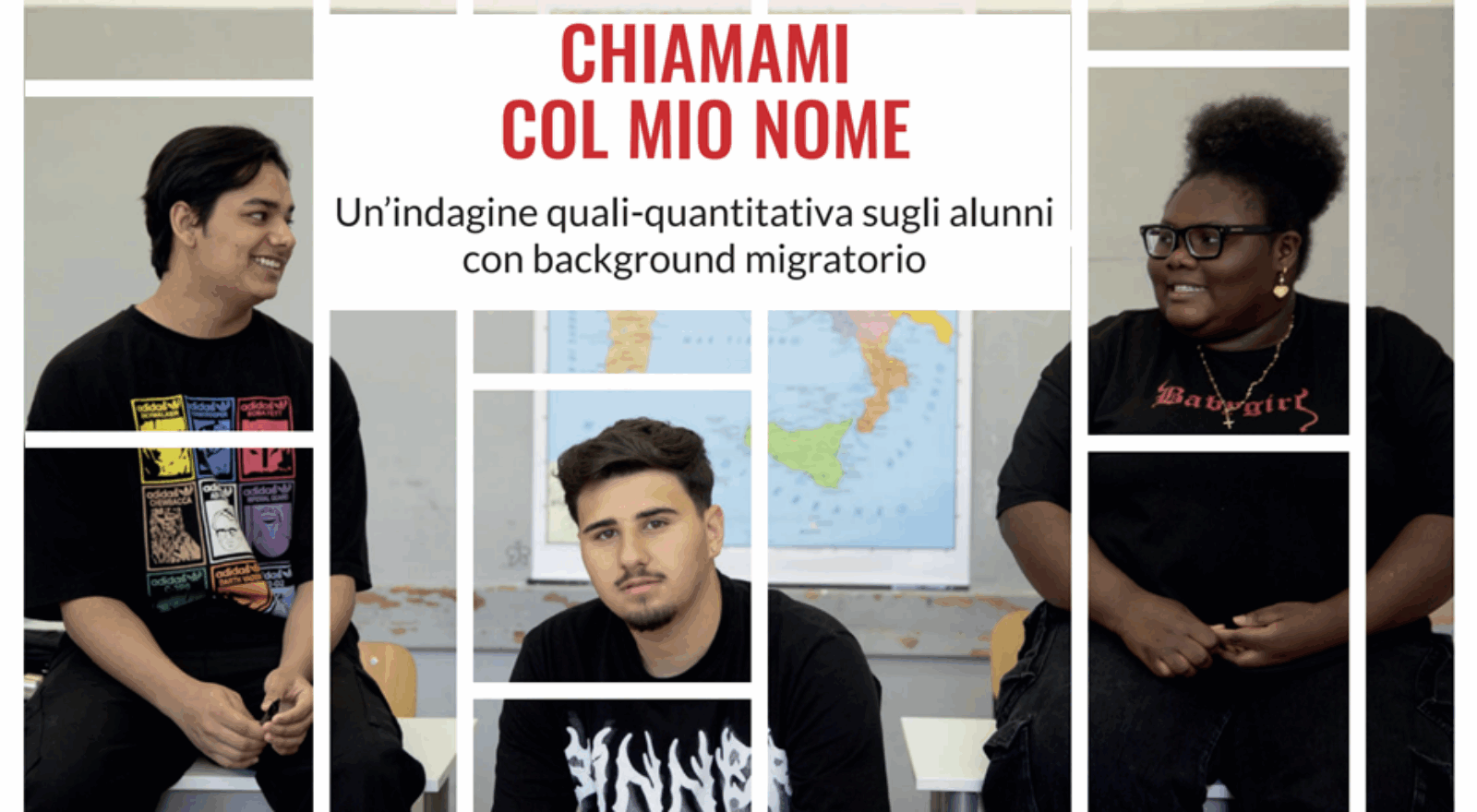
The FBK Center for Religious Studies collaborated as a research partner on Save the Children's Back to School 2025 Dossier, which analyzes the experiences of young people with migrant backgrounds in Italy. To learn more, we spoke with FBK-ISR researcher Valeria Fabretti
What was the aim of the Back to School 2025 Dossier, titled Call Me by My Name, focused on kids with migrant backgrounds?
We enthusiastically joined the Back to School project because we believe that studying the experiences of young people with migrant backgrounds offers essential insight into our society. It allows us to uncover both discriminatory mechanisms and transformative processes that challenge simplistic labels and narrow ideas of identity.
FBK-ISR played a leading role in this work. What was your specific contribution?
As the FBK Center for Religious Studies – in a small team made up of myself and Stefania Yapo – we worked alongside researchers from Save the Children Italy and activists from the Italiani senza cittadinanza (Italians Without Citizenship) movement involved in the project. Our task was to design and conduct the qualitative part of the research. Drawing on the sociological expertise within our Center, we focused on aspects of social exclusion and inclusion, topics we often reflect on. We paid particular attention to intersectional discrimination and the challenges faced by cultural and religious minority groups in gaining recognition. We conducted interviews with students during school hours in three cities, analyzed the data, and co-authored the text of the Call Me by My Name dossier. The publication was edited by myself and Christian Morabito, a senior researcher at Save the Children Italy, who carried out the quantitative analysis.
What research method did you follow?
Integrating our work into a broader quantitative framework required a methodological effort. We added a qualitative dimension to provide deeper insights, focusing specifically on the experiences of young people born and/or raised in Italy. As part of this in-depth investigation, in addition to gathering the perspectives of teachers, educators, and social workers regarding the challenges of inclusion, we chose to interview students in their first and fifth years of high school, from different specializations, in the cities of Brescia, Modena, and Trento (27 students in total). Despite their differences, these three cities share similar characteristics—such as the distribution of the migrant population—that make it possible, even within the scope of a small-scale study, to adopt a common set of research questions. Through the voices of these young people, born and/or raised in Italy in migrant families, we were able to identify key aspects of their lived experiences that influence their choices and shape their outlook on the future.
What are the main findings that emerged from the study?
While the analysis of data from ISTAT, MUR, and INVALSI has provided an updated picture of the persistent inequalities affecting students with a migratory background—particularly in comparison to so-called “native” students—within the school system (for example, in terms of their choices for high school specialization, academic outcomes, and expectations regarding university enrollment), the portrait that emerges from our qualitative research is more nuanced. On a social level, “second-generation” kids develop plural identities, often maintaining a strong connection to the cultures of their parents’ countries of origin. This connection is seen as a resource—even when experienced critically—and they express a desire for these cultures to be recognized as part of an increasingly diverse Italian landscape, rather than treated as foreign or devalued, as they often are in public discourse and in both traditional and digital media. These young people are aware of the broader hostile climate surrounding the figure of the “migrant”—especially at certain intersections, such as with Muslim identity—and while they do experience racism, both in subtle and explicit forms, they often respond with composure and, at times, even with irony. In doing so, their personal and collective strengths come to the fore, often bolstered by a familial emphasis on avoiding conflict and investing in integration as a means to secure a “good life.” However, there is a risk that exclusionary dynamics—especially those rooted in adult generations—become normalized and escape collective reflection and critique, particularly within educational contexts.
The limitations of the Italian school system become particularly evident at key transitional stages, such as the orientation process for choosing one’s high school. At this point, certain preconceptions—or we might say, biases—still appear to influence the guidance provided by middle schools. These biases often lead to students with a migratory background being discouraged from pursuing certain academic pathways in favor of others, regardless of their academic performance or personal preferences.
Citizenship also appears to make a significant difference. Possessing Italian citizenship can help close gaps in learning outcomes and academic choices compared to peers without a migratory background. Moreover, it is experienced not only as a legal status but as a form of social legitimacy—a symbolic and practical foundation upon which to plan for the future, including future mobility.
What can we conclude overall?
We can say that the educational and social pathways of young people who have recently arrived in Italy—and even those born and/or raised in the country—are still not fully comparable to those of their peers without a migratory background. And this discrepancy is not merely a “matter of time”. Barriers to full access to essential services and fundamental rights must be dismantled. At the same time, we must create environments that value young people’s resources and support their participation—as individuals and as citizens. Schools are at the forefront of this process. They are crucial spaces for meaning-making, promoting equality, and combating discrimination. However, schools alone are not enough. They must be supported by broader networks that can sustain and adapt educational approaches to the evolving needs of different local contexts.
How did the collaboration with Save the Children come about?
The collaboration between FBK-ISR and Save the Children Italy is longstanding, marked by nearly a decade of research agreements. The most recent agreement—focused on this study—was signed in April 2025. At its core is a shared commitment to fostering dialogue between research and social action. At FBK-ISR, as in the Foundation more broadly, many projects aim not only for rigorous academic inquiry but also for measurable social impact. In parallel, Save the Children Italy has significantly strengthened its research capacity in recent years, establishing a dedicated internal research center. This mutual investment signals a shared recognition: in the face of today’s complex social challenges, both the understanding of phenomena and the pursuit of change require new alliances and the convergence of diverse perspectives that can enrich one another. For this project, the collaboration was further expanded to include the association Italiani senza cittadinanza (Italians Without Citizenship), a self-organized movement of the “children of immigrants.” This group contributed valuable lived experience, knowledge, and advocacy perspectives to the project, particularly around the acquisition of Italian citizenship and the need to reform Law 91/1992. Their involvement proved invaluable—not only in shaping the research questions but also in interpreting the findings—further affirming our belief in the need for research to be open to dialogue and “contamination” with civil society actors who represent the communities we seek to understand.
What are the future prospects?
Looking ahead, there is strong potential for continued collaboration with Save the Children Italy. Together, we are currently developing proposals for European-level competitive calls on pressing shared issues. Among them are the educational challenges young people face in the age of Artificial Intelligence, and the ways in which AI may deepen existing educational inequalities.
Cover photo: Save the Children. Photo by Lorenzo Pallini for Save the Children
The author/s
-
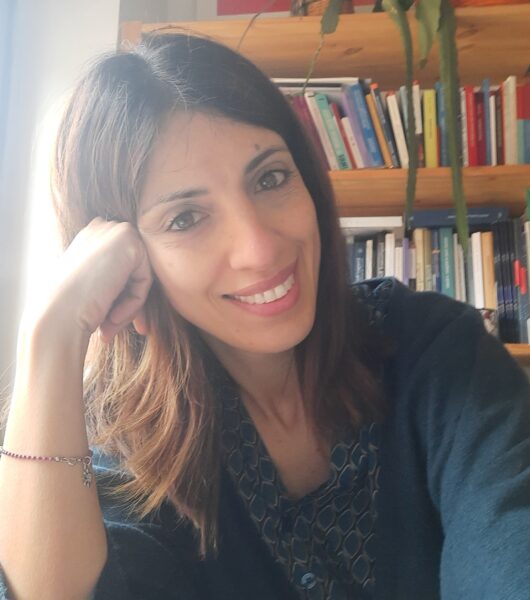 Valeria Fabretti
Researcher at Center for Religious Studies (ISR) FBK
MORE INFO