

Children’s Eyes: From Trentino, a New Digital Model Connecting Pediatricians and Telemedicine
February 27, 2026
An important step forward in protecting children’s eyesight has been marked by the publication in Scientific Reports, a Nature Portfolio journal, of the study “Digital infrared reflex testing and asynchronous teleconsultation for infant eye screening.”
The research, developed as part of the “Digital Health and AI” project funded by the Autonomous Province of Trento (Resolution No. 2475 of 12/22/2022), demonstrates how technology can enhance infant eye screening and improve prevention in the region.
Why is this important?
The first six months of a baby’s life are crucial for detecting eye conditions such as congenital cataracts. Timely diagnosis is therefore essential to intervene before visual development is permanently compromised. However, early identification of opacity in the anterior segment of the eye is often hindered by a lack of specialists and resources. The scientific article highlights how the use of digital images shared between primary care pediatricians and ophthalmologists represents a valid and accurate method for early detection of eye abnormalities, overcoming the logistical limits of in-person specialist visits. Despite some operational challenges related to staff training and processing times, the results show a high level of diagnostic agreement with traditional tests.
In summary, the adoption of these digital working methods promises to improve clinical documentation and, as Dr. Federica Romanelli, Head of the Multizonal Operating Unit of Ophthalmology at ASUIT, notes, “paves the way for future applications of Artificial Intelligence for even faster and more precise diagnoses, allowing us to create a safety net that protects children’s vision from the very first stages of visual development.”
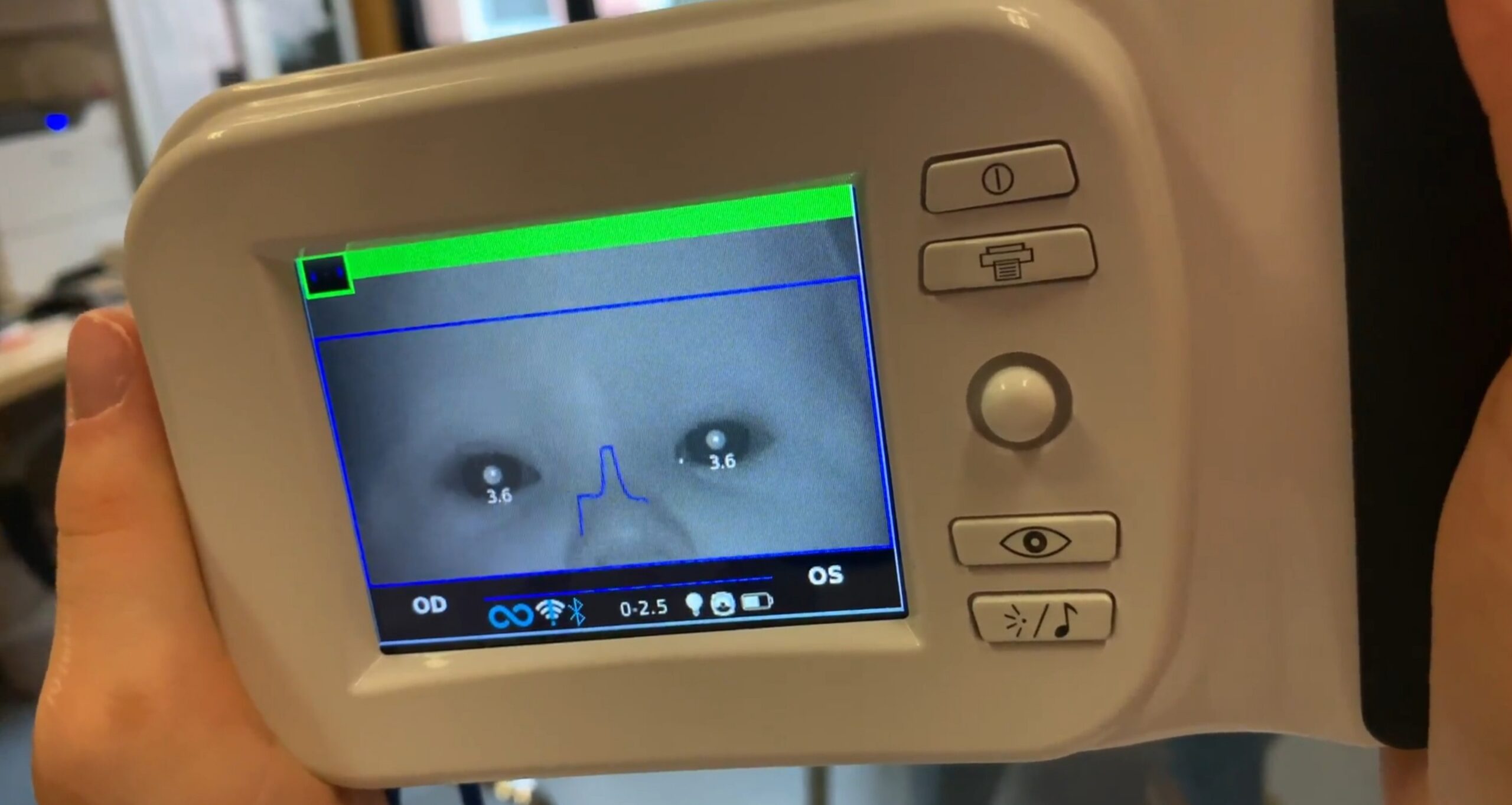
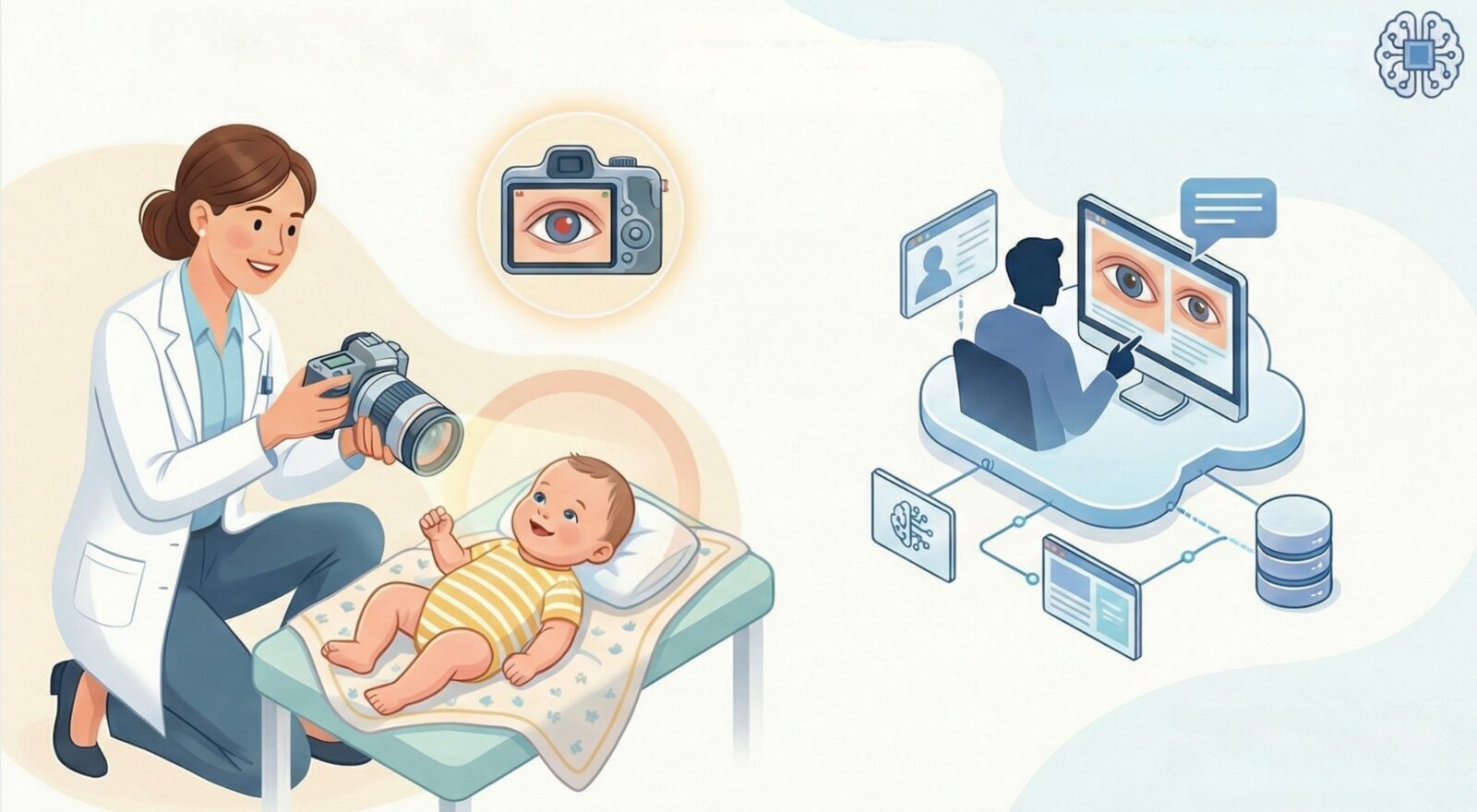
“We have verified that the method is accurate and feasible,” reported Dr. Elisabetta Racano from the Multizonal Ophthalmology Unit, which handled clinical supervision and data analysis together with the Epidemiology Service. “Digital images are collected through the digital infrared reflex test (IRRT), and in the case of a positive or uncertain result, they can later be evaluated by specialist clinicians (so-called ‘asynchronous teleconsultation’).
The screening results speak for themselves: feasibility of 84% and nearly perfect diagnostic agreement (99%) with traditional tests, making it a reliable tool for primary prevention.”
Research sample
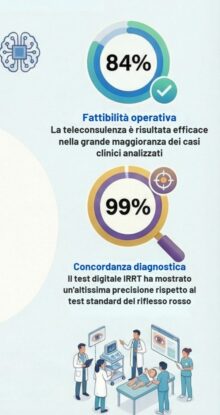
The study involved a total of 189 infants between April 2024 and March 2025. Each child underwent both the digital infrared reflex test (IRRT) and the standard red reflex test (RRT) to compare their accuracy.
Teamwork
The success of the trial is based on a strong collaboration among key health and research partners in Trentino:
- TrentinoSalute4.0 (TS4.0) and Fondazione Bruno Kessler (FBK), through project manager Giulia Malfatti, led the technological integration and study design;
- The Trentino Integrated University Healthcare System (ASUIT), with the Multizonal Ophthalmology Operating Unit directed by Dr. Federica Romanelli and the Epidemiology Service—where specialist Elisabetta Racano and statistical expert Riccardo Pertile supervised data collection and analysis, respectively;
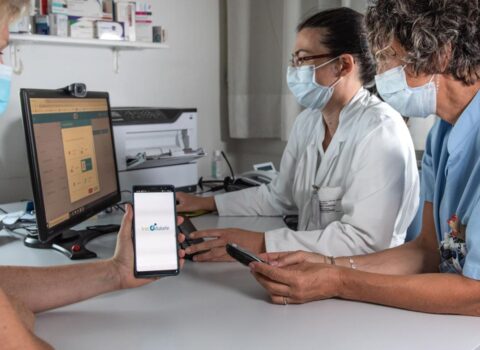
- Pediatricians (Adele Compagnone, Marta Betta, Roberta Pasquini, Lorena Filippi, and Lucia Pavanello), who performed the digital tests on their young patients directly in their offices.
Conducting the study within this age group made it possible, on an experimental basis, to integrate screening into routine well-child visits carried out by pediatricians. This approach brings advanced diagnostics directly to pediatrician offices, sparing families the need to travel to specialist centers for routine checkups.
The research confirms Trentino as a laboratory for innovation, where community-based medicine and digital technologies come together to improve care and well-being in smaller towns and cities.
About the journal Scientific Reports
Scientific Reports is an open-access scientific journal from Nature Portfolio that publishes original research across major fields of the natural sciences, medicine, psychology, and engineering. It is peer-reviewed and indexed in major international databases (Web of Science, PubMed, Scopus, Google Scholar) and, in 2024, was the third most cited journal in the world, with more than 834,000 citations according to Journal Citation Reports (Clarivate). The journal ensures broad international visibility thanks to its open-access model and high traffic on the nature.com website.
Please follow this link to the paper: https://www.nature.com/articles/s41598-026-40517-3
NEWS TS4.0/FBK/ASUIT Trento, February 27, 2026
The author/s
Related articles