
FBK at the forefront of the 3rd NQSTI congress: strengthening italy’s Quantum Technology Network
April 15, 2026
The opening of the works, during World Quantum Day, illustrated the most important applications also in the medical field, announcing the new quantum lab Q-Sud. Richard Hall Wilton: "FBK is at the forefront of translating opportunities into concrete results".
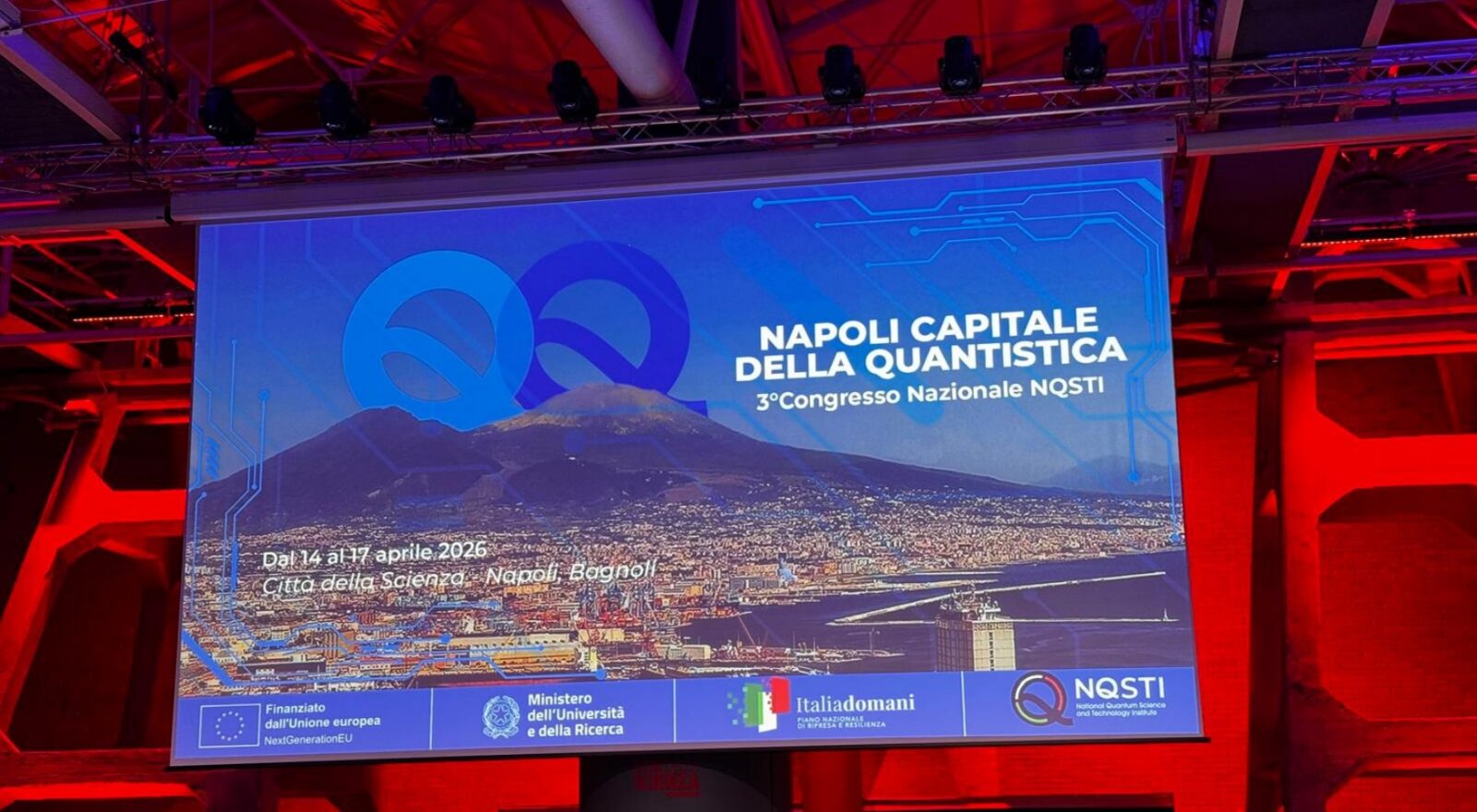
The NQSTI (National Quantum Science and Technology Institute) national congress, which opened on Tuesday, April 14 in Naples, on the World Day dedicated to quantum physics, represents a key moment to take stock of the state of the art of quantum research in Italy and strengthen the national network involving over 600 researchers and more than 40 entities, including universities, public bodies, and companies engaged in the development of these strategic technologies. Among the key contributors to the network is Fondazione Bruno Kessler, actively involved in the Institute’s activities.
The president of the Institute, Claudio Pettinari, stressed the importance of the sector in his opening speech”The funding from the PNRR, thanks to an investment of 116 million euros over three years, represented a crucial step for the development of quantum technologies in Italy, strengthening a critical mass of researchers into a framework capable of competing internationally. NQSTI today is a major entity with a dual mission: on the one hand, to strengthen scientific research in the field of quantum technologies (computing, communication, sensing); on the other hand, to build an ecosystem capable of taking these technologies out of the laboratories. Thanks to the synergistic work of these three years and the commitment of the MUR, which made all this possible, we look to the European future with ambition and responsibility “.
Fondazione Bruno Kessler stands out for its strong participation in NQSTI, with a large number of abstracts presented and an active role in five “spoke” projects, ranging from theoretical research to technology transfer. This presence confirms FBK’s ability to contribute to high-impact initiatives, acting as a bridge between advanced research and concrete applications.
The event, running through Friday the 17th, with a busy calendar of scientific presentations, workshops, and discussions covering all the main areas of quantum research—from quantum computing to secure communication, from advanced sensors to new materials, up to industrial applications and technology transfer—is dedicated to developments in the field. Significant space is also being reserved for dialogue between research and business, with initiatives dedicated to innovation and startups, such as knowledge transfer activities and the presentation of entrepreneurial projects in the field of deep-tech technologies.
“It will be an intense week of work here in Naples,” said NQSTI scientific coordinator Fabio Beltram, “to develop concepts and innovations in the field of quantum physics. In Naples, at Città della Scienza, hundreds of physicists active in this important sector are gathered, which is the basis of the most modern technologies, a development tool for many technological sectors. We have grown significantly thanks to the PNRR funds that have been allocated to us, and we are now a powerful resource for the country. A first example I like to highlight is the birth of Q-SUD, the National Quantum Pole based in the city of Naples, a reference point not only in Italy, but internationally “.
“The challenge of quantum technologies is not only Italian, but global,” commented Richard Hall Wilton, director of the Center for Sensors & Devices at FBK. “This is why it is essential that institutions, research centers, and companies join forces, as is happening with the National Quantum Science and Technology Institute. Italy has the skills and resources to make a significant contribution, and FBK is at the forefront of translating this opportunity into concrete results, from theory to technology transfer. The impact of these technologies is just around the corner, and we need to be ready to seize it.”
Meanwhile, on the first day of the work, the state of the art of the second quantum revolution was presented—the one that brought the application of quantum physics in everyday life from the laboratory to everyday reality.
Among the implementation projects, those related to biomedicine, such as the microbiology and oncology sectors, stand out, as illustrated by researcher Giada Bianchetti:
“Techniques based on quantum light, which allow us to study the properties of biological systems in greater depth, could result in more effective diagnostic tools, for example to identify infections even at very low concentrations or to more accurately analyze the characteristics of tumors,” says the researcher from the Catholic University of the Sacred Heart of Brescia. “We started from a very concrete clinical problem: sepsis, in which time is a crucial factor. It is estimated that every hour of diagnostic delay increases mortality by 7%. Today, the method used to identify bacteria is blood culture, which requires high concentrations of microorganisms before being detected and, to do so, takes several days. Having tools that can detect bacteria directly in blood or urine samples, already at low concentrations, could reduce the time of diagnosis, thus limiting the unnecessary use of antibiotics “.
But even in research for the prevention and treatment of tumors, quantum methodologies can be incisive: “The Q-Meta project proposes to develop spectroscopies and microscopies based on quantum light to study the metabolism of tumors in an innovative and least invasive way possible. These techniques offer very high sensitivity, which allows the detection of extremely weak biological signals such as the autofluorescence of molecules involved in metabolic processes. The goal is to understand how cancer cells respond to the environment, for example to factors such as tissue stiffness and pressure. These stimuli, in fact, affect the metabolism of cells, with a direct impact on growth, progression, and invasiveness. Understanding these mechanisms is therefore fundamental, because it can pave the way for innovative therapeutic strategies that are more targeted and effective, especially for the most aggressive and complex forms of cancer.”
The author/s
-
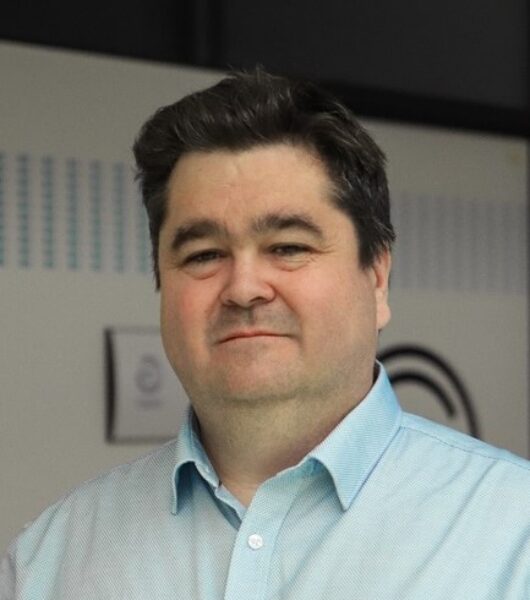 Richard Hall-Wilton
Director Center for Sensors & Devices - FBK
MORE INFO
Related articles