TURING completes its first year, laying the foundations for trustworthy AI in science
October 28, 2026
The €7.5 million Horizon Europe project reaches a major milestone in developing reliable, physics-aware AI for science, with Fondazione Bruno Kessler leading research on foundation model adaptation and distributed learning
Artificial Intelligence can help scientists understand complex phenomena, from extreme weather to nuclear reactor safety. But in applications where decisions have serious consequences, accuracy alone is not enough: AI must also be reliable, respect the laws of physics and provide results that experts can understand and assess.
This is the ambition of TURING – Trustworthy Unified Robust Intelligent Generative Systems, which has completed its first year and achieved a major research milestone. Launched on 1 September 2025, TURING is a 36-month research and innovation project funded by the European Union’s Horizon Europe programme under Grant Agreement No. 101215032.
The project is coordinated by the Institute of Communication and Computer Systems (ICCS), Greece, with Konstantinos Tserpes as Project Coordinator. Dusan Jakovetic of the University of Novi Sad, Faculty of Sciences, Serbia, leads scientific and technical coordination.
Making AI More Reliable for Science
Many scientific and industrial processes depend on sophisticated computer simulations to understand how complex physical systems behave. These simulations are often extremely demanding, requiring significant computing power, time and resources. TURING aims to develop a new generation of AI models that can make such analyses faster and more efficient while maintaining scientific reliability.
Unlike conventional AI approaches that rely primarily on patterns in data, TURING seeks to incorporate scientific knowledge and physical principles into the way AI models are developed and used. The project focuses on making AI more robust, explainable and adaptable to different conditions, while providing ways to assess the uncertainty associated with its predictions.
At the heart of TURING is the development of the TURING Framework, which will bring together advanced AI models, tools for their development and adaptation, and a user-friendly interface enabling scientists and engineers to interact with the technology. TURING five use cases cover three domains: nuclear science and engineering, high-energy particle physics and meteorology. The project ultimately aims to make its key models and tools publicly available for wider scientific use.
FBK’s research towards more reliable and efficient AI
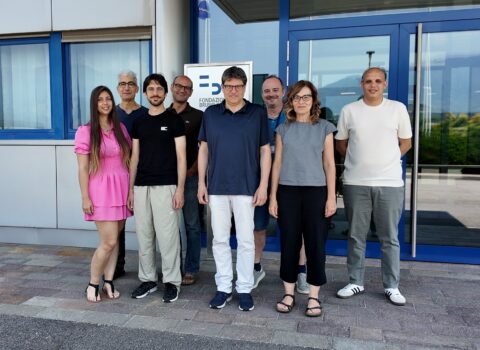
Fondazione Bruno Kessler contributes to TURING through three research units: SpeechTek and DVL both part of FBK’s Center for Augmented Intelligence, and E3DA part of its Center for Digital Society. Together they combine expertise in artificial intelligence, computer vision, audio processing and resource-efficient AI systems.
FBK leads the activity on federated and distributed transformers in Work Package 3 and leads Work Package 4, where it also contributes to the activities on adaptation of foundation models to different tasks within a scientific application. This includes developing techniques to fine-tune and adapt models using limited data, quantify prediction uncertainty, improve the interpretability of results and reduce computational costs.
“For FBK TURING represents a valuable opportunity to apply the expertise we have developed in computer vision, audio processing and edge AI to new challenges in science and engineering,” says Elisabetta Farella, head of the E3DA Research Unit.
“One of the most interesting aspects of this project is the opportunity to explore how AI methods developed for processing complex data, such as speech and audio, can be adapted to different applications domains such as nuclear engineering, high-energy particle physics and meteorology. Our goal is to contribute to AI models that are not only powerful, but also efficient and capable of working with limited resources,” explains Alessio Brutti, head of the SpeechTek Research Unit.
“By combining advanced AI techniques with scientific knowledge and physical principles, we aim to develop foundation models that can adapt to different applications while ensuring reliable and interpretable results. This is particularly important in scientific domains where understanding the uncertainty of predictions is as essential as their accuracy,” adds Davide Talon, researcher in the DVL Research Unit.
A Major First-Year Achievement: Completion of MS2
Throughout its first year, the consortium worked to establish the scientific and technical foundations required for the development of the TURING Framework. This included examining existing scientific modelling approaches and their limitations, identifying the needs of the five use cases, defining user and technical requirements, and establishing the initial architecture of the future framework. This provides the foundation for the next phase of model development, integration and evaluation.
Scientific Progress and International Visibility
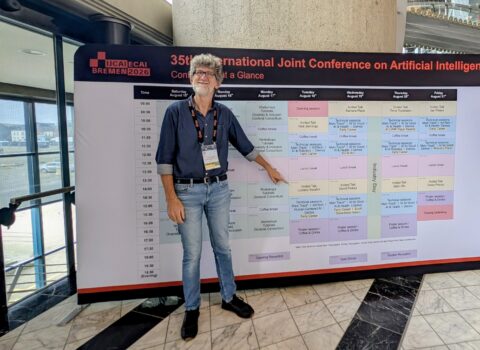
The project has already recorded four journal publications (one joint) and nine international conference publications (one joint). TURING partners have participated in numerous scientific and networking events and co-organised three workshops or special sessions, including activities at BDVA Data Week 2026, 9WCSCM 2026 and WCCM–ECCOMAS 2026. They also participated in IEEE ICE 2026 and EBDVF 2026. TURING has established six synergies with other Horizon Europe projects, supporting scientific exchange and future collaboration.
A Consortium Across 12 Countries
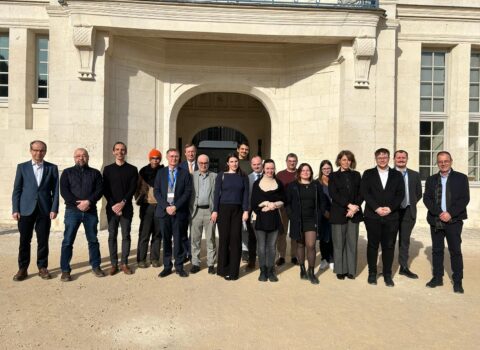
TURING brings together 23 organisations from research, academia and industry. The partnership combines international expertise in AI and scientific computing with specialist knowledge of the project’s application domains.
Countries represented in the TURING consortium
TURING Partners
Greece: Institute of Communication and Computer Systems (ICCS); ZELUS IKE; DIINEKES (DIE); Foundation for Research and Technology – Hellas (FORTH); Ypologistiki Michaniki Epomenis Genias IKE (NCOMP).
Germany: AEGIS IT Research GmbH; NEC Laboratories Europe GmbH; University of Stuttgart (USTUTT).
Italy: Fondazione Bruno Kessler (FBK); Scuola Superiore di Studi Universitari e di Perfezionamento Sant’Anna (SSSA).
Canada: École de technologie supérieure (ÉTS).
India: Indraprastha Institute of Information Technology Delhi (IIIT-Delhi).
Netherlands: NRG PALLAS BV.
France: Bull SAS; Météo-France.
Serbia: University of Novi Sad – Faculty of Sciences (UNSPMF).
Slovenia: Fakulteta za informacijske študije v Novem mestu (FIS); Rudolfovo Znanstveno in Tehnološko Središče Novo mesto (RDL).
Cyprus: IOTAM Internet of Things Applications and Multi Layer Development Ltd (ITML); ML and AI Data Consultants Ltd (MLAI).
Slovakia: Slovenská technická univerzita v Bratislave (STUBA).
Switzerland: European Organization for Nuclear Research (CERN); Eidgenössische Technische Hochschule Zürich (ETH Zürich).
ETH Zürich and IIIT-Delhi participate as associated partners.
The author/s
-
 Elisabetta Farella
 is head of the Energy Efficient Embedded Digital Architectures research unit at FBK Digital Society Centre.
MORE INFO -
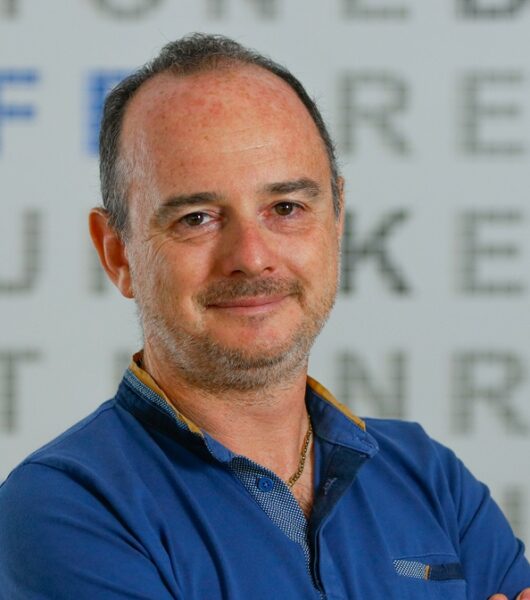 Alessio Brutti
Head of Speech Technology Lab (SpeechTek) of the Centre for Augmented Intelligence,
MORE INFO -
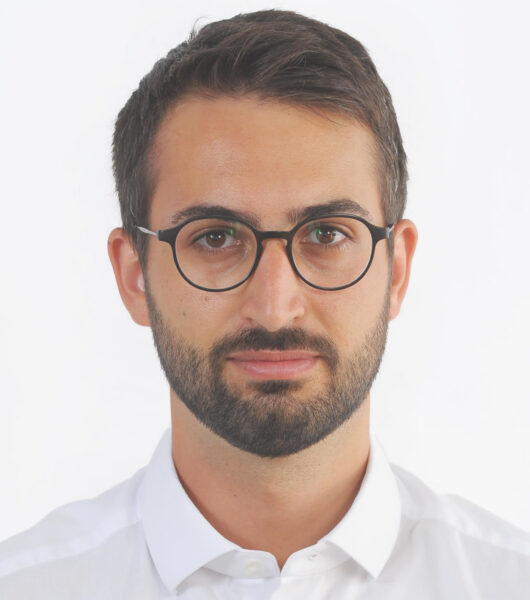 Davide Talon
Researcher in the Deep Visual Learning (DVL) unit at Fondazione Bruno Kessler (FBK)
MORE INFO
Related articles