
Shrinking light onto chips: the future of photonics in sensing and navigation
November 6, 2026
An interview with Georg Pucker, Head of the Integrated and Quantum Optics (IQO) Unit at the Center for Sensors and Devices and visiting professor at the INPHOMIR School, discussing microchip integration, cleanroom fabrication.
Light is the backbone of modern civilization: humans all over the planet use technologies based on photons and light to live, move, produce and exchange information.
A practical example: high-speed data streams, based on light, power the global internet; ultra-precise navigation guiding satellites lead us and our complex transportation systems across regions.
Because of the centrality of light and photonics, the recent INPHOMIR School—organized by the Polytechnic University of Bari under a major uropean Union-funded Horizon Europe initiative, coordinated by the Italian company GEM Elettronica, gathered students, researchers, and industry experts to explore the cutting edge of Integrated Photonics for Sensing and Navigation.
Distinguished lecturer of the school was Professor Georg Pucker, a senior researcher and head of the Integrated and Quantum Optics (IQO) Unit at Fondazione Bruno Kessler.
In this interview, Pucker touches some of the key aspects about how shrinking optical systems onto microchips is a game-changer, how cleanroom fabrication bridges the gap between theoretical physics and real-world tech, and why teaching the next generation of scientists is a two-way street for innovation.
Dr. Pucker, what was the INPHOMIR School about?
Organized by the Polytechnic University of Bari as part of a major European Union-funded Horizon Europe initiative, coordinated by the Italian company GEM Elettronica, the INPHOMIR School focused on Integrated Photonics for Sensing and Navigation. In short: using light micro-chips to navigate the physical world and sense environment changes with unprecedented precision.
Optics and photonics sound like a hyper-specialized topic. Why dedicate an entire school to integrated photonics?
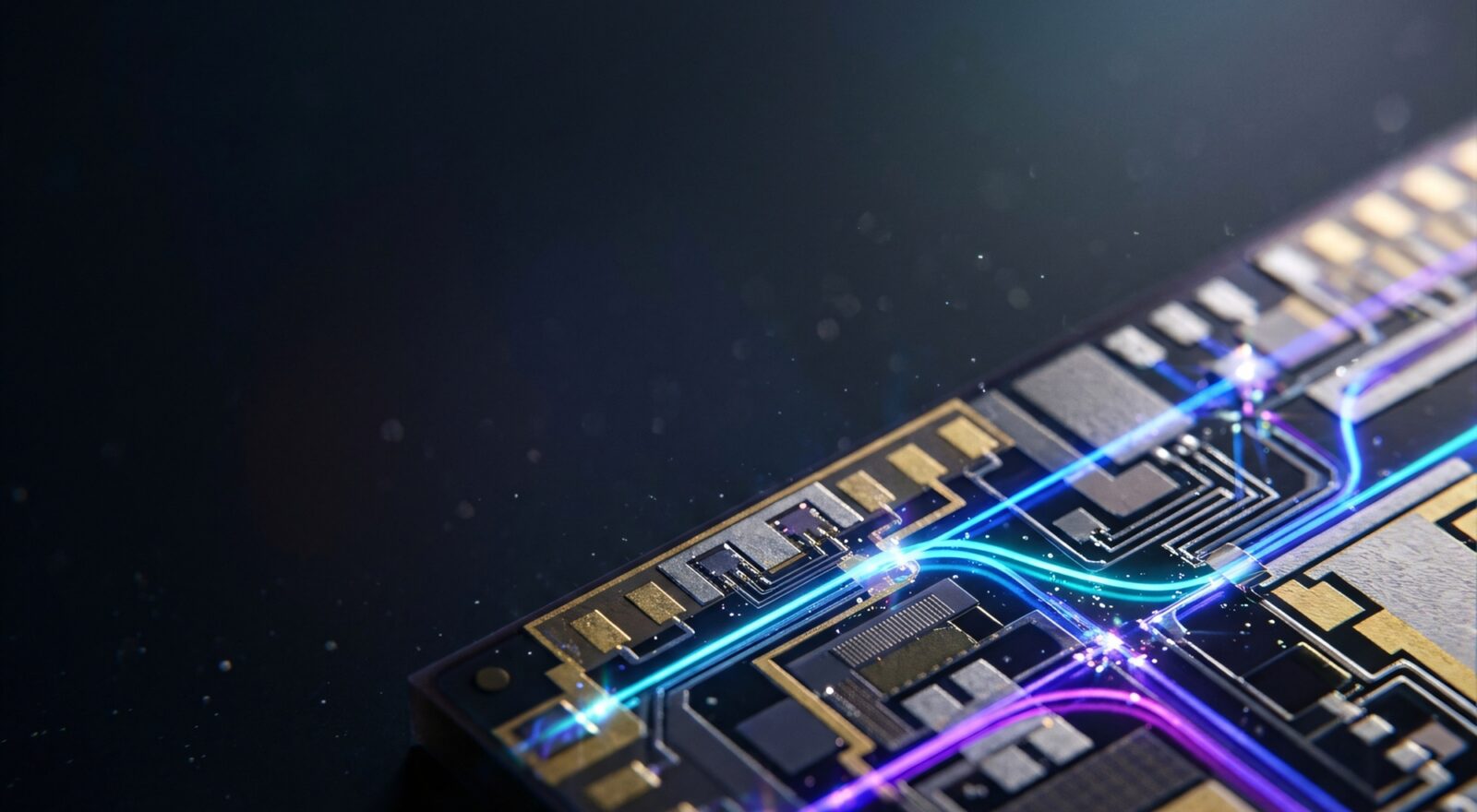
Light literally powers our everyday technologies. The most obvious example is the internet: massive optical fibers carry data across oceans and through data centers. But optics also power satellite-to-satellite communication, hyper-precise atomic clocks, and next-generation optical navigation systems. Integrated photonics shrinks all those massive optical setups down onto microchips: it’s one of the most transformative technology nowadays.
What does an applied research institute bring into universities?
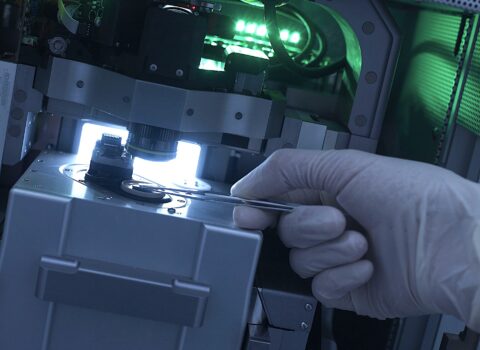
Universities excel at theoretical foundations and advanced research, but few have the industrial-scale infrastructure required to fabricate photonic integrated circuits and assemble them into fully functional, real-world systems. FBK bridges that gap. We bring practical cleanroom know-how, state-of-the-art fabrication capabilities, and system packaging expertise that pure academic labs often lack.
What specific topic did you tackle during the school?
I lectured on advanced heterogeneous integration—essentially, the art of smartly combining different optical components and materials onto a single chip platform. Imagine taking a silicon component that routes light in multiple directions and flawlessly marrying it to high-sensitivity detectors that read the signal across those different channels.
Why is that packaging and integration step so crucial?
Because micro-optics demand extreme precision. Aligning lasers, optical waveguides, and detectors requires sub-micron accuracy inside high-tech cleanrooms. In fact, assembly and packaging are often the single biggest contributor to the final cost of a commercial photonic device. Mastering these techniques is what turns a cool lab experiment into an affordable, scalable product.
What is the main take away of this experience?
Preparing these lectures brings me to systematically benchmark our work against global breakthroughs in a fast-moving field. Summer schools are much more intimate than massive international conferences. Participating as a lecturer means you also get to be a listener. The smaller environment opens up deep, candid discussions—not just with peer experts, but with brilliant, passionate students who ask the kind of fresh questions that spark new ideas.
The author/s
Related articles