
An Increasingly (nano)technological society?
October 12, 2026
FBK at NanoInnovation Rome 2026
“Your body is the harp of your soul, and it is yours to bring forth sweet music from it, or confused sounds.”
— Kahlil Gibran, The Prophet
Looking into the future through an atomic force microscope might seem like a purely laboratory exercise confined to the world of research. But the truth is that whatever happens in the lab eventually escapes, seeping into the outside world with an impact on people so profound that it transforms not only our lifestyles, attitudes, expectations, and even desires, but also something far more fundamental: our cells, the proteins that make up human bodies, and our DNA. Take nanomedicine, for example, which interacts directly with the molecular foundation of our flesh—the very core of who we are.
Or consider microchips, which power the networks holding together our economic and cultural systems, along with the astounding volume of information flowing from one corner of the planet to another. Microchips are the building blocks of modern civilization; what we call “modernity” could not exist without them. Whether it’s nanomedicine, new nanomaterials, or microchips for artificial intelligence, nanotechnologies are not just a challenge for scientific advancement—they are increasingly the new tools our species relies on to understand and inhabit the world, reality, and even ourselves.
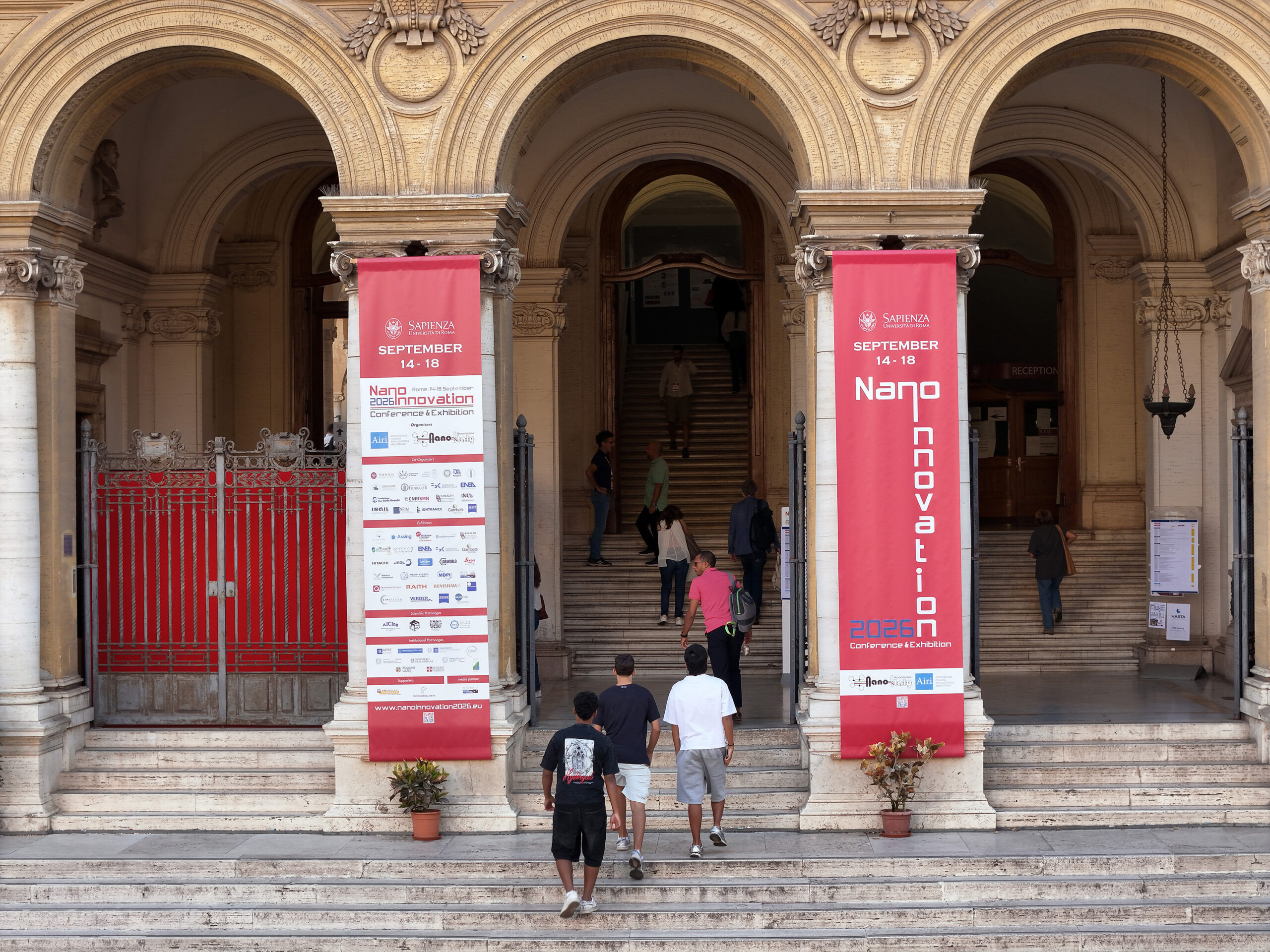
For this reason, FBK’s decade-long presence at NanoInnovation Rome—Italy’s flagship event for micro- and nanotechnologies—has evolved over time. It has shifted from a showroom for presentations and lectures focused strictly on innovation and applied research into a catalyst for cross-cutting, interdisciplinary events that examine the impact of science through a social, philosophical, and anthropological lens.
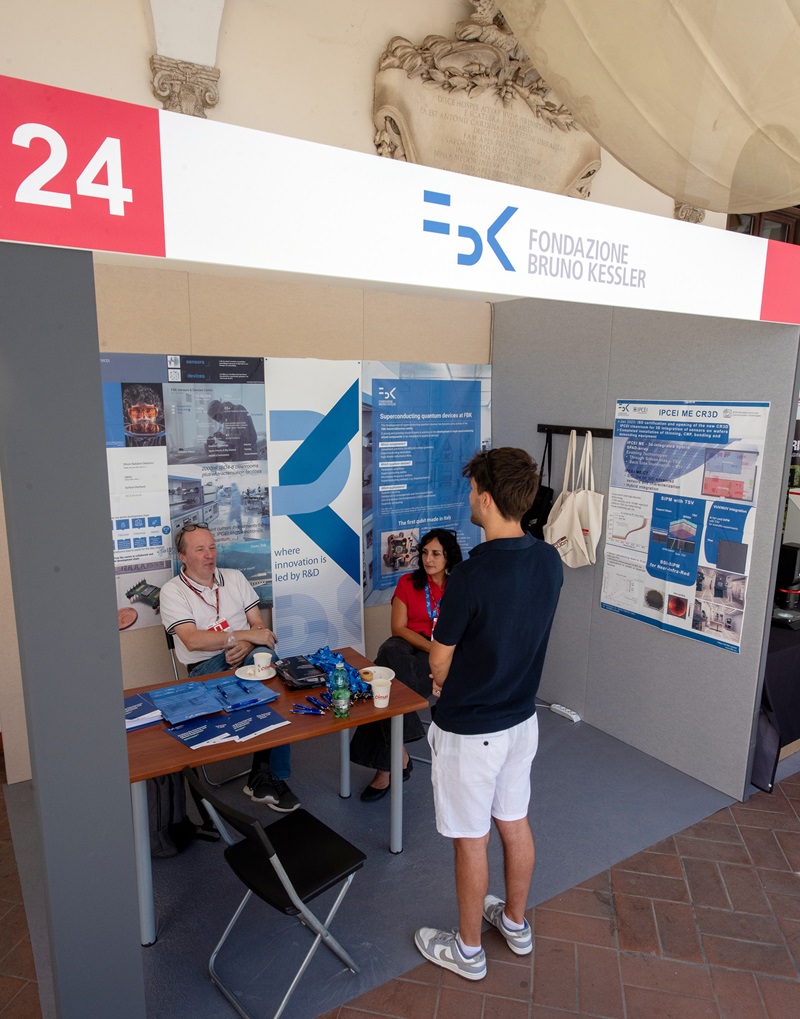
Between informational booths, philosophical plenaries, and scientific sessions, FBK chose to solidify its position as a key stakeholder in applied nanotechnology research while framing these technologies within a broader reflection on their social and cultural impact. In doing so, FBK demonstrated that responsible innovation cannot merely be a superficial marketing label, but must serve as a conditio sine qua non—a non-negotiable prerequisite—for modern research.
“Situated” nanotechnologies
We are now well aware that science and technology are not neutral tools; they are “situated”—geographically, politically, and culturally. Take facial recognition algorithms, for example, which have mostly been trained on Caucasian faces, making them more prone to errors when analyzing darker skin tones. Or consider wearable sensors used to measure capillary glucose levels: because they were trained on a predominantly light-skinned demographic, they misread data when higher melanin concentrations—darker skin—distorted the signal.
These examples confirm that the speed at which nanotechnologies are reshaping our society demands deeper questions: Who decides the direction of research? And, above all, how do we ensure innovation is “good, clean, and fair,” to quote Slow Food founder Carlo Petrini? Bringing social impact to a highly specialized event like NanoInnovation meant tearing down the wall between those who develop technology and those who will experience, enjoy, or endure its effects—all of us.
From talks to geopolitics and theater: event highlights
The path mapped out in Rome was deliberately multifaceted and interdisciplinary. The conference’s opening plenary was delivered by Mexican philosopher Manuel Delaflor, known for his Model-Dependent Realism (MDO) theory. Through MDO, Delaflor proposes a radical reassessment of how we conceive reality, knowledge, and our beliefs, arguing that we do not “discover” an objective, pre-existing external reality; rather, we create it through our physical, cognitive, and conceptual models. In other words, the “reality” accessible to human beings coincides with the structure of the model we use to interpret it.
To address gender bias in scientific research, we presented the play “Troppo bella per essere vera” (“Too Beautiful to Be True”), performed by the Trentino-based Pequod theater company, directed by Maura Pettoruso, and written by Massimiano Bucchi. Using theater to tell the story of gender contradictions and discrimination—which unfortunately still persist in scientific research—proved to be a powerful communication tool.
On September 16, the interdisciplinary panel “Geopolitics of Nanotechnologies” explored how technological sovereignty and the supply of critical raw materials dictate international political agendas and shape future nanotechnology developments.
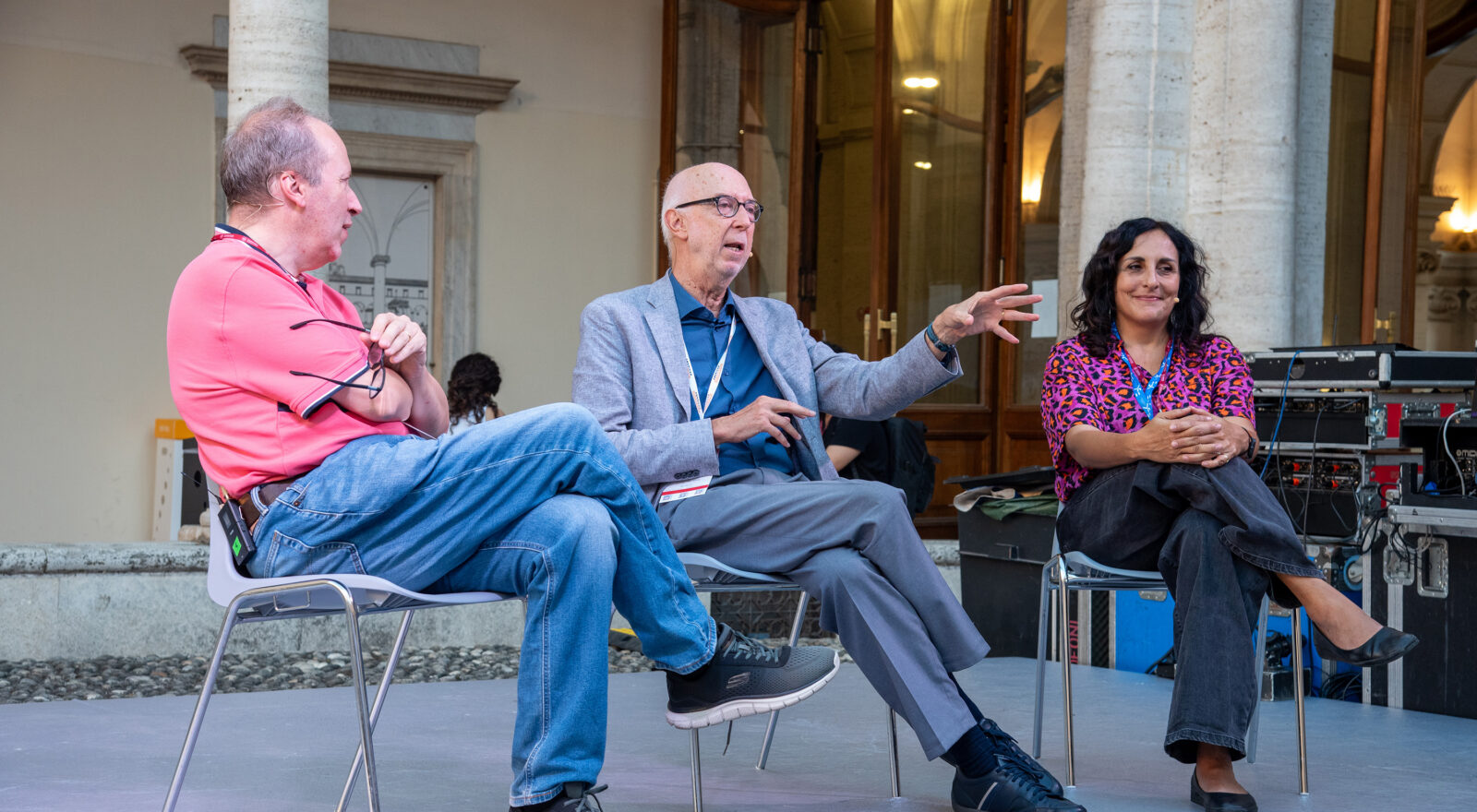
Closing out these sessions was a book presentation by Gianfranco Pacchioni, Professor Emeritus at the Polytechnic University of Milan. His book, Scienza chiara scienza scura (“Clear Science, Dark Science,” il Mulino, 2019), provided an excellent opportunity to discuss how public research is losing ground to the private sector, and why scientific knowledge must be protected so it continues to serve the public good. Throughout the event, the FBK booth served as both a visual and conceptual landmark, bridging these discussions with high-level scientific sessions dedicated to cutting-edge micro- and nanotechnologies.
Specifically, the Center for Sensors and Devices made significant contributions to the session “Advances in Sensors and Microfluidics for Environmental and Health Applications” with three presentations on innovative technologies for minimally invasive diagnostics, digital microfluidics, and biomolecule purification: Senior Researcher Leandro Lorenzelli opened the session by introducing an innovative smart sensing platform integrated into a smartphone. The system combines microneedle technology with minimally invasive blood testing for diagnostic applications. Researcher Andrea Adami provided an overview of the latest developments in digital microfluidics, highlighting its potential to transform technology by enabling the precise manipulation of minuscule liquid droplets. This offers greater miniaturization, superior flexibility, and reduced resource consumption. Special attention was paid to the growing integration of microfluidics with photonic sensing technologies, opening new avenues for ultra-sensitive analytical platforms. Researcher Cristina Potrich presented an automated, versatile microfluidic platform designed for the rapid isolation and purification of molecules. The system is effective at purifying antibiotic residues in food matrices like milk, as well as extracting clinically relevant biomarkers from biological fluids. It represents a promising step toward faster, more reliable analytical tools for early disease diagnosis and food quality monitoring.
Rounding out the scientific agenda, Researcher Lorenza Ferrario promoted FAIR Data principles in nanofabrication, paving the way for scientific data management that is truly Findable, Accessible, Interoperable, and Reusable—a crucial pillar for research collaboration across cleanrooms and for maximizing scientific impact in step with AI capabilities. Ferrario addressed these topics during her lecture, “Metadata, Controlled Vocabularies, PIDs,” for “The Learning Shift” school.
It is precisely within this synthesis—where excellence in nanotechnology research meets ethical responsibility and data transparency—that FBK reaffirms its leadership role: advancing science while remaining anchored to the human and social values that make it truly meaningful for our present and future.
FBK also helped bring one of the most delicate phases of technological innovation to center stage: the bridge connecting research results to real-world applications. This topic ran through the two-day workshop “From Low to High TRL: Technological Challenges and System Evolution Across Research and Industry,” co-organized by FBK and dedicated to the nanotechnology “innovation journey.”
The workshop brought together researchers, industry leaders, policymakers, and finance professionals to analyze both successes and failures in technology transfer from the lab to the market. Attendees tackled technical, systemic, and regulatory hurdles across sectors ranging from energy and electronics to sensing and biomedical applications. In this context, Francesco Matteucci, Senior Advisor on Innovation at FBK and a workshop committee member, contributed significantly to discussions on commercializing research outcomes and establishing the mechanisms needed to turn scientific innovation into technological, economic, and social value.
The author/s
Related articles