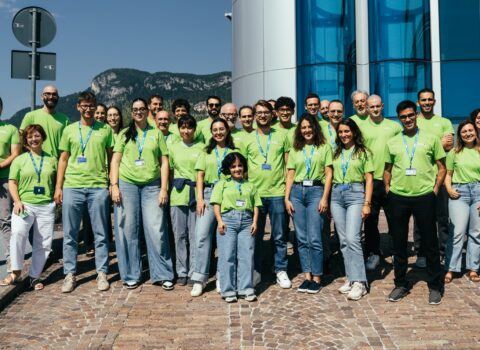
FBK hosts doctoral students from the Max Planck Institute
October 21, 2026
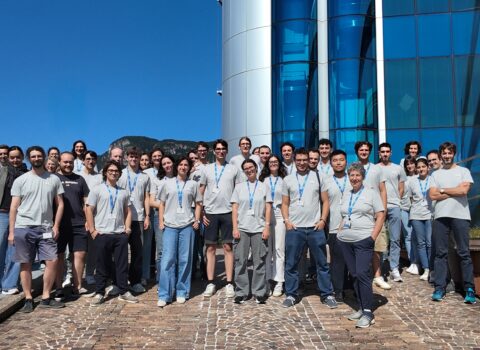
Cutting-edge science and international academic networks: On October 16, the Foundation hosted a delegation of 30 doctoral students from two prestigious German research facilities—the Max Planck Institute for Intelligent Systems (MPI-IS) and the Max Planck Institute for Solid State Research (MPI-FKF).
While MPI-IS focuses on fields such as artificial intelligence, machine learning, robotics, and smart materials, MPI-FKF concentrates on quantum physics, nanochemistry, and solid-state spectroscopy. The visit offered an opportunity to strengthen international academic networks and promote scientific exchange, highlighting FBK’s leadership in pioneering fields like quantum technologies and artificial intelligence.
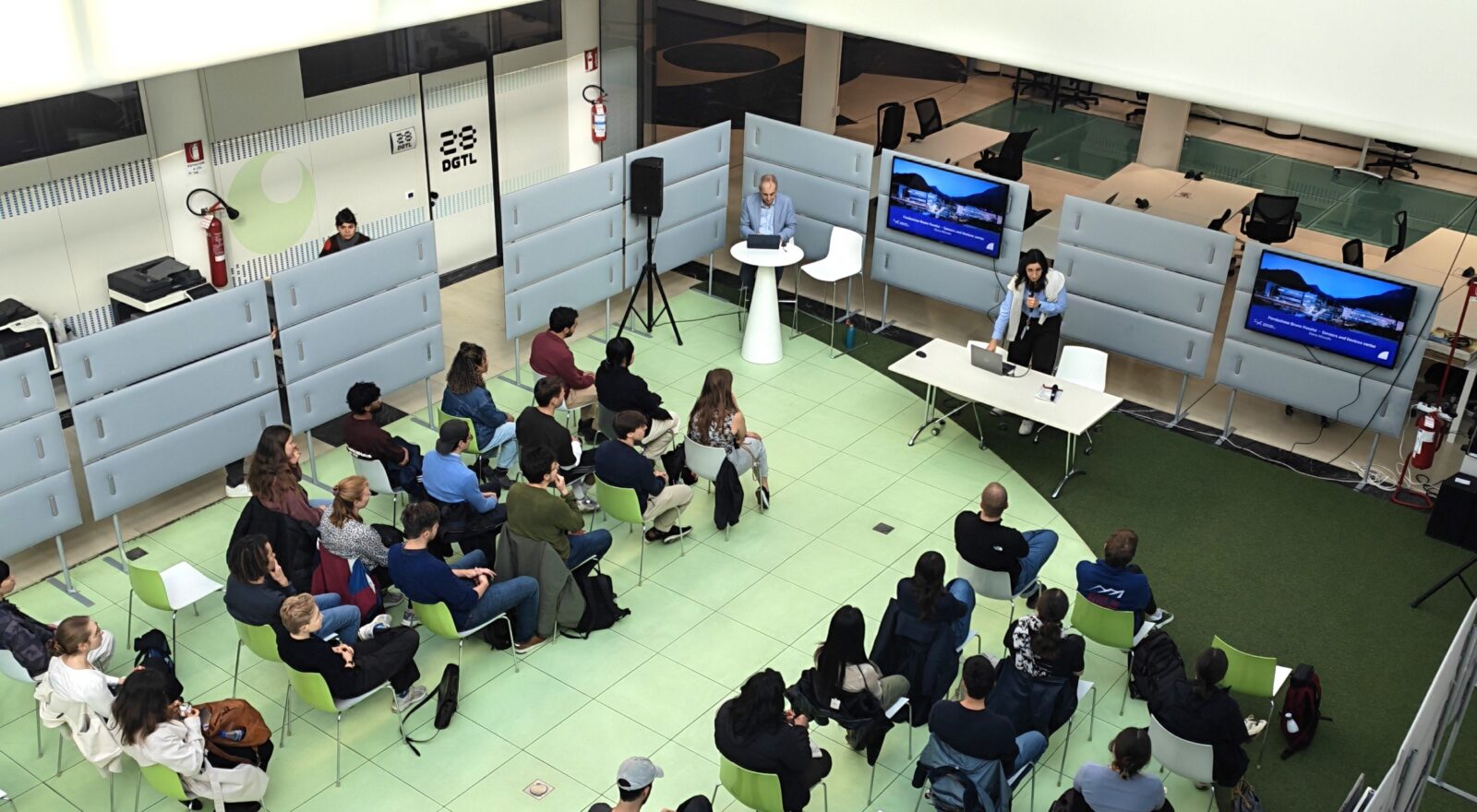
Elena Missale, a researcher in the MTSD Unit at the FBK Center for Sensors & Devices, opened the morning session. In her presentation, she described the center’s hybrid model, which combines basic research, applied prototyping, and small-scale production on silicon, silicon carbide, and diamond substrates. Missale explored technologies for next-generation computing and sensing (quantum technologies), explaining how tiny, controlled imperfections—known as color centers, such as NV, GeV, and SiV centers—are created and studied inside diamonds. These nanoscopic defects are deliberately introduced into the diamond’s structure; when illuminated, they emit light signals that can serve as quantum bits (the building blocks of future computers) or ultra-precise sensors.
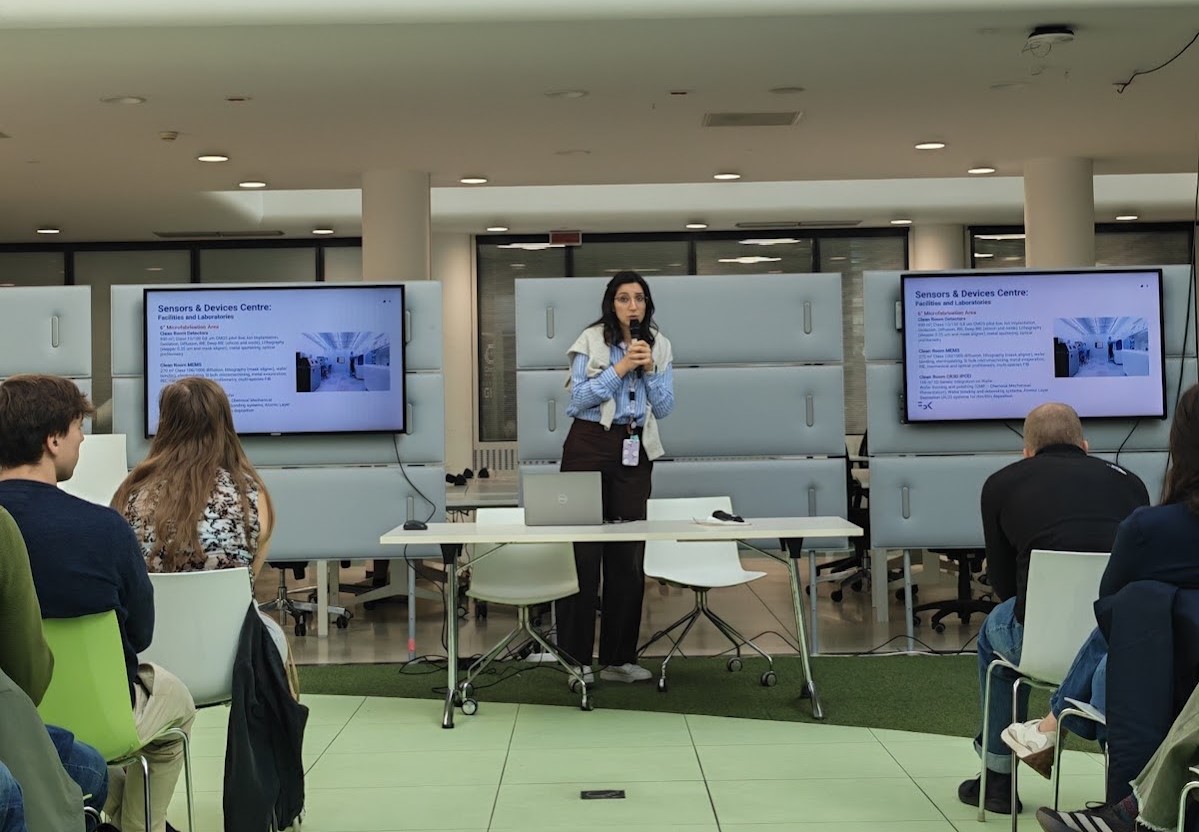
To achieve this, ion beams inject these defects into the diamond with surgical precision. The diamond is then heated to extreme temperatures to repair its crystal structure and settle the new atoms into place, activating the color centers.
Missale also demonstrated how shaping the diamond into microscopic columns (nanopillars) improves the emission of the produced light.
The presentation strongly impressed the young researchers, both for the advanced techniques shown and for the center’s ultra-high-purity laboratory infrastructure. Its cleanroom air is 99.999% free of dust and microscopic impurities, which is essential for handling features just a few billionths of a meter across without damaging them.

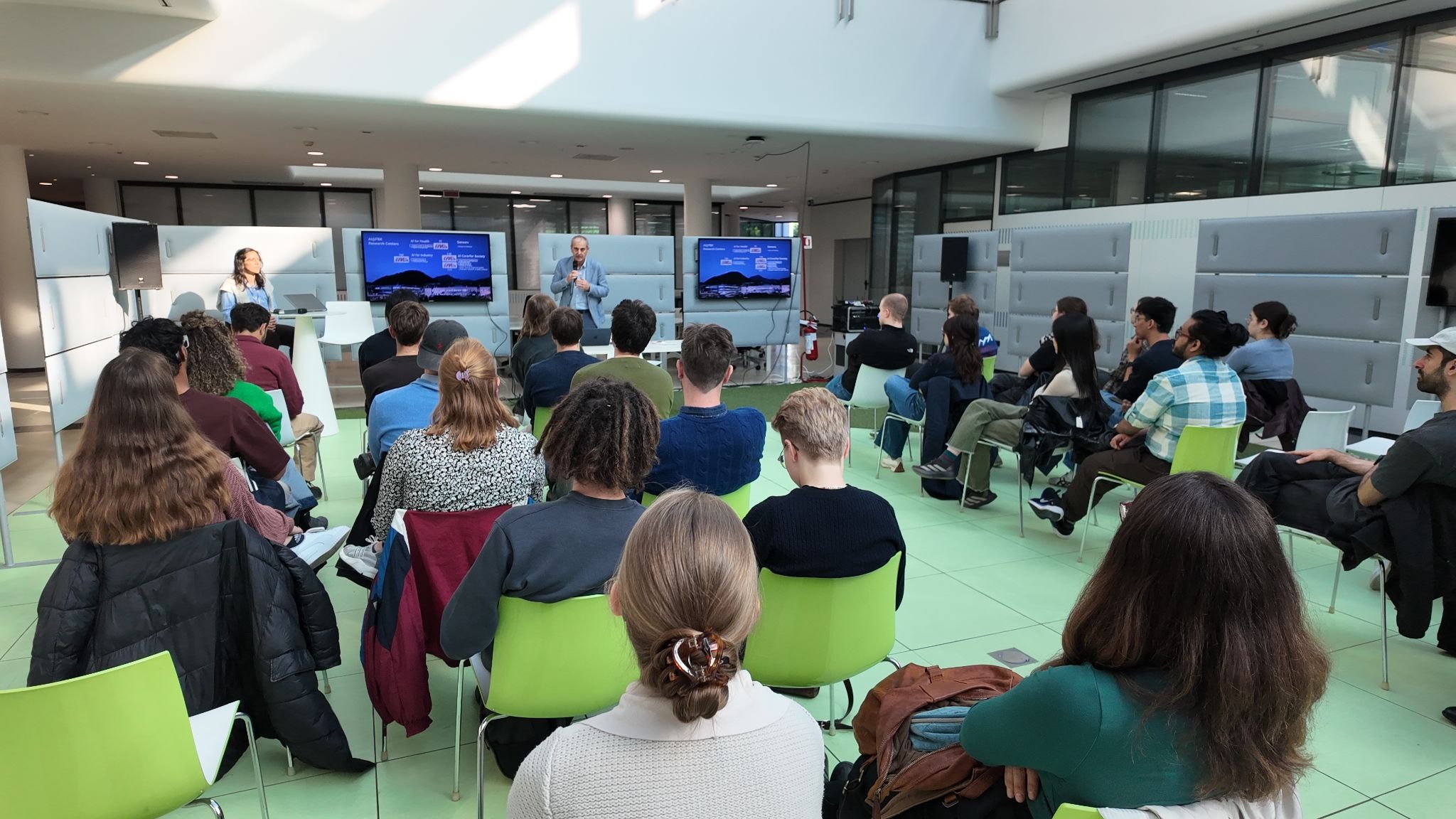
Next, Prof. Alessandro Sperduti, Director of FBK’s Center for Augmented Intelligence, presented an overview of the foundation’s AI ecosystem.
Professor Sperduti outlined FBK’s AI research areas, ranging from deep learning to neuro-symbolic architectures that combine knowledge representation with neural networks. Specifically, these areas include Neuroinformatics, Process and Data Intelligence, NLP, Language and Dialogue Technology, Data and Knowledge Management, Mobile and Social Computing, Speech Tech, Intelligent Interfaces and Interaction, Deep Visual Learning and Technologies, AI for Industry and Physics, and Digital Health and Wellbeing.
The partnerships and alliance projects presented also underscored FBK’s strong European presence through its role in major consortia. These include ALT EDIC for large language models, the IPCEI initiative for smart cloud and edge infrastructure, the Italia AI Factory (which leverages supercomputing resources for strategic sectors like Agritech, Cybersecurity, Earth Science, and Manufacturing), and the TEF-Health initiative for digital health. Sperduti briefly highlighted the real-world impact of these solutions, noting,
“The artificial intelligence models of the future will be increasingly compact, efficient, highly specialized, and capable of continuous learning.”
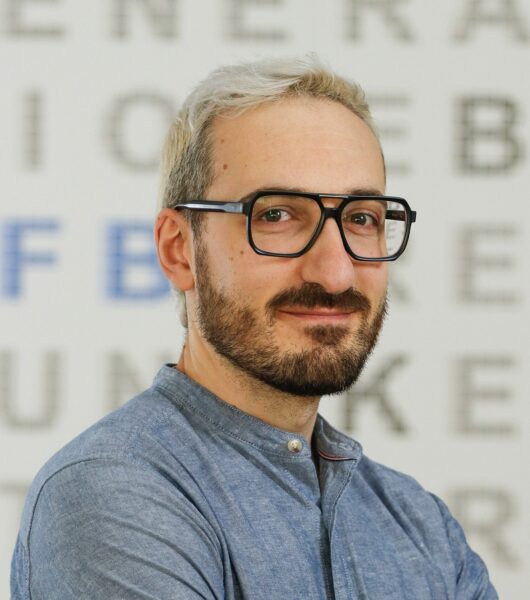
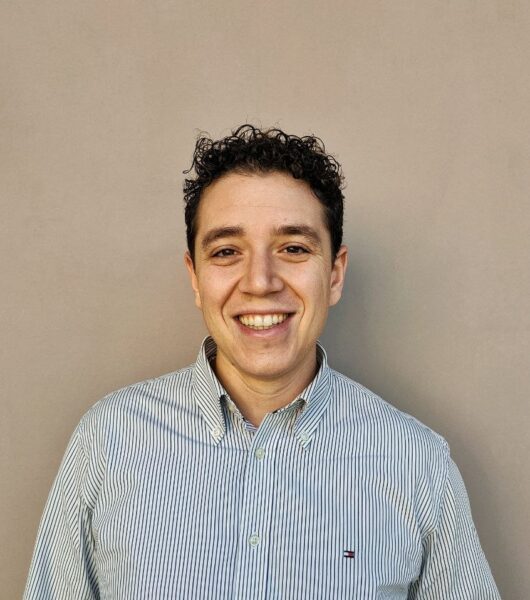
The morning wrapped up with tours of the analytical characterization laboratories and the microfabrication cleanroom. Guided by FBK Center for Sensors and Devices research staff—Elena Missale (MTSD Unit), along with Alessandro Cian and Elia Scattolo (both from the MNF Unit)—the PhD students split into two groups to examine the instruments powering the center’s research. This hands-on experience demonstrated the true value of such visits, which foster international academic networks and synergies while reinforcing FBK’s central role in the European scientific community.
The author/s
-
 Alessandro Sperduti
Direttore del Centro Augmented Intelligence - FBK
MORE INFO -
 Elena Missale
Ricercatrice Centro Sensors & Devices | Unità Materials and Topologies for Sensors and Devices (MTSD)
MORE INFO -
 Alessandro Cian
Researcher at the Micro- and Nanofabrication (MNF) Facility of the Center for Sensors and Devices at FBK.
MORE INFO -
 Elia Scattolo
Researcher in the NEXT Unit of the Center for Sensors and DevicesFBK at FBK.
MORE INFO
Related articles