FBK in the “World’s Top 2% Scientists 2025”
November 10, 2025
Fondazione Bruno Kessler remains among the most influential Italian research institutions at the international level in the ranking prepared by Stanford University and published by Elsevier. The ranking, based on Scopus data and considered a global reference, identifies the top 2% of the most cited researchers each year by disciplinary area. Francesca Bovolo (FBK) is one of them: in the interview, she recounts her work, reflecting on her most significant experiences.
Once again this year, Fondazione Bruno Kessler stands out with several prominent names in the “World’s Top 2% Scientists” ranking: Fabio Remondino, founder and head of the 3DOM (3D Optical Metrology) Unit at the Center for Digital Industry; Alessandro Cimatti, director of the Center for Digital Industry; and Francesca Bovolo, founder and head of the Remote Sensing for Digital Earth Unit at the Center for Digital Society*. Also among them are researchers from the European Center for Theoretical Studies in Nuclear Physics and Related Areas (ECT*): Bira van Kolck, Daniele Binosi and Giovanni Garberoglio, who distinguished themselves both for the impact of their research in the year under review, and Maurizio Dapor together with Bira van Kolck and Daniele Binosi, for the overall impact of their careers.
Fabio Remondino, head of FBK’s 3DOM Unit, is among the most cited researchers at Fondazione Bruno Kessler and comments on the result: “The ranking has international significance, given the many countries, universities, and research centers involved, and citations can now be seen as a kind of ‘business card’ for researchers. Being included (or aspiring to be) can certainly motivate individuals and institutions to improve their research, publication, and dissemination strategies, as well as to ensure the quality of publications and scientific collaborations.” The evaluation criteria, Remondino points out, are robust but still quantitative: they are a significant indicator of the influence of a work or a person, but they only indirectly measure the scope of innovation or the actual social impact of research. It is also always important to report and consider these indices in relation to the disciplinary sector. “Visibility and citations are important aspects of research,” continues Remondino, “but not the only measure of evaluation to determine the excellence or social relevance of an institution or its researchers. Certainly, FBK has once again proven to be well represented in the international ranking, and this is extremely positive, but I would like to stress that there are many talented and outstanding researchers also outside the ranking.”
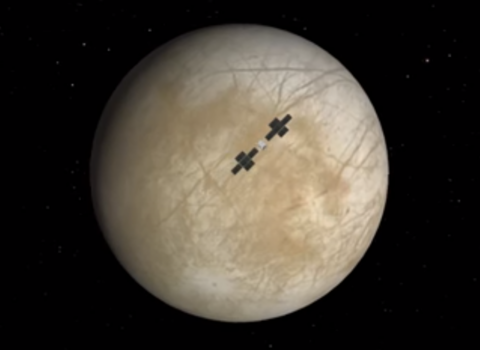
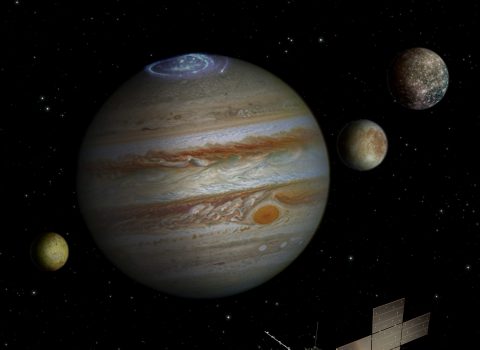
The only woman on the podium, Francesca Bovolo, also commented on the results. She is currently head of the research unit that analyzes images collected by sensors for observing the Earth and other planets, developing advanced methodologies to process images and extract information for different purposes. Under her leadership, the FBK unit is also involved in two European Space Agency missions: JUICE, dedicated to Jupiter and its icy moons, and EnVision, focused on Venus. A trajectory that combines basic research, practical applications, and international collaborations.
Francesca, what is it like to be among the most cited researchers internationally within FBK? And what are the main factors that determine the number of citations?
It was a pleasant surprise and also a responsibility. I don’t think about citations when we carry out our research activities with the team, but rather about developing solid methods and tools that serve the scientific community and, possibly, society.
I believe there are several factors that account for the number of citations: first and foremost, the quality and consistency of the work, which pay off over time. Then come international collaborations: working within a network of space agencies and universities around the world enhances both the quality and visibility of the results. Even frontier topics—such as multitemporal analysis or the fusion of data acquired from different sensors—attract a lot of attention because they are increasingly relevant and crucial for understanding the world around us and the changes affecting it.
Your work focuses on processing remotely sensed satellite images, multitemporal analysis, radar and passive sensors. Can you explain in simple terms the main challenges and applications in this field?
Simply put, it involves observing the Earth — primarily, but also other planets — through “special eyes,” using various types of imaging sensors, such as optical and radar sensors. These instruments allow us to collect images of the Earth’s surface from above and with different characteristics—and, when mounted on satellites, to do so regularly over time. The challenge lies in interpreting the enormous amount of data coming from these sensors and integrating them to understand what changes, where, and possibly why.
The applications are numerous, including forest and urban monitoring, land cover mapping, glacier and cryosphere studies, and the analysis of extreme events such as wildfires and floods. In all these cases, our goal is to create models and maps that can be used by administrations, organizations, companies, or other researchers to make informed decisions, improve prevention, or enhance land management.
The unit is involved in two major European Space Agency missions, JUICE and EnVision. What challenges does working on planetary exploration projects involve?
Space missions always attract great media attention; they are fascinating. JUICE, launched two and a half years ago, will study the Jovian system and its icy moons: in particular, we will analyze data from the RIME radar instrument (funded by the Italian Space Agency and NASA), capable of probing subsurface layers. The Jupiter data has not yet arrived; at the moment, we are working with similar data from Mars and Earth to prepare ourselves. EnVision is making good progress. The context is highly stimulating and involves multiple skills.
Looking at your career, which experiences were decisive in reaching your current position?
I have always tried to grow step by step, with patience and perseverance. Certainly, collaborations with the European and Italian Space Agencies have been essential, especially the Climate Change Initiative program: it inspired me and made me realize how much research in remote sensing can have a concrete impact on climate analysis and environmental policies.
Cross-disciplinary exchange and collaboration with colleagues remain essential. I have been fortunate to work with people who have trusted me, offered constant encouragement and opportunities for dialogue, and to find collaborators who have carried out high-quality research.
What is the current state of research in this field?
I think we are entering a phase of significant maturity. For the past ten years, satellite data have become increasingly abundant and accessible, and artificial intelligence and cloud computing are transforming the way we process them. It is a relatively young research field (the first Earth observation satellites date back to the 1970s), but opportunities are growing: new skills, common standards, and strong attention to result validation will be needed. The most promising areas certainly concern the environment and climate: monitoring ice, water, forests, and urban areas.
What advice would you give to a young person who wants to pursue research in your field?
I would say: cultivate curiosity and patience. Research is made up of attempts, failures, and moments when you have to stop and understand how to improve, sometimes even redefining your goals. It takes courage and determination because things don’t always go as planned, but every mistake is an opportunity to learn. And above all, never lose sight of the impact of your choices. The most meaningful research is the one that, one day, becomes useful to people’s lives.
The author/s
-
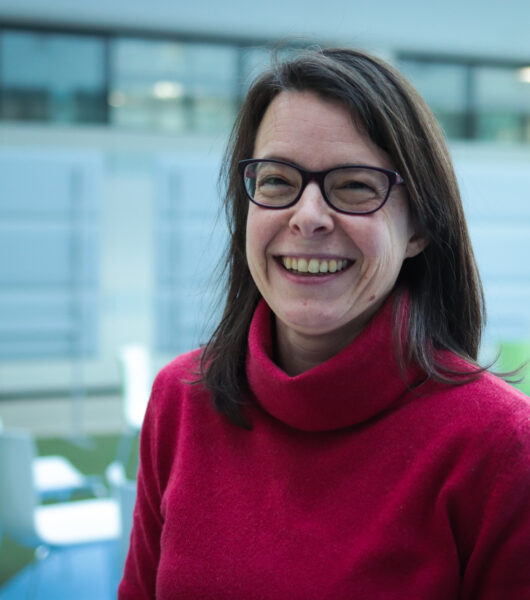 Francesca Bovolo
FBK reFrancesca Bovolo is the founder and the head of the Remote Sensing for Digital Earth unit at Fondazione Bruno Kessler (FBK), Trento, Italy.
MORE INFO -
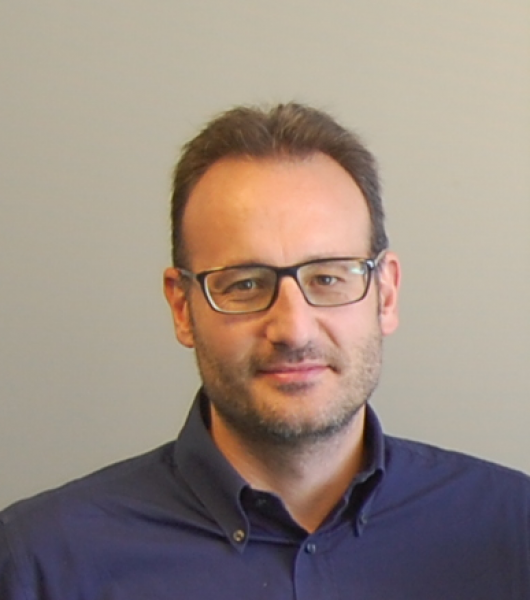 Fabio Remondino
Head of Unit 3D Optical Metrology (3DOM), Digital Industry Center -FBK
MORE INFO -
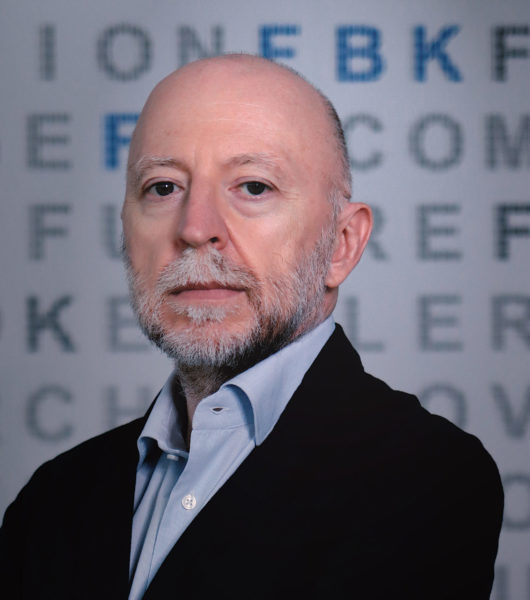 Alessandro Cimatti
Director Digital Industry Center, FBK
MORE INFO -
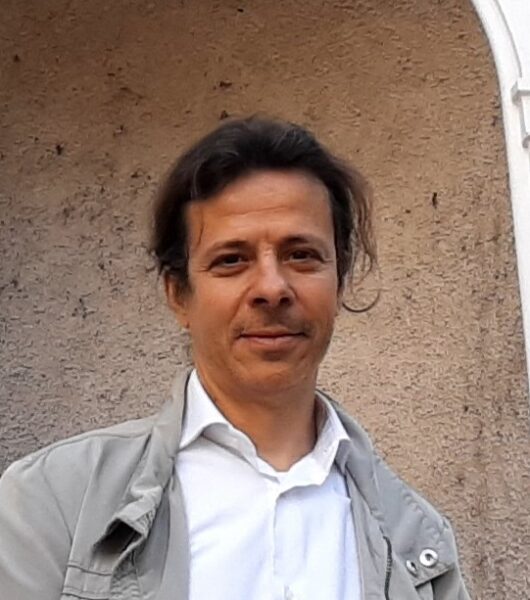 Daniele Binosi
Ricercatore senior in FBK-ECT*
MORE INFO -
 Giovanni Garberoglio
ECT*- LISC Senior Researcher
MORE INFO