Mauro Dragoni: growing at FBK, building research, bringing AI to healthcare
June 22, 2026
From his early research projects at FBK to leading a unit: a career path built within the Foundation. At the heart of it all is artificial intelligence for healthcare, encompassing major national programs, collaborations with companies, and engagement with the scientific community.
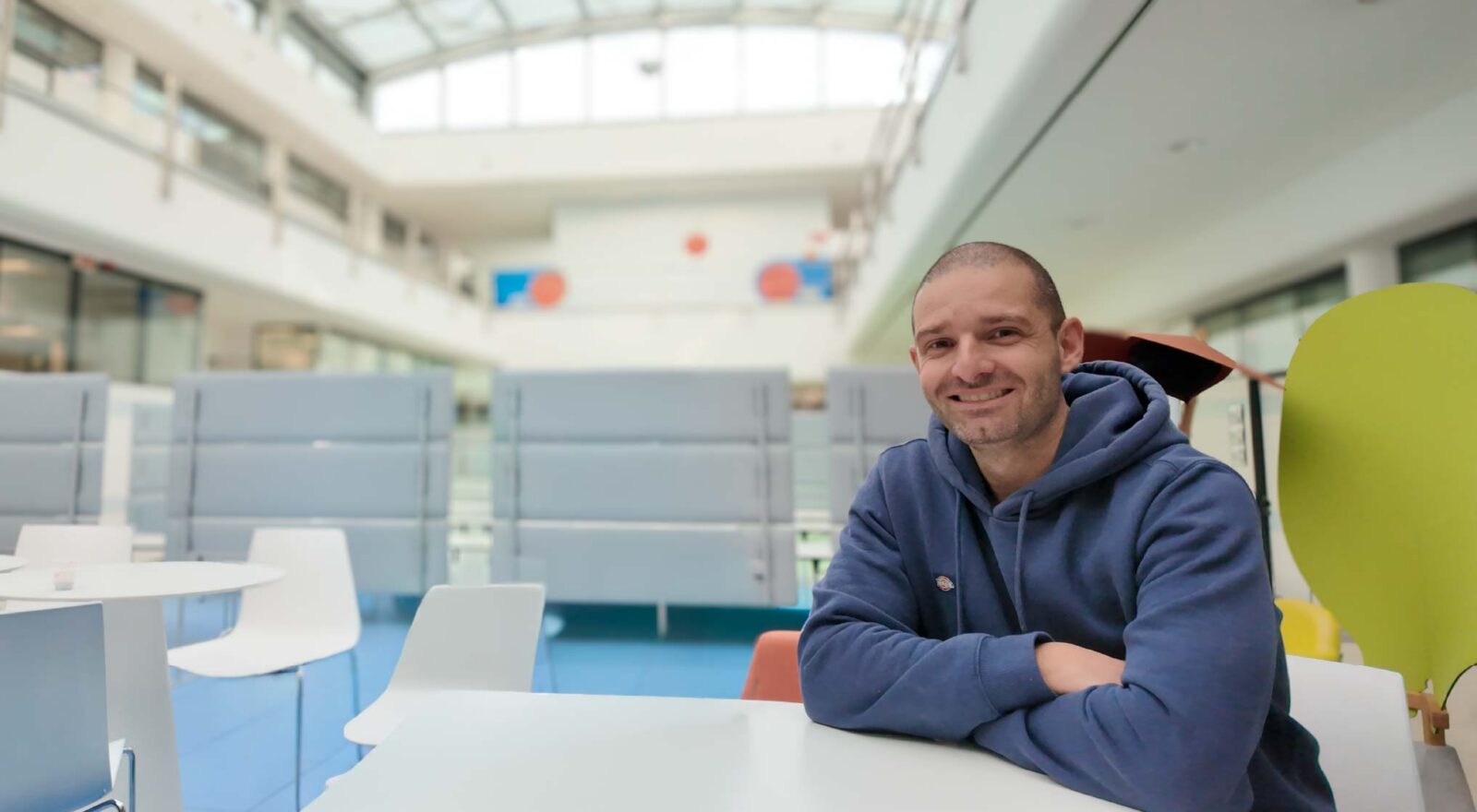
After earning his PhD from the University of Milan, Dragoni joined Fondazione Bruno Kessler, where he progressed from researcher to head of a research unit. Today, he is a Senior Researcher and leads the Intelligent Digital Agents (IDA) unit at the Center for Digital Health and Wellbeing.
His career has developed alongside Italy’s major national AI initiatives and an increasingly impact-driven approach to research—applying AI to healthcare, collaborating with industry and public administration, and supporting education. More recently, he has also expanded his contribution to the national scientific community by joining the Board of Directors of AIxIA.
Let’s start at the beginning. Your career began at FBK. What kind of growth has it been?
It has been a gradual and very solid progression. I had the opportunity to develop my career here, moving from research to increasingly complex projects. Over time, I also began coordinating activities and teams. The creation of my unit in 2023 was a natural outcome of that journey.
What does your unit focus on today?
We work on artificial intelligence applied to digital health. It’s a field that requires integrating different areas of expertise while addressing real-world challenges. We have been heavily involved in projects funded through Italy’s National Recovery and Resilience Plan (PNRR). We participated in the Extended Partnership on Artificial Intelligence, Future Artificial Intelligence Research (FAIR), where FBK coordinated the Integrative AI Spoke, promoting an interdisciplinary approach to integrative artificial intelligence. We have also contributed to other initiatives, including iNEST, D34Health, and D-HEAL. Alongside these large-scale programs, we also work on more focused competitive projects. One I’d particularly like to mention is a two-year, €200,000 grant from Compagnia di San Paolo for AI in healthcare. The project was selected from 15 proposals submitted nationwide, and FBK coordinates one of its subprojects.
How important is your relationship with companies and the healthcare system?
It’s extremely important. In a field like this, research has to remain closely aligned with real needs. We carry out several activities aimed at supporting companies, and training is another important area. For example, through FormLab we work directly with the local healthcare authority. This kind of interaction is essential for developing solutions that can actually be adopted.
Your unit was established only recently but is already very active. How do you build a research group today?
You need a clear vision, but also the ability to seize opportunities. The current landscape, especially with the national programs, has certainly accelerated many developments. That said, the real challenge is building a team that can thrive over the long term—with complementary expertise, but above all with the ability to work well together.
Alongside your research, you’ve recently joined the AIxIA Board of Directors.
It’s a new experience for me, but a very interesting one. AIxIA is a longstanding organization, founded in 1988, and today it is Italy’s largest association dedicated to artificial intelligence, bringing together universities, research centers, and companies. FBK has always played an important role within the association, so in many ways this is also a continuation of that tradition.
What are your priorities for your first term on the AIxIA Board?
My priorities are very concrete. First, I want to strengthen the association’s contribution to Italy’s economic system. AIxIA should increasingly serve as a bridge between those who conduct research and those who apply it, whether in industry or public administration. The second priority is networking—both among members, who bring a wide range of expertise, and with other professional associations, so we can collaborate on national and international funding opportunities. Another key issue is AI literacy. It’s essential to help companies and public administrations understand what artificial intelligence can realistically achieve, as well as its limitations. Raising the overall level of knowledge is a necessary condition for responsible and informed adoption.
Looking at Italy as a whole, what is the biggest challenge for AI today?
That challenge is precisely turning knowledge into widespread capability. Developing advanced technologies is not enough; we also need to create the conditions for people to understand them and use them effectively. That requires both research and strong networks.
Getting back to FBK: What makes a path like yours possible?
The opportunity to grow over time in an environment that combines high-level research with a strong focus on impact. FBK has a long tradition in artificial intelligence and applied research, and that translates into concrete opportunities: major projects, collaborations, and room for professional growth.
If you had to summarize the common thread running through your career, what would it be?
I would say continuity and perseverance, along with a willingness to gradually broaden my horizons. From my PhD to leading a research unit, and now contributing to the scientific community, these are different stages of the same journey. The goal has always been to develop useful solutions and build the connections that allow research to make a real impact.
The author/s
-
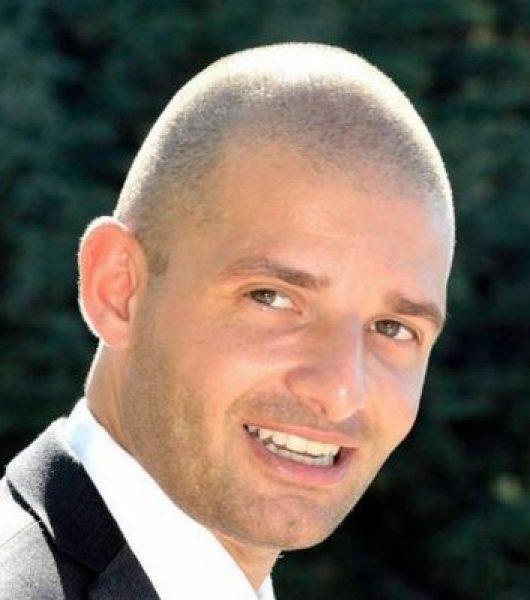 Mauro Dragoni
RESEARCHER at PROCESS & DATA INTELLIGENCE research Unit. Research interests: Computational Intelligence; Information Retrieval; Knowledge Management and Semantic Technologies; Sentiment Analysis and Opinion Mining.
MORE INFO
Related articles