
November 1966: The flood in Trentino
November 3, 2026
Sixty years after the flood of November 1966, we remember those tragic days that devastated Trentino and left an indelible mark on the region's memory.
Between November 3 and 5, 1966, prolonged and heavy rains lashed central and northern Italy, causing severe damage, especially in Florence, but also in Trentino. Heavy rain had already fallen the previous month, leaving waterways overflowing. Because of rising average temperatures, some of the early snowpack was already melting.
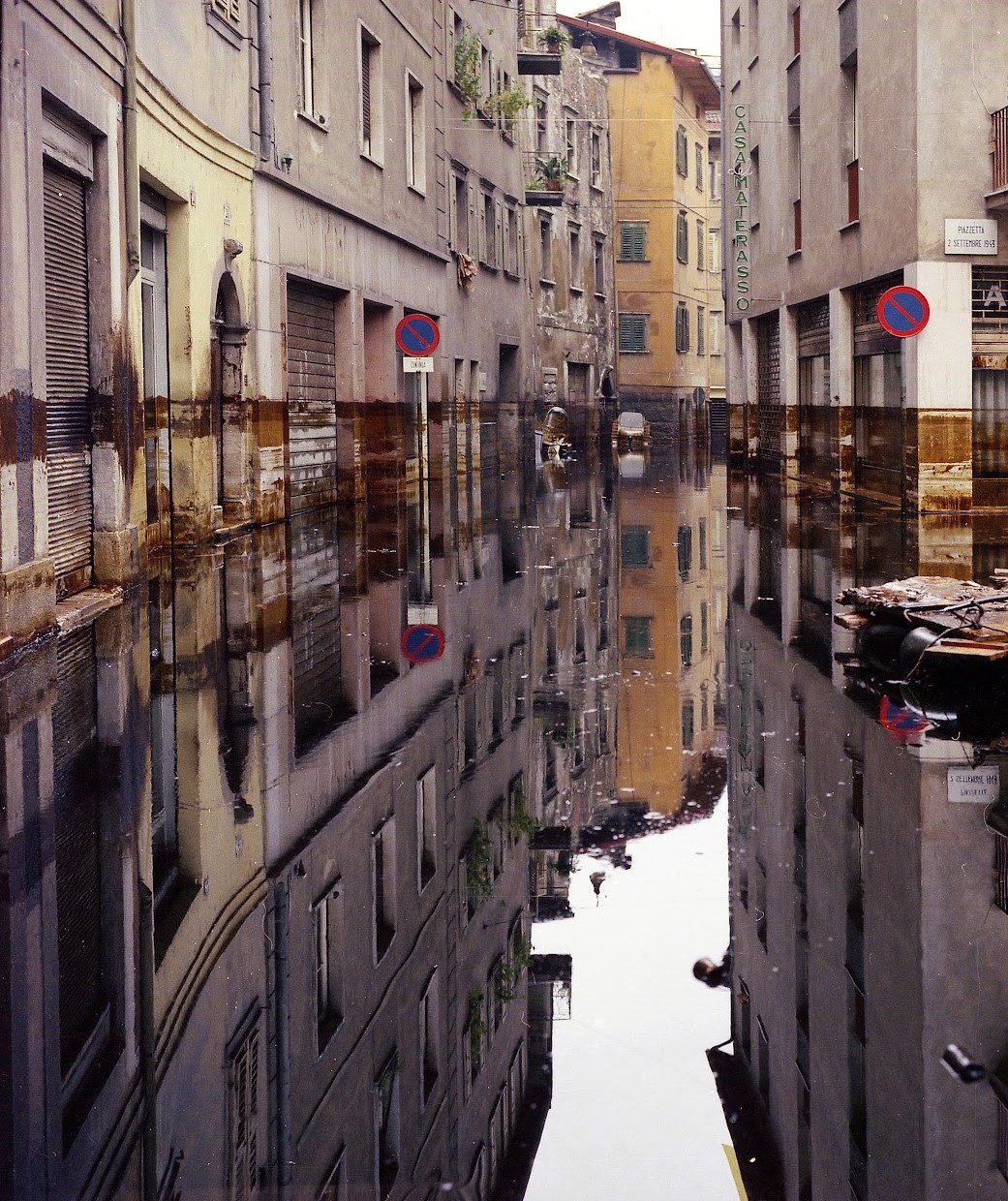
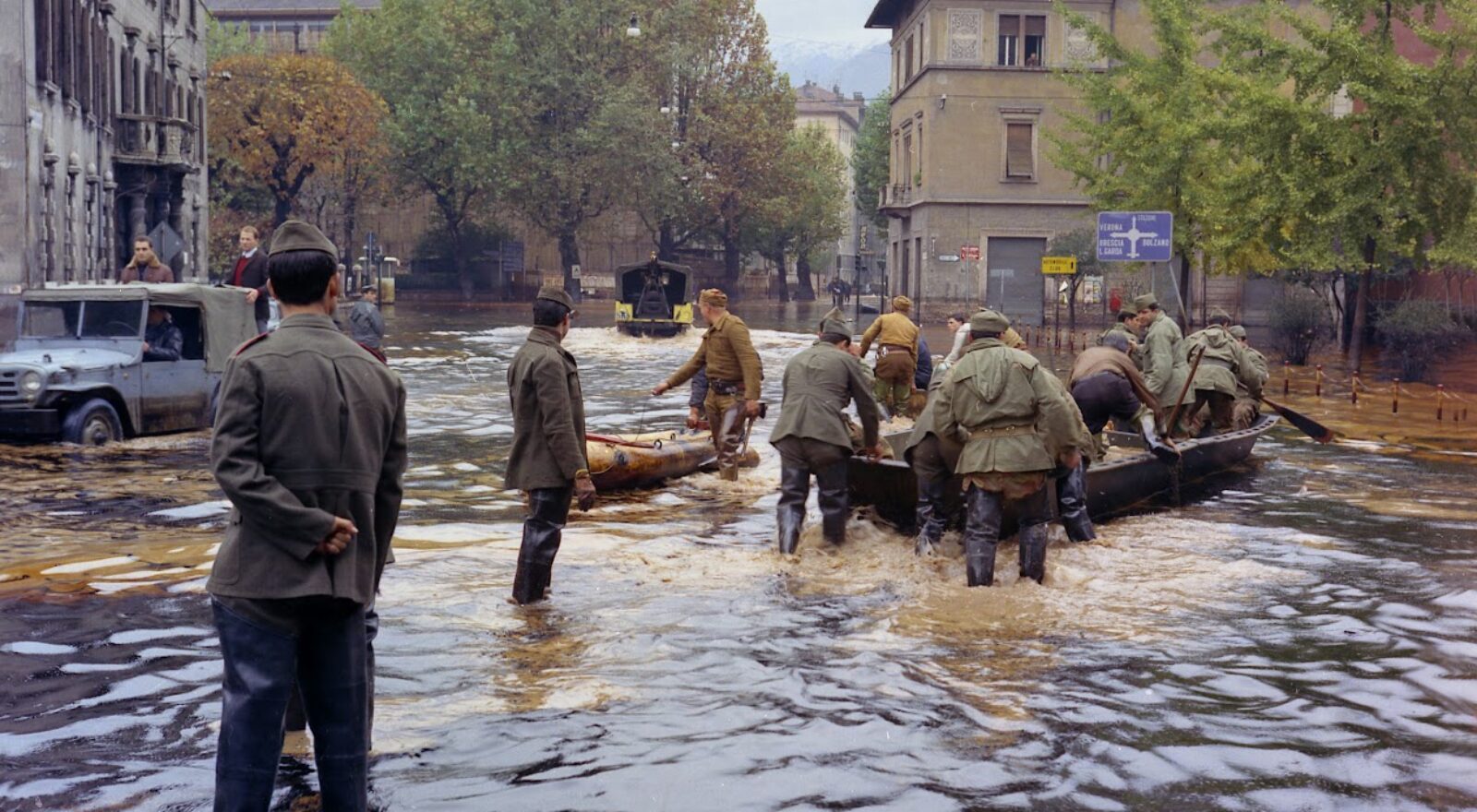
In Trento, 74.5 mm of rain fell on Friday, November 4 alone; in just a few days, more rain fell than typically falls in an entire month. The Adige River breached the embankment at Trento Nord (Roncafort) on the night of November 4–5. In that industrial area, floodwaters came into contact with SLOI’s sodium barrels, triggering explosions and fires. In the city proper, the water primarily flooded lower-lying areas along the old riverbed.
Until the mid-19th century, the Adige did not flow where it does today. The river formed a wide bend to the east, reaching almost to the walls of Buonconsiglio Castle and running along what are now Via Torre Verde and Via Torre Vanga. In 1858, the riverbed was moved westward and straightened to protect the city from flooding and to make room for the new Brenner Railway.
The entire Trentino region was affected by the flood, but the eastern area was hit hardest, particularly Val di Cembra, Bassa Valsugana, and above all, Primiero.
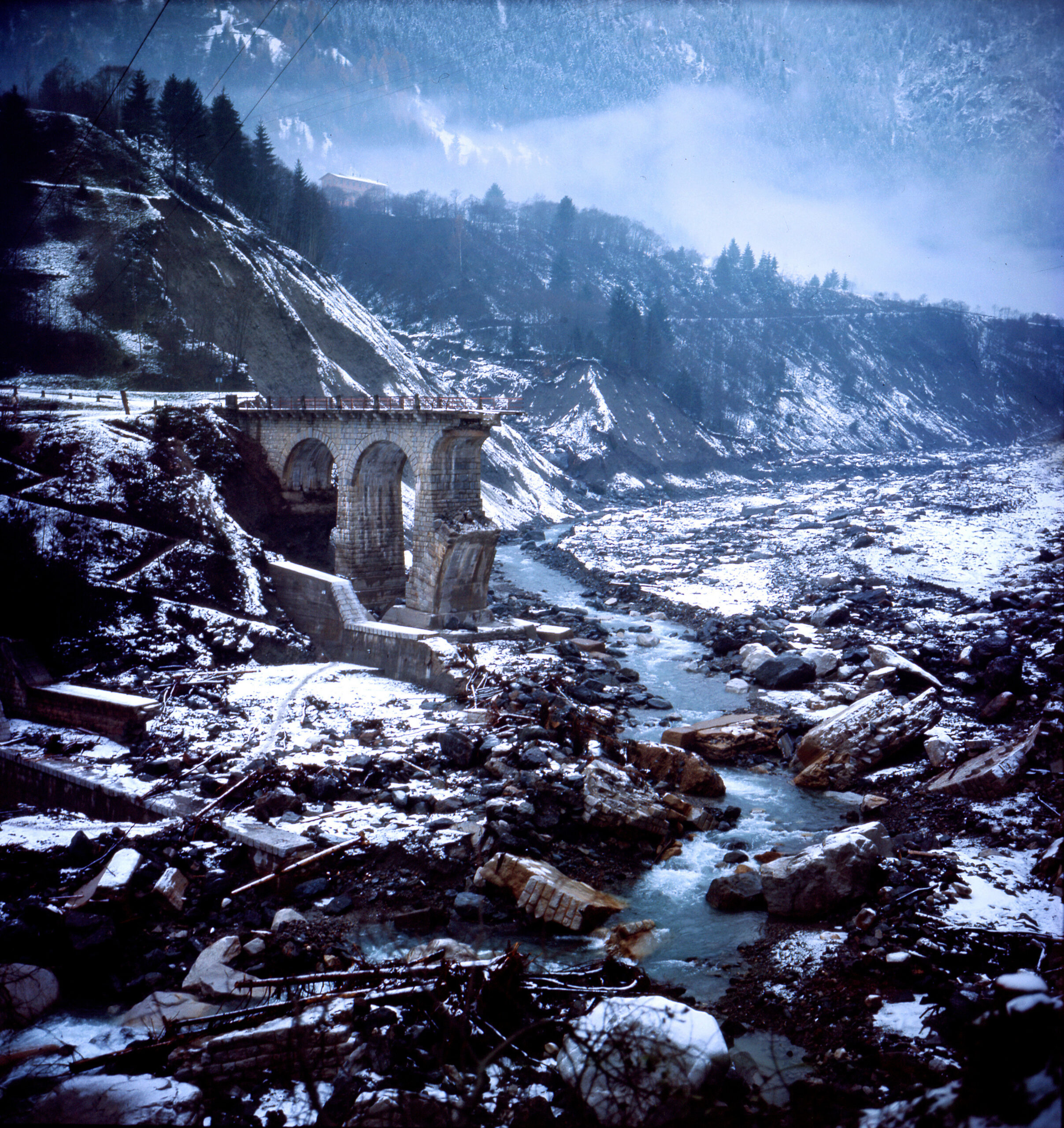
Imer, Valle del Primiero
A total of 22 people died, and nearly 500 lost their homes. Damages amounted to tens of billions of lire..
The tragedy was immense, but so was the immediate relief effort mounted to contain the worst damage. The Autonomous Province was led by Bruno Kessler, President of the Provincial Council since 1960. A state of emergency was declared as early as the afternoon of November 4, and the entire provincial administration was mobilized. Emergency operations centers were set up right away under a designated official to ensure rapid decision-making and a local presence in each affected basin. Priority went to restoring communication lines and connections between valleys that had been cut off from the capital by landslides and collapsed bridges.
Kessler himself stepped in to help from the start, particularly in Primiero, where he spent days alongside local residents and rescue workers. During years of research, I even came across a private photo of Kessler wearing knee-high boots and holding a shovel—an image I have not seen in any of the numerous publications on the flood.
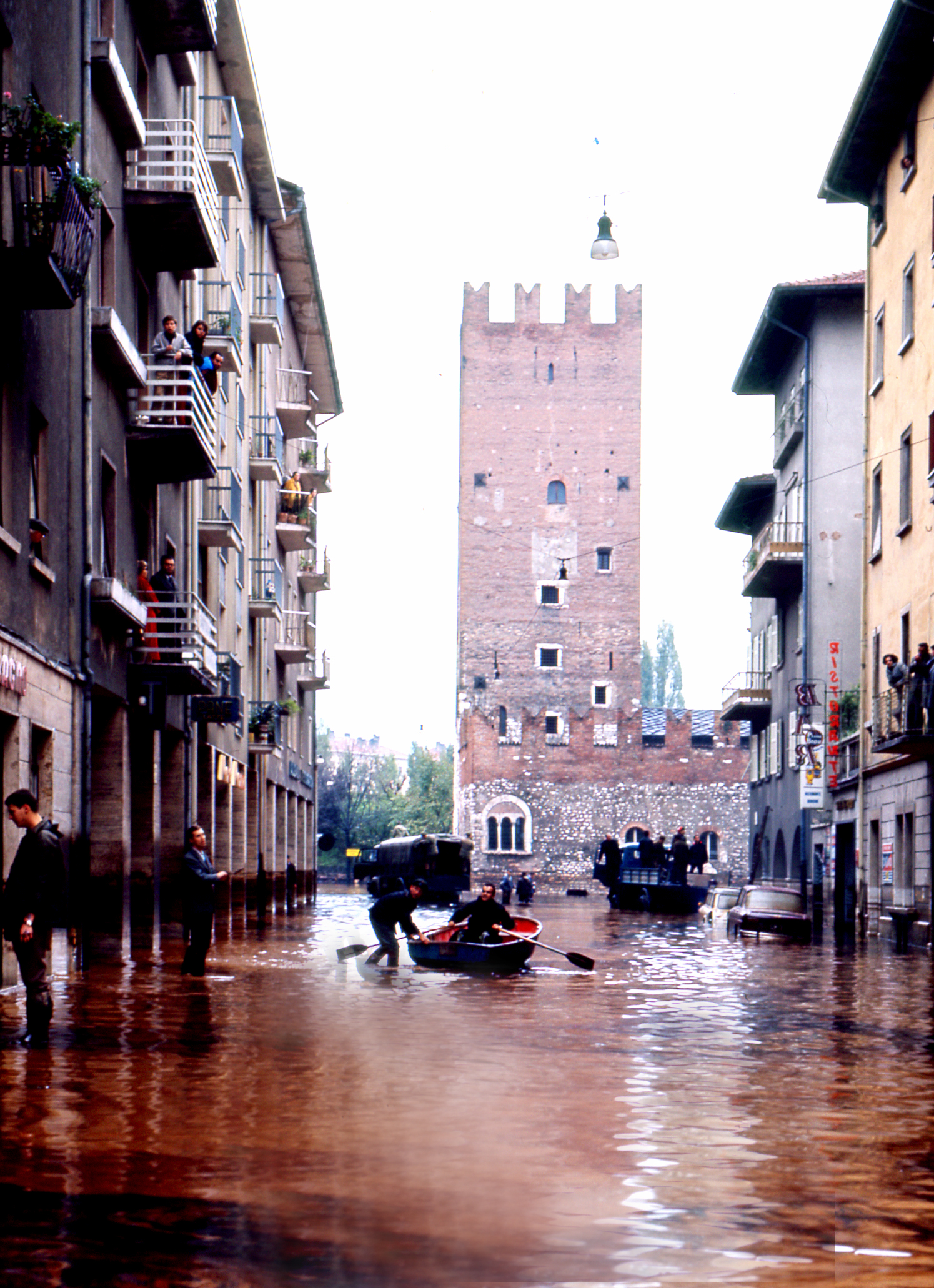
From the beginning, the story of the flood was told through pictures. Photographs from those days quickly began to circulate, including in special publications produced by the Province and the newspaper l’Adige. Even though its printing presses were flooded on the night of November 5, the newspaper still managed to publish a reduced edition under the headline “Trento è un’isola” (“Trento is an island”), featuring a photo of the flooded railway yard on Via Filzi in northern Trento.
The most famous images from those days were taken by Flavio Faganello, but many other photographers also documented the events, fully aware that they were capturing a historic moment.
Memories and images from that period were gathered immediately, and many were used in later years to retell the story of the disaster. In 2016, for example, the Trento Historical Museum Foundation drew on photos and videos donated by local citizens for its exhibition “November 1966.”
These materials, often stored for years in private archives or closets, serve as invaluable sources for historians. Though frequently hidden and lacking contextual details, they remain essential for reconstructing history through the eyes of everyday people.
Sandro Leonardelli (1931–2010) was one of those photographers. A postal worker by trade, he pursued photography in his spare time, using his camera to capture framing, geometry, and above all, human portraits. During the flood, he walked through the streets of downtown Trento that were hardest hit by the water, from Piazza Sanzio to Via Prepositura, and from Torre Vanga to Via Santa Margherita.
Note: Fifteen of these images are on display in a small exhibition at the Spormaggiore Library starting November 9, 2026, in collaboration with the Municipality of Spormaggiore and the Paganella Libraries.
Photo by Sandro Leonardelli (Private archive).
The author/s
Related articles