
Pasta, saffron, and Malvasia wine: Discovering food trends of the past
October 19, 2026
We interviewed researcher Julia Seeberger, winner of a Marie Skłodowska-Curie postdoctoral fellowship, who chose FBK-ISIG to carry out her research project
1) What is the objective of your project on “food trends” of the past that you are conducting at FBK-ISIG?
When we talk about food trends today, we probably think first of things like vegan or plant-based diets, Paleo diets, high-protein products, low-carb diets, or other eating patterns that express our lifestyle and perhaps, to some extent, our personality. However, my project starts with a question that has never been explored before: Were there already food trends in the Middle Ages and the early modern period?
Of course, people didn’t talk about “food trends” back then. But even then, there were new foods, new flavors, and new culinary habits that spread along trade routes. Foods that were previously unknown—or at least unavailable—reached new regions and modified existing dishes, or even led to the creation of entirely new recipes. It is precisely this type of process that I want to describe using the concept of the Food Trend, understood not as an anachronistic label, but as a useful analytical category for understanding premodern processes in the formation of cultural preferences and culinary distinction.
My project focuses on the Italian-German commercial sphere, specifically on relations between Venice and Nuremberg between the 13th and 17th centuries. Venice was an important trading hub for goods from the Mediterranean region and Asia, and many of these goods traveled farther north from there. In this context, however, the analysis isn’t limited to the movement of products; it also considers the people and knowledge that accompanied their spread.
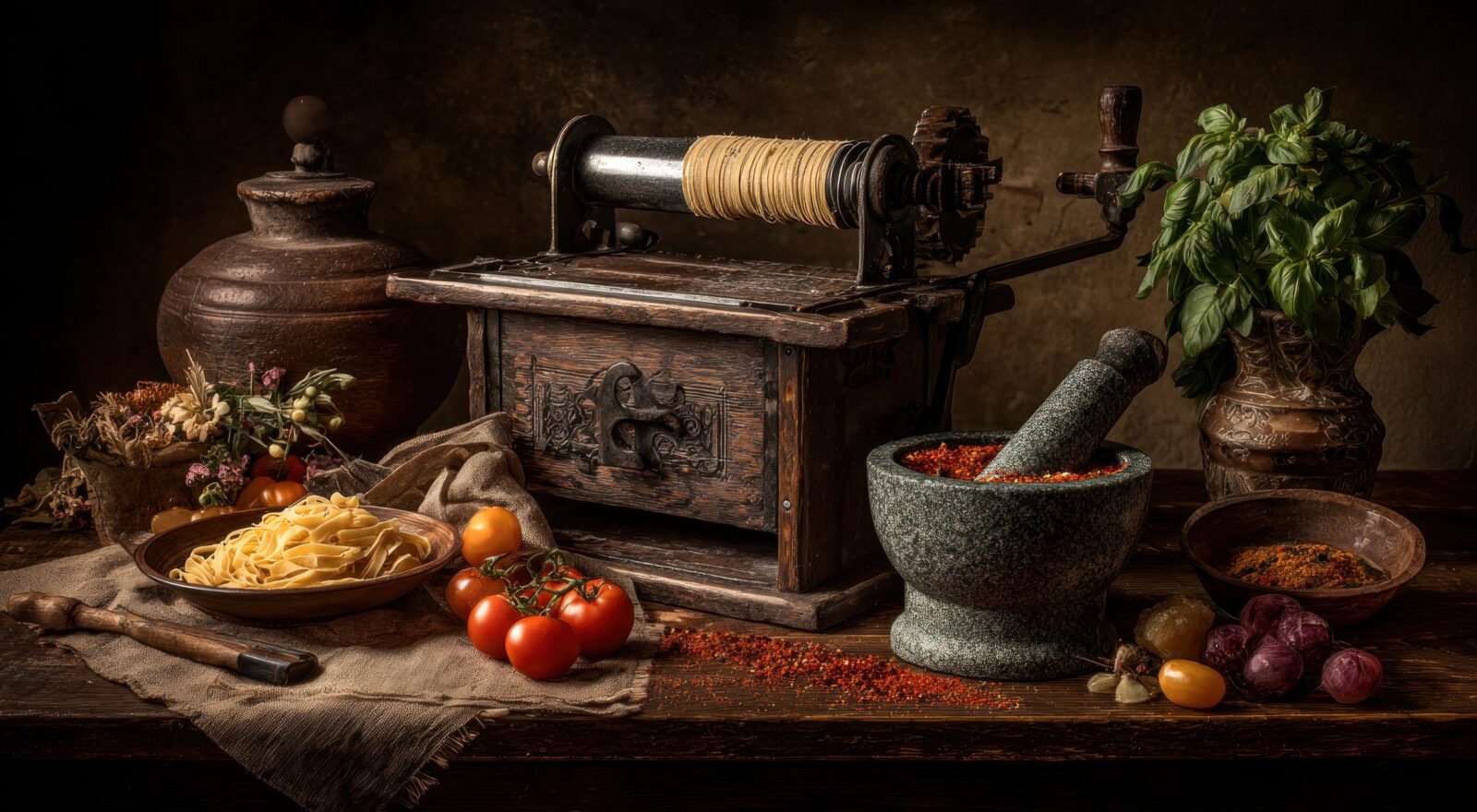
My project focuses particularly on three products—or, in other words, three “food trends”: pasta, saffron, and Malvasia wine. These products allow us to see with particular clarity how foods moved from south to north, how they were received, and how their circulation contributed to the emergence of new culinary trends.
2) What sources does your research draw on?
To study these processes, I analyze a variety of sources: accounting books and other economic records, as well as medical and philosophical writings, religious texts, and, of course, cookbooks. When we change our eating habits, it isn’t just what’s available on the market that changes. Our knowledge about food and our ideas about what is considered healthy or unhealthy change as well; the religious and social meanings attributed to food shift; and, finally, the practical ability to access certain foods changes.
My goal is therefore to develop a new perspective on the history of food through the concept of Food Trends. It is not just a matter of understanding what foods people ate in the past, but of understanding how tastes, knowledge, and culinary habits changed—and how closely these changes were linked to trade, mobility, and social developments.
3) This path was made possible thanks to a Marie Skłodowska-Curie postdoctoral fellowship. What exactly is it, and how did you get it?
The Marie Skłodowska-Curie Actions (MSCA) are a European program funded under Horizon 2020. This specific grant is a two-year postdoctoral research fellowship. “Mobility” means that, for the entire duration of the project, you leave your academic country of origin to work at a research institution in another European country—or, in the case of a Global Fellowship, at a partner institution outside Europe as well.
The Fellowship is designed as a full-time, two-year position that allows recipients to devote themselves entirely to their research project without having to take on regular university teaching duties. Fellowships are awarded through competitive international calls for applications. Researchers apply for funding together with a host institution of their choice; currently, the success rate stands at around ten percent.
For me, the MSCA represents a great opportunity to gain international research experience, build an academic network abroad, and have the time needed to develop a research project aligned with my career trajectory in collaboration with the host institution.
4) Why did you choose to conduct your research at the Italian-German Historical Institute of Fondazione Bruno Kessler?
The answer to this question is already embedded in the title of my project: “Food in Transition from Venice to Nuremberg: Identifying Food Trends in Premodern Times (13th–17th century).” The project examines a major trade route of the premodern world: the one connecting the Republic of Venice and the imperial city of Nuremberg. For this reason, it fits seamlessly into the activities of the Italian-German Historical Institute.
To understand how this trade route worked, it helps to start in Venice, where the Fondaco dei Tedeschi was established as early as the 13th century to accommodate German merchants and serve as a warehouse for their goods. However, many of the goods that arrived in the city didn’t stay there; they continued their journey across the Alps. Nuremberg merchants played a key role in this trade network. In the late Middle Ages, the city assumed a leading position in transalpine commerce and, alongside Cologne, developed into a major economic center.
For my project, though, it isn’t just the goods themselves that are interesting, but also the people who transported them. Merchants were carriers of both knowledge and cultural practices. Food trends, therefore, don’t spread solely through the movement of products, but also through the movement of people and ideas.
In addition to the connection expressed in the title, the concept of “mobility” is an important research area for ISIG. Culinary trends depend on the movement of goods, but also on the circulation of ideas that introduce new elements and ultimately bring something different to the table.
On a personal level, this means I can rely on many colleagues at ISIG who study travel, mobility, and exchange—peers with whom I can brainstorm and engage in stimulating dialogue. The overlap between my research topic and ISIG’s fields of study was decisive in my choice of host institution.
5) Is there anything that surprised you about living and working in Trento that you didn’t expect before coming here?
First off, I’ll answer from the perspective of a food historian: what particularly surprised me about daily life in Trento is the cuisine. For someone coming from Germany—especially southern Germany—certain aspects of Trentino’s culinary tradition are reminiscent of specialties from southern Germany, Austria, South Tyrol, and the broader Alpine region.
At the same time, of course, there are classic Italian dishes like carbonara and pizza, whose authenticity as expressions of Italian cuisine has recently been questioned by several experts, including the Parma-based economic historian Alberto Grandi, author of books such as Denominazione di origine inventata (Invented Designation of Origin, 2018) and La cucina italiana non existe (Italian Cuisine Does Not Exist, 2024, with Daniele Soffiati). This coexistence of two culinary traditions on a single menu—to take the idea to an extreme—is fascinating to me.
If we try to read this culinary coexistence from a historical perspective, can we learn something about Trento’s history? I think so. Every dish has a story, and every story leaves its mark on the kitchen.
6) What are your goals for the near future?
As part of the “FiT” project, I will participate in several conferences, where I will present and discuss various aspects of my research. In addition, my colleague Claudio Ferlan from ISIG and I are planning to organize a workshop here in Trento—likely in early 2028—dedicated to the concept of “trends” or “food trends.” However, we still need to discuss whether we will also explore food trends from a practical, culinary standpoint during the event. Ultimately, the results of my research will be compiled into a monograph, which will serve as the final output of the project.
The author/s
Related articles