
Technological Humanism: Italian excellence in artificial intelligence
October 13, 2026
From optimizing electric bus fleets with Milan’s transit authority to developing anti-counterfeiting labels for the Italian State Mint, projects from FBK are spotlighted in a new volume bringing together 84 Italian leaders in AI.
Technological Humanism: Italian Excellence in Artificial Intelligence—a coffee-table book produced by the Ministry of Foreign Affairs and International Cooperation and edited by AIRI (the Italian Association for Industrial Research)—made its domestic debut at the 78th Prix Italia in L’Aquila. Among the featured success stories are two standout projects from Fondazione Bruno Kessler.
The book highlights FBK’s partnership with the Milan Transport Company (ATM), where researchers from the Data Science for Industry and Physics (DSIP) unit at FBK’s Center for Digital Industry are developing AI systems to organize, manage, and schedule ATM‘s electric vehicle fleet.
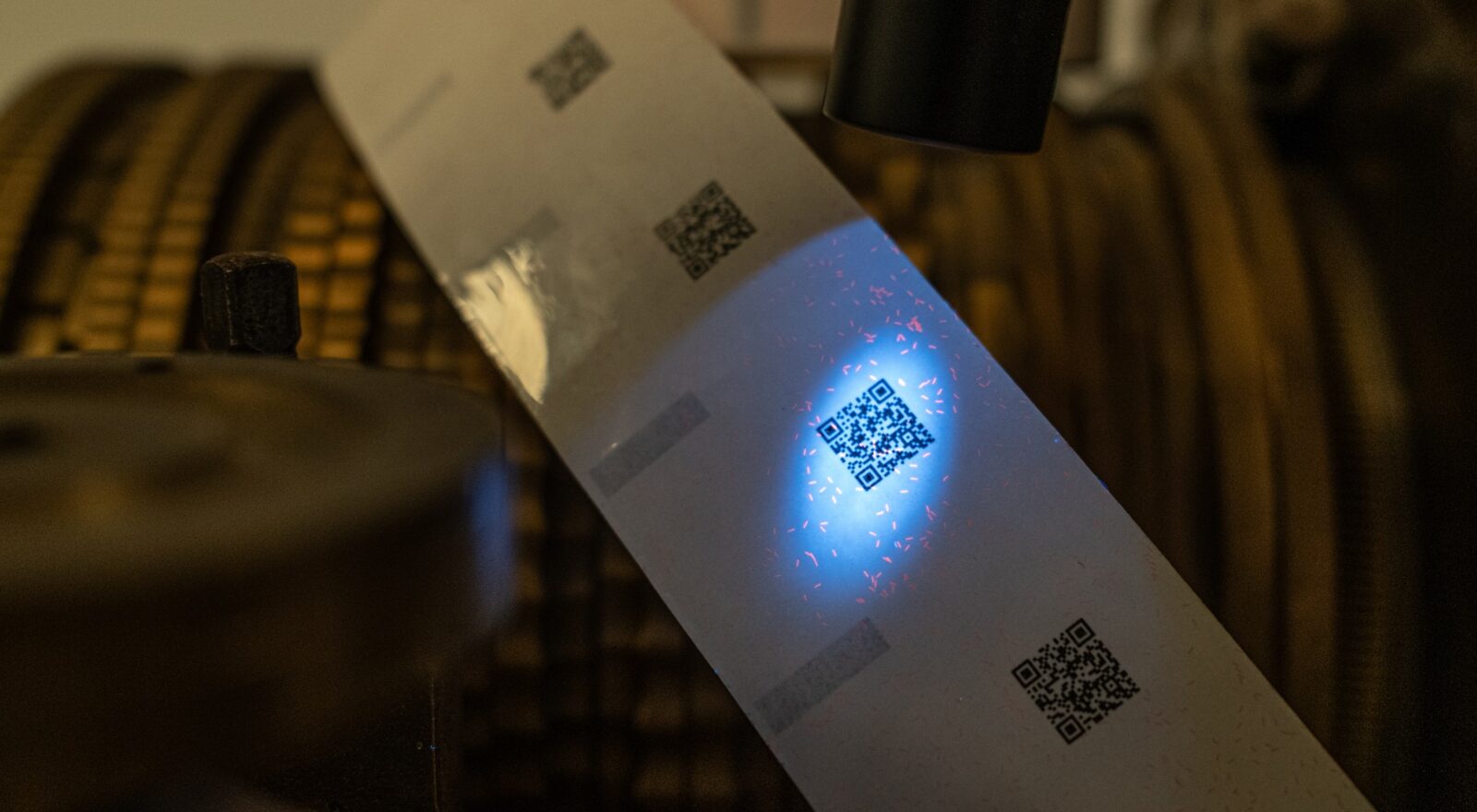
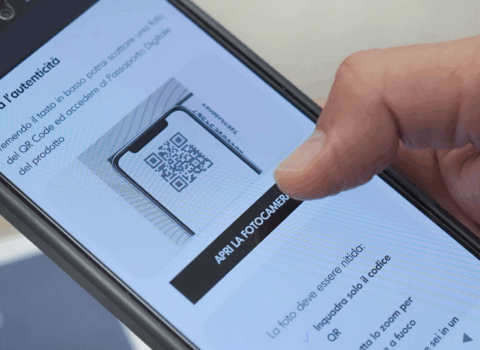
In a separate initiative, FBK’s Technologies of Vision (TeV) unit partnered with the Italian State Mint and Polygraphic Institute (IPZS) to design an advanced QR code labeling system. By combining security microfibers with artificial intelligence, the system offers businesses and consumers a simple, highly reliable anti-counterfeiting tool.
FBK is featured alongside many other top Italian centers of excellence working with artificial intelligence: a humanoid robot designed for shipyards, a logistics optimization system that saves €2.1 million, and a tire capable of collecting road data to communicate with a car’s onboard electronics. These are just a few of the stories highlighting Italy’s cutting-edge work in AI. Umanesimo Tecnologico: le eccellenze italiane nell’Intelligenza Artificiale (Technological Humanism: Italian Excellence in Artificial Intelligence) produced by the Ministry of Foreign Affairs and International Cooperation and curated by AIRI (the Italian Association for Industrial Research)—is more than just a publication; it is a high-end coffee-table book built around the concept of an “ideal city” inspired by Italian identity, where diverse innovations converge to outline a unified vision of the future.
The book is designed as a tool for “growth diplomacy.” Distributed globally through Italian embassies, consulates, and cultural institutes, it will help project a modern image of Italy—one built on the intersection of scientific research, industrial capacity, innovation, and expertise
Technological Humanism highlights Italy’s expanding role in practical AI solutions for industrial research. It features 84 case studies across major corporations, SMEs, startups, universities, research centers, and national innovation hubs. Together, these examples demonstrate how AI extends far beyond chatbots and generative models to power robotics, sensors, automation, and autonomous machinery across production lines, infrastructure, and public services.
Spanning 11 key sectors—including the blue economy and shipbuilding, integrated logistics, packaging, automation, microelectronics, healthcare, aerospace and defense, fashion, automotive, agrifood, and energy—the common thread across all 84 cases is AI embedded in the real economy. These solutions streamline processes, modernize infrastructure, and bridge the gap between academic research and industry.
Rooted in the heritage of Italian Humanism, the book argues that technological innovation should amplify human creativity, freedom, and dignity rather than replace them. This is the core philosophy of Technological Humanism: a responsible convergence of human and artificial intelligence built to serve people.
“The new asset of Italian industry—human intelligence paired with AI—comes from combining data with the deep industrial knowledge embedded in people and organizations. A technician servicing a turbine, a process chemist, a railway maintenance worker, or a production engineer all possess enormous amounts of unwritten, practical knowledge,” explains Andrea Bairati, President of AIRI. “This approach is especially powerful in sectors where Italy excels: precision engineering, robotics, chemicals, energy, aerospace, pharmaceuticals, agrifood, specialized manufacturing, and logistics.” Bairati adds: “The goal isn’t just a factory with AI, but a factory that learns. A huge part of Italian industrial quality relies on expertise that is hard to formalize on paper—adjusting a setting, spotting a defect, tweaking a process, or customizing a product to a client’s exact needs. AI enhances human intelligence on the shop floor by analyzing data, images, sensors, and operator decisions.”
Featured organizations & contributors include: 3AInformatica, 3rdPlace, Agricola Moderna, AIENG, altermAInd, Argotec, AutoRevol, Barilla, BluHub, Bracco Imaging, Brembo, CCAM4italy (National Innovation Hub for Connected and Automated Mobility), CETMA, Comau, Concept Reply, Corticale, Cosberg, DigiSky, Domina, Dompé farmaceutici, Edison, Elettra Sincrotrone Trieste, Enel, EssilorLuxottica, FAIR (Future Artificial Intelligence Research), Fincantieri and the University of Trieste, Focoos AI, Fondazione Bruno Kessler (FBK) and ATM, Fratelli Piacenza, Generative Bionics, Gran Sasso Science Institute, Gruppo Almaviva, Health Triage, i-Deal, IngeniArs, Intellico, Irritec©, Italian Institute of Artificial Intelligence (AI4I), Italian Institute of Technology (IIT), Italian Institute of Technology (IIT) and Bracco S.p.A., National Institute of Metrological Research, Italian State Mint and Polygraphic Institute (IPZS) and Fondazione Bruno Kessler (FBK), La Marzocco, Gran Sasso National Laboratories, Leonardo, Lexroom, LivGemini, Marchi & Fildi, MoreSense, Mutti, Next Technology Tecnotessile, NICO (Neuroscience Institute Cavalieri Ottolenghi), Oversonic, Pirelli, Plures, Polytechnic University of Turin (Chilab-ITEM), Poste Italiane, Proteso, RINA Consulting, Sapienza University of Rome, Scuola Normale Superiore, Scuola Superiore Sant’Anna, SIPEOM, Smigroup, Soccerment, Space Industries, SPEA, Spindox, STMicroelectronics, SunLink and the University of Siena, TecnoBody, TIM Enterprise x Archivio Olivetti, TuoMuseo, TXT Group, UNI Italian Standardization Body, Unioncamere, Campus Bio-Medico University of Rome, Catholic University of the Sacred Heart (Piacenza) and IIT, University of Siena and Centro Chirurgico Toscano, University of Calabria, University of Catania, University of Milano-Bicocca, University of Turin, and Vox.
Following its initial release, the book will be distributed internationally through Italian diplomatic and cultural networks. Its global debut will take place at the 2026 Guadalajara International Book Fair in Mexico—the world’s second-largest publishing fair—where Italy will serve as the Guest of Honor.