
QR code and Artificial Intelligence: a label to combat counterfeiting
October 23, 2025
The collaboration between FBK and IPZS makes it possible for everyone to verify the authenticity of products
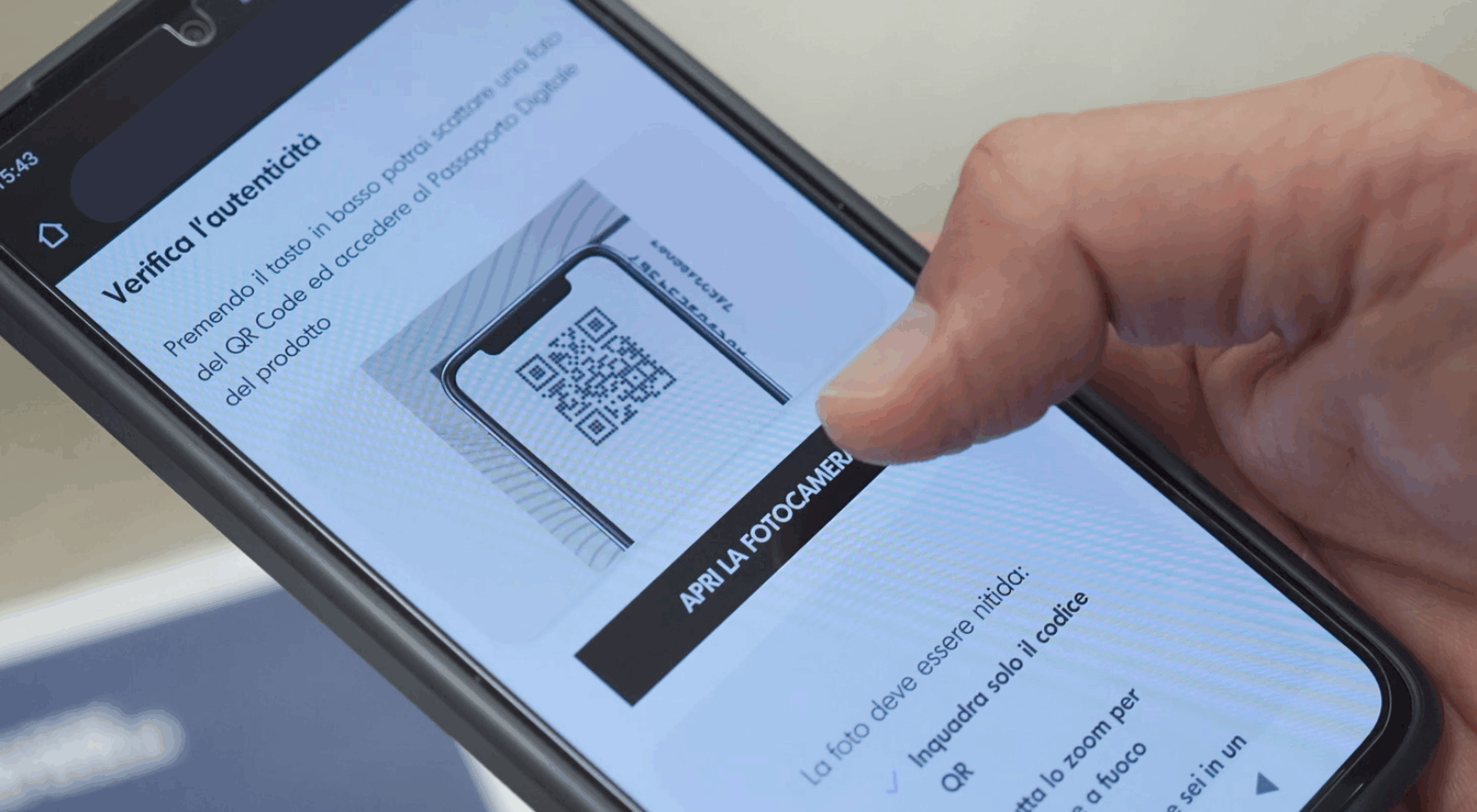
A new technology in the fight against counterfeiting has emerged from the collaboration between Fondazione Bruno Kessler and the Istituto Poligrafico e Zecca dello Stato (IPZS), the Italian State Printing Works and Mint: a labeling system featuring a QR code that integrates security fibrils and artificial intelligence, designed to protect citizens and businesses through simple and reliable verification tools.
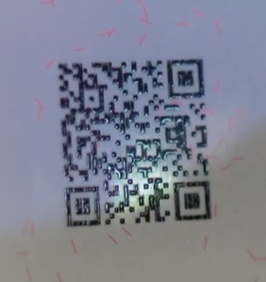
The system is based on fibrils, i.e. security elements similar to textile fibers visible to the naked eye and inserted in the labels, whose arrangement and composition create a unique imprint. A QR code is printed at the center of the label, which, when scanned with the camera of any smartphone, allows users to verify its authenticity.
The verification focuses on two different aspects of the fibrils. The first concerns material authenticity: a module based on artificial intelligence determines whether the fibril is actually the one produced during the printing process and therefore truly authentic. The second aspect concerns the arrangement: at the time of printing, dedicated algorithms record a descriptor of the fibrils’ positions, which becomes a kind of unique and non-replicable fingerprint. Adopting these two levels of control allows different counterfeiting scenarios to be covered. If, for example, someone photocopies an original label and applies it to another product, the arrangement of the fibrils would be formally correct but their material authenticity would not be. Conversely, even if it were possible to replicate the fibril material, it is almost impossible to reproduce the exact arrangement.
The contribution of FBK research—developed by the Technologies of Vision Unit at the Center for Digital Industry —has made it possible to transform the expertise of the forensic expert into an automated system available to everyone. “The challenge,” said Sergio Povoli, researcher at the TeV unit and FBK Science Ambassador, “was to translate specialist expertise into an automated process using artificial intelligence, allowing anyone with a smartphone to achieve the same level of recognition once reserved for expert technicians.” Alongside Sergio Povoli, researchers from FBK’s Technologies of Vision Unit who contributed to the project include Stefano Messelodi, Luigi Riz, and Fabio Poiesi.
“With this innovation, we reaffirm our mission to provide ever more advanced security solutions that combine the tradition of anti-counterfeiting materials with digital innovation, giving citizens tools for direct and immediate protection,” said Corrado Guidobaldi, travel document area manager of the IPZS Innovation Division.
The collaboration between FBK and IPZS, active for several years on various projects, finds in this result a significant step in a path that integrates scientific research, technological innovation, and industrial applications. In a context where counterfeiting takes on increasingly sophisticated forms, being able to rely on simple and reliable tools such as the new label with fibrils and QR codes—accessible to everyone through any smartphone—means strengthening trust and responsibility throughout the entire supply chain. It is precisely in this integration between the tradition of anti-counterfeiting materials and digital innovation that the strength of the project lies: offering anyone the opportunity to verify the authenticity of products, protecting consumers and businesses. The joint work of FBK and IPZS, which continues over time, represents a concrete example of innovation for the benefit of the community.
The author/s
-
 Sergio Povoli
Researcher at Technologies of Vision (TeV) unit, Fondazione Bruno Kessler
MORE INFO -
 Stefano Messelodi
TEV (Technologies of Vision) FBK
MORE INFO -
 Luigi Riz
Researcher at Technologies of Vision (TeV) unit, Fondazione Bruno Kessler
MORE INFO -
 Fabio Poiesi
FBK-TEV researcher since 2016 focused on detection and tracking, registration, mapping and 3D modelling, and multi-sensor fusion to enable Augmented and Mixed Reality.
MORE INFO
Related articles