
The study of the SARS-CoV-2 pandemic in Italy: the FBK scientific contribution becomes a book
April 21, 2026
The book The Study of the SARS-CoV-2 Pandemic in Italy, authored by Stefano Merler and dedicated to the activities of Fondazione Bruno Kessler during the health crisis, was created with the aim of rigorously and transparently documenting the work carried out during the COVID-19 emergency.
The book collects methods, data, and evidence produced by FBK’s Center for Health Emergencies, offering a technical and well-documented reconstruction without introducing retrospective judgments. The intent is to provide a faithful scientific record of the contribution made to the country during one of the most complex periods in recent history.
During the pandemic, the FBK-HE Center—directed by Stefano Merler—developed statistical, mathematical, and computational models to analyze the evolution of the epidemic, estimate its impact on the healthcare system, and evaluate the effectiveness of containment measures. These same tools were later used to interpret the effects of the vaccination campaign.
Thanks to over thirty years of experience in the epidemiology of infectious diseases, FBK continuously supported several institutions, including the Istituto Superiore di Sanità, the Ministry of Health, the Scientific Technical Committee, and the Office of the Extraordinary Commissioner for the COVID-19 emergency, as well as various regional administrations.
The book presents the scientific work of the Center without aiming to be exhaustive with respect to international research, but with the goal of making its results accessible through specific bibliographic references. In line with the vision of research as a service to the public good, the work was carried out free of charge, and the book is available in open-access format.
The contribution of the FBK-HE Center has consistently been confined to data analysis and the production of scientific evidence, maintaining a clear distinction from political and operational decisions, which fall under the authority of public institutions.
The analyses presented reflect the information available at different stages of the pandemic and are not intended to provide evaluations of institutional actions. Rather, the aim is to improve the country’s preparedness for future health emergencies.
As Richard Feynman noted, there is a profound difference between “knowing the name of something” and “knowing something.” This book is part of that effort: to contribute to a more solid, data-driven understanding in support of the community.
The author/s
-
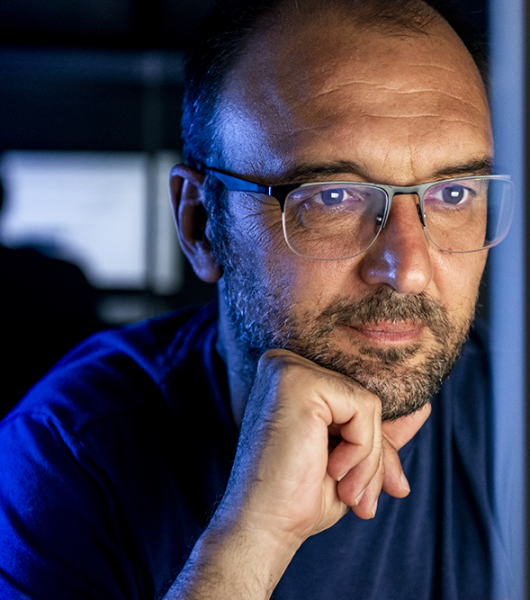 Stefano Merler
Director Center for Health Emergencies, FBK
MORE INFO
Related articles