Francesca Bovolo

Francesca Bovolo is the founder and the head of the Remote Sensing for Digital Earth unit at Fondazione Bruno Kessler (FBK), Trento, Italy.
Her main research activity is in remote-sensing image processing. Her interests are related to multitemporal remote sensing image analysis, radar sounders, change detection in multispectral, hyperspectral and SAR images, and very high resolution images, time series analysis, content-based image retrieval, domain adaptation and LiDAR. She conducts research on these topics within the context of several national and international projects.
She is one of the Co-Investigators and the instrument manager of the Radar for Icy Moon Exploration (RIME) instrument of the ESA JUpiter Icy moons Explorer (JUICE) and the Sub-surface Radar Sounder (SRS) of the ESA EnVision mission.
Spotlight's articles
-
 November 10, 2025FBK in the “World’s Top 2% Scientists 2025”Fondazione Bruno Kessler remains among the most influential Italian research institutions at the international level in the ranking prepared by Stanford University and published by Elsevier. The ranking, based on Scopus data and considered a global reference, identifies the top 2% of the most cited researchers each year by disciplinary area. Francesca Bovolo (FBK) is one of them: in the interview, she recounts her work, reflecting on her most significant experiences.
 -
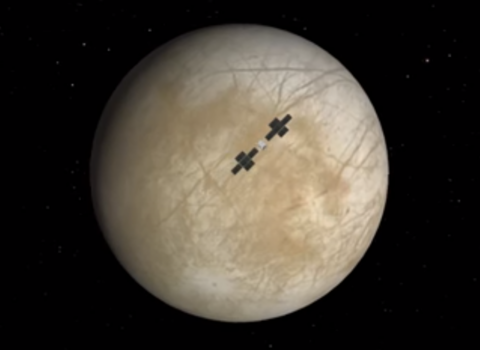 February 9, 2023Destination: GanymedeThe European probe JUICE is set to be launched from Kourou Space Base in French Guiana in the second half of April. Mission goal: to reach Jupiter's orbit in seven years and study its icy moons. The Bruno Kessler Foundation (with the research group coordinated by Francesca Bovolo) is among the partners in the UniTrento-led project.
 -
 December 15, 2020FBK researchers among the most cited in the worldWe highlighted the scientific results of Francesca Bovolo, Alessandro Cimatti, Manlio De Domenico, Paolo Massa, Fabio Remondino and Carlo Strapparava. The Scopus data analysis was published in the international journal Plos Biology