

Interview with Claudio Ferlan
March 4, 2026
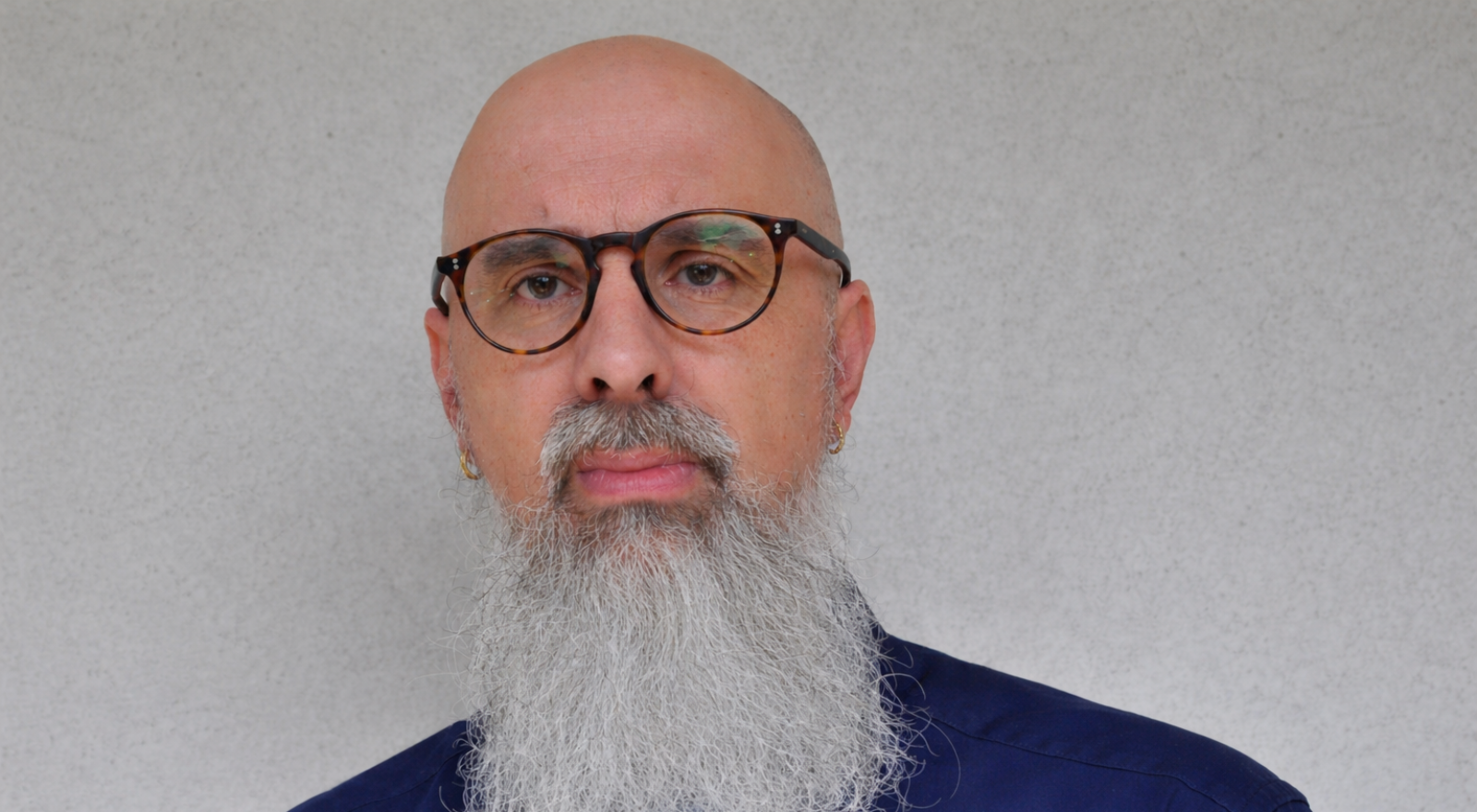
Claudio Ferlan, a researcher at the Italian-German Historical Institute, has been confirmed for another three-year term as Director of FBK’s publications, a role he has held since 2022, in alignment with Massimo Rospocher’s leadership of FBK-ISIG. We asked him a few questions to better understand and discuss upcoming projects.
- Director, since 1975 FBK-ISIG has published the “Annals of the Italian-German Historical Institute in Trento / Jahrbuch des italienisch-deutschen historischen Instituts in Trient,” a journal that brings together scholars of different generations and geographic backgrounds engaged in historical research from the early modern period to contemporary history. What role has this publication, which you direct, played in the life of FBK-ISIG?
The Annals / Jahrbuch have played a fundamental role in shaping the Institute’s scientific identity. They are one of the main tools through which ISIG has built its reputation within the scholarly community and strengthened its international vocation, particularly in fostering dialogue between the Italian and German-speaking worlds. Since 2011, the journal has been published twice a year and, since 2018, it has adopted a monographic format. It is classified as an ANVUR “A” journal in several disciplinary areas, but what matters most is the continuity of scholarly exchange that has lasted nearly fifty years and continues to involve researchers of different generations and backgrounds.
I serve as managing editor, while the scientific direction is entrusted to ISIG Director Massimo Rospocher. This distinction reflects the nature of my role: I am responsible for editorial oversight, also by virtue of my registration in the special registry of editors of technical, professional, and scientific periodicals and my collaboration with several national publications. Part of my work is to bring together academic rigor and high-quality public writing.
- There is also Aro, “Annali.Recensioni.Online,” an electronic journal of reviews dedicated to new scholarly works related to European history. What is distinctive about this publication?
Aro is an online journal of historiographical reviews that grew out of the review section of the Annals and became independent in 2018.
Writing reviews is not just about commenting on books; it means understanding where historiography is heading, what new questions are emerging, and how perspectives are changing. Aro serves as an ongoing observatory on trends in European historical research, making this scholarly exchange accessible beyond the circle of specialists.
Here again, I serve as managing editor, while the scientific direction is entrusted to Katia Occhi, whose work—together with that of the entire ISIG research community—is essential to the journal’s vitality.
- Are these journals available in open access? How important is that aspect in promoting the sharing of knowledge?
Aro was established from the outset as a fully open-access journal with an international outlook. Publishing books and research without allowing free access would have made little sense. Open access enables wider circulation of ideas and makes research genuinely public.
The Annals, on the other hand, have a longer history as a print publication. The recent transition from the publisher Il Mulino to Viella is also part of a broader effort to increase open-access availability, in line with publishing standards.
- In addition to these scholarly journals, you also direct FBK Magazine, where we publish, which is a journalistic outlet.
This is probably the least conventional aspect of my role, as it involves science communication. It is quite common for a researcher to direct academic journals; less common is directing a journalistic publication as well. For me, however, it is a natural extension of my research work.
I believe that communicating science—from the hard sciences to the humanities and social sciences—is one of the primary responsibilities of researchers today. Directing FBK Magazine means creating a space where research is not only communicated but also interpreted and placed in dialogue with major contemporary issues, while highlighting the people who make it possible.
- Turning to your role as a researcher, you are a historian of Christianity, with a focus especially on the Jesuits as well as on the history of food. How did your interest in these areas develop?
It began with two key elements: a great teacher and compelling sources. At the University of Trieste, I had the good fortune to attend classes taught by Liliana Ferrari, who introduced me to the history of Christianity. I have always been interested in studying encounters between people of different cultures, and religion offers a particularly rich vantage point for observing these processes.
While working with missionary sources, I repeatedly encountered references to daily life and to relationships with food and drink—for example, alcohol consumption and its consequences. From there, a line of research emerged that continues to shape my work.
- What was your childhood dream job? Do you see any connection with what you do now?
I do. Probably my first career dream was to cover sports by telling its stories. Since I was never a standout athlete in the sports I practiced, I imagined becoming a sportscaster. I also wanted to write comic book scripts, because drawing was never my strong suit.
In the end, I still do something similar: I tell stories. But instead of athletes or illustrated characters, I write about researchers, their ideas, and the stories of the women and men who played leading roles in the missionary experience—my specific field of study. The subjects have changed, but the desire to understand and tell stories remains, as does the effort to make them engaging for readers and listeners.
- What future developments do you envision for your research and for the journals you oversee?
I believe that the Annals and Aro are now well established on the international scholarly scene, and I expect them to continue along solid paths, thanks also to the committed and qualified involvement of the ISIG community.
For FBK Magazine, the challenge is different. I would like to see it strengthen its presence in public debate, expanding its reach beyond the boundaries of Fondazione Bruno Kessler and becoming an increasingly recognizable space for dialogue across disciplines—where research gains not only visibility but also a voice.
As for my research, I first hope to open new international collaborations to better understand the dynamics of cultural exchange produced over time by encounters—and conflicts—among believers of different religions. After focusing primarily on Europe, especially German-speaking countries (which is also why I joined ISIG fifteen years ago), and later on Latin America, in recent years I have begun studying Christian missions in North America. These projects have led me to travel and spend extended periods abroad. I would now like to develop collaborations in contexts I know less well—for example, Canada. I hope to continue learning and, in turn, continue telling stories.
The author/s
-
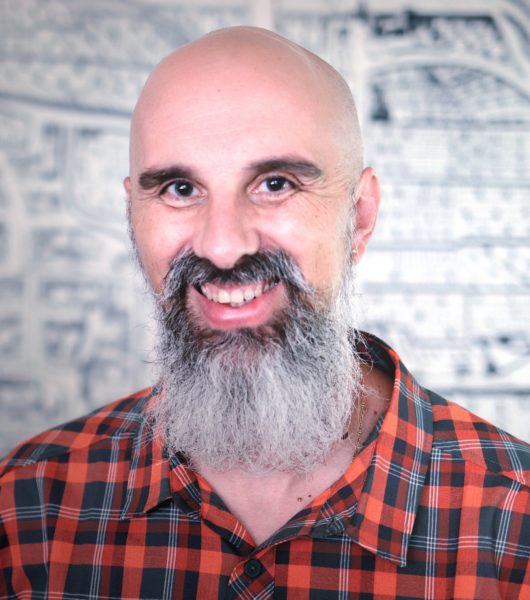 Claudio Ferlan
Since 2008 (2011 full-time) I am researcher at the Bruno Kessler Foundation, Italian German Historical Institute.
MORE INFO
Related articles