

AI + DATA: Practice & Law, the first FBK Summer School on AI Governance concludes in Trento
June 17, 2026
Three days of training, discussion and practical work on artificial intelligence, data governance and European law.
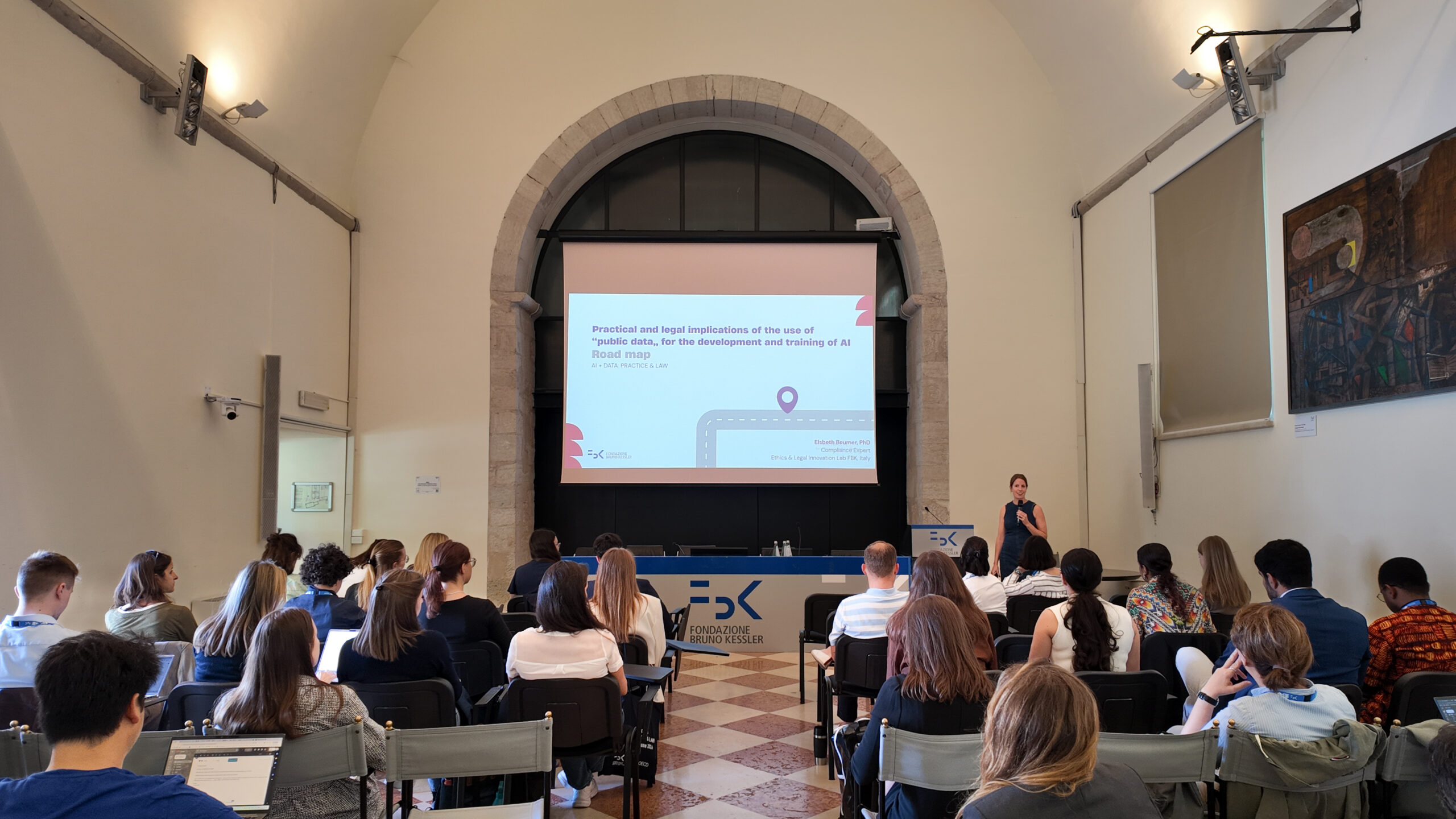
From 10 to 12 June 2026, Fondazione Bruno Kessler hosted the first edition of “AI + DATA: Practice & Law”, a three-day Summer School organised by FBK’s Ethics & Legal Innovation Lab in collaboration with the OECD Trento Centre.
The Summer School is a capacity-building initiative bringing together professionals working at the intersection of artificial intelligence, data governance and law. Its objective is clear: to strengthen participants’ ability to understand, implement and oversee AI governance frameworks that are in line with ethical principles and the EU legal framework.
A practice-oriented approach to AI governance
The Summer School responds to an increasingly urgent need: providing professionals with a concrete and interdisciplinary introduction to the legal, ethical and technical challenges raised by AI and data-driven systems.
The first day introduced the broader technical, ethical, constitutional and legal context of AI governance. The crash course on AI offered the participants the necessary brickstones to better understand all the subsequent lectures that dealt with AI and a specific field of governance. The seminars on ethics and the overview of all the EU legislative initiatives gave a holistic view on the framework in which AI should be developed and deployed. The following two days combined expert-led seminars with practical sessions and interactive working groups. Participants explored key topics including the GDPR, the AI Act, cybersecurity, pseudonymisation, intellectual property, risk assessment, public administration, regulatory sandboxes, roles and responsibilities, competition law and data access. Specific attention went to the legislative proposals of the European Commission to simplify and streamline its complex digital rulebook, the so-called Digital Omnibus.
This combination of legal analysis, technical concepts and applied work reflects the core ambition of the programme: not only to explain regulatory frameworks, but also to support their practical implementation in professional contexts.
An interdisciplinary and international cohort
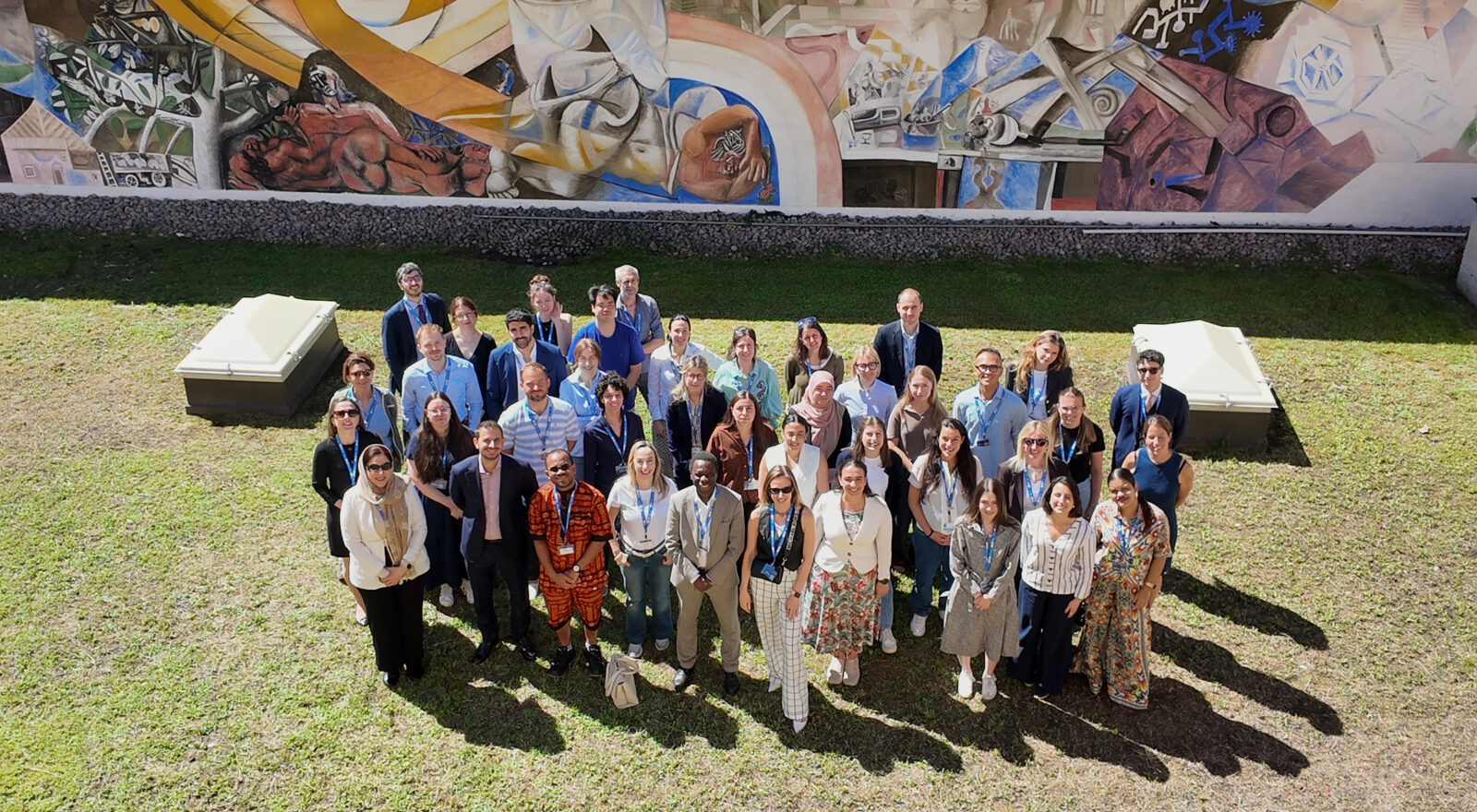
The first edition attracted strong interest, with 81 applications and 32 selected participants, to ensure close networking and active participation. The group brought together professionals from a broad range of sectors (from agriculture to banking and to ICT media), and organization types including universities, private companies, public administrations, non-profit organisations, international organisations and research institutions.
The cohort also had a significant international profile: 74% of applicants came from European countries, while 26% came from outside the EU. This diversity contributed to a rich exchange of perspectives on how AI governance is being understood and implemented across different legal systems, sectors and institutional settings.
Particularly significant was the participation of professionals from the private sector, whose contributions brought concrete insights from organisations directly involved in the governance of AI systems. Their perspectives enriched the discussions and confirmed the relevance of a practice-oriented approach to AI regulation.
Building bridges between research, law and professional communities
The Summer School was supported by Confindustria Trento, the Trento Bar Association and the BioLaw Project of the University of Trento, highlighting the importance of building bridges between research, professional communities, institutional actors and the productive sector. The Trento Bar Association also recognised 6 professional training credits for lawyers, further confirming the relevance of the initiative for legal professionals working on data protection, AI and emerging technologies.
A growing demand for AI governance training
The strong response to the first edition confirms the growing demand for interdisciplinary training on AI governance and the relevance of the initiative for legal professionals working on data protection, AI and emerging technologies. As AI systems become increasingly embedded in public and private decision-making processes, professionals are called to navigate a complex landscape of legal obligations, ethical principles and implementation challenges that can only be properly addressed when professionals from different fields can work and communicate with one another.
In this context, initiatives such as AI + DATA: Practice & Law play an important role in supporting the development of shared competences and practical tools for responsible AI governance.
As Giulia Olivato, along with Elsbeth Beumer scientific coordinator of the Summer School, explains: “One of the main challenges in AI governance is that people need to learn to speak the same language. In interdisciplinary work, a lot can get lost in translation: lawyers need to understand the foundations of the technologies they foster compliance with, just as computer scientists need to become familiar with the basic legal framework in which the technologies they develop operate. Nobody operates in a vacuum”.
This was one of the key principles behind AI + DATA: Practice & Law. The presence of computer scientists among the participants, alongside legal professionals and experts from public and private organisations, confirmed the need for spaces where different competences can meet and develop a shared vocabulary. In this sense, the Summer School was not only a training initiative, but also a platform for dialogue across disciplines and sectors, supporting the development of shared competences and practical tools for responsible AI governance, contributing to FBK’s broader mission of translating scientific excellence into practical impact. It also helped foster an international network of professionals committed to the trustworthy development, deployment and governance of artificial intelligence.
The author/s
Related articles