
Autonomy: What citizens, students, and businesses in Trentino have to say
November 11, 2026
At the Autonomy Forum, the newspaper il T Quotidiano presented the results of its two-year survey. The questionnaires, analyzed by FBK-IRVAPP, highlighted issues related to housing, opportunities for young people, and the region’s appeal.
The people who responded to the questionnaires on autonomy (694 citizens, 159 students—mainly from high schools—and 70 businesses) describe a region that is appreciated almost unanimously and a future on which opinions diverge. The biggest difference concerns whether people plan to stay. When asked, “Do you still see yourself in Trentino in 5 to 10 years?” fewer than one in five students answered “yes, certainly,” compared to three out of four citizens.
The three modules—dedicated respectively to citizens, students, and businesses—relate to separate questionnaires completed by those who participated in the meetings of the Autonomy Tour promoted by the newspaper “il T.” Therefore, the results do not represent the entire population of Trentino, and the differences between groups should be interpreted as descriptive of this particular audience.
History and benefits of Autonomy
Almost everyone claims to be familiar with the Special Statute, and a clear majority attribute its origin to the 1946 De Gasperi-Gruber Agreement. When asked about the main advantage of Autonomy, about four out of ten respondents in each group cited increased resources for services and infrastructure. This is followed by the protection of identity, which is mentioned more often by citizens than by students.
What unites the three groups
Nature and landscape are the primary positive aspects of living in Trentino for about eight out of ten respondents in all three groups. Among the options, there is one that expresses a bond with the region: “Trentino is home.” This was chosen by more than half of the businesses, by about four out of ten residents, and by one-third of the students.
Sustainability is also the top area in which they believe Trentino should be a leader. For businesses, it is on par with the evolution of the tourism model; for residents and students, it is followed by schools, research, and universities. The issue of housing, this time as a place to live, is once again the top concern: it is cited by about half of citizens and students and 61% of businesses.
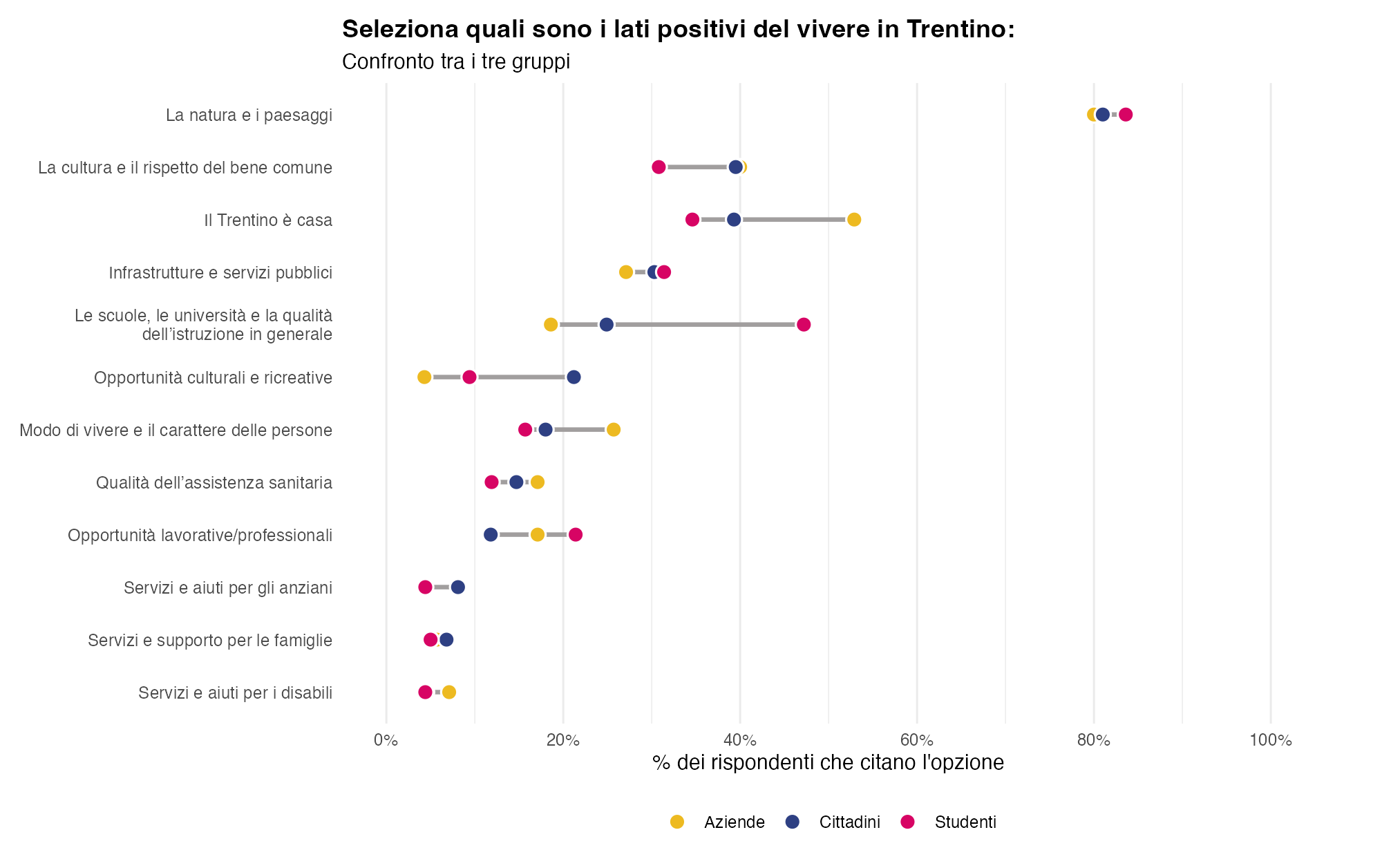 Figure 1 · “Select the positive aspects of living in Trentino.” Comparison between the three groups.
What divides the three groups
Beyond housing, priorities change with age. Students mention services for young people and public transportation more often than residents, who in turn mention healthcare more often. The same trend appears among residents by age group, with concern for healthcare and services for the elderly increasing with age and concern for transportation decreasing.
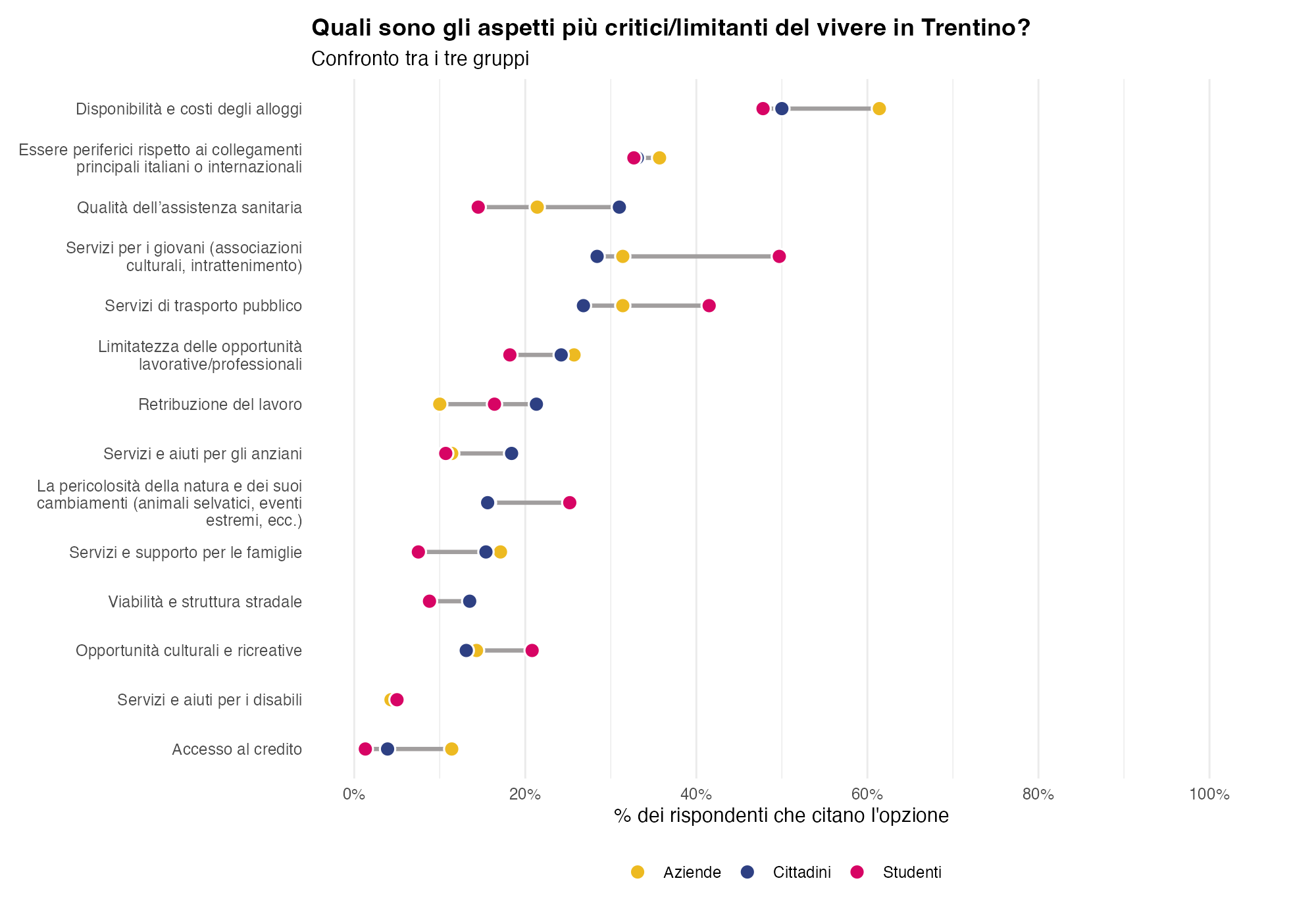
Figure 2 · “What are the most critical/limiting aspects of living in Trentino?” Comparison between the three groups.
Expectations for the next ten years differ more widely. Students choose the option “Trentino will become increasingly attractive to both tourists and potential new residents” more often than the other groups; citizens choose the option “Our province will be increasingly penalized by policies that fail to resolve emergencies and envision the future.” “Trentino will be older because many young people will have found opportunities elsewhere” is an answer that occurs to a similar extent in the three groups, between one-fifth and just over one-quarter of respondents. Among students, two seemingly opposing predictions coexist, reminding us that attracting new residents and retaining those who grew up in Trentino can be separate goals.
The regional scope of the two provinces is most often cited as a future guarantor of Autonomy, by 60% of students and by more than four out of ten citizens and businesses. The Euregio is mentioned by 37% of citizens and only 14% of students.
Train here, work elsewhere
When it comes to studying, the Province of Trento is the destination most often indicated by students (36%), ahead of abroad (18%) and other Italian regions (17%). When it comes to work, the top destination is abroad (30%), followed by the Province of Trento (24%), while 28% do not know how to answer. The responses describe Trentino as a place of education rather than work, with a large proportion of undecided respondents. Moving for study and work at that age is common, but for the Province’s public policies, what matters are the career prospects offered to those who have been educated here and the appeal of returning.
The business module, on the other hand, looks at the same labor market from the other side. When asked whether the Special Statute guarantees businesses more favorable conditions than in other regions and provinces, the most frequent answer (53%) was “Yes, but I believe it is necessary to improve access to services and subsidies and to speed up bureaucratic procedures,” while 24% chose “Yes, I think Autonomy helps us a lot” in terms of productivity and economic returns. Among the most useful policies, companies cite the Province’s fiscal leverage, support for purchasing power, and training; among the challenges of the coming years, innovation and artificial intelligence (59%), generational handover, and recruitment of workers are each mentioned by about half of the companies.
Students, therefore, see more job opportunities outside the Province and, in particular, abroad, while companies list the workforce among their main challenges. Taken together, these two observations highlight an area of concern for the local labor market.
Conclusions
The three groups agree on nature, sustainability, and home. The differences concern services, mobility, and future prospects, which largely depend on the age of the respondents. The questionnaire and the discussion with the presidents of the two provinces highlighted some issues that public policies need to address, first and foremost providing access to housing for both students and workers. In fact, the responses of younger people show a gap between their appreciation of the area and the prospect of building their lives there. The responses of citizens and businesses point to two challenges: one demographic, linked to aging and generational turnover, and one technological, linked to innovation and artificial intelligence.