Bologna’s Civic Digital Twin wins the Best Projects Award in Shanghai
September 25, 2026
FBK is among the project partners integrating data, models, and artificial intelligence to simulate urban scenarios and assess their social impact
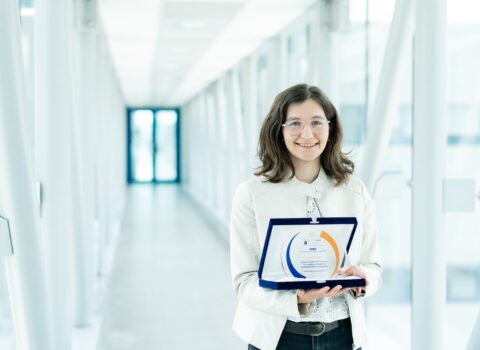
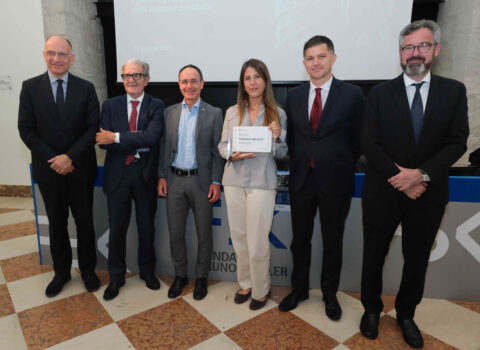
The Civic Digital Twin of Bologna, the urban governance infrastructure developed by the Municipality of Bologna with Fondazione Bruno Kessler, the University of Bologna, CINECA, and Fondazione IU Rusconi Ghigi, was honored today at the Region Smart City Awards in Shanghai. Councilor for Digital Innovation Raffaele Laudani was present to accept the award.
The Region Smart City Awards are organized by the Smart City Expo World Congress and promoted as part of the World Smart City Awards program, one of the leading global awards in the field of urban innovation. The Smart City Expo World Congress is the largest international platform for exchange and cooperation among cities, involving nearly a thousand municipalities.
The award aims to identify and promote projects capable of setting new standards for the digital, green, and sustainable transformation of urban environments, providing practical solutions to the challenges facing contemporary cities.
The project awarded
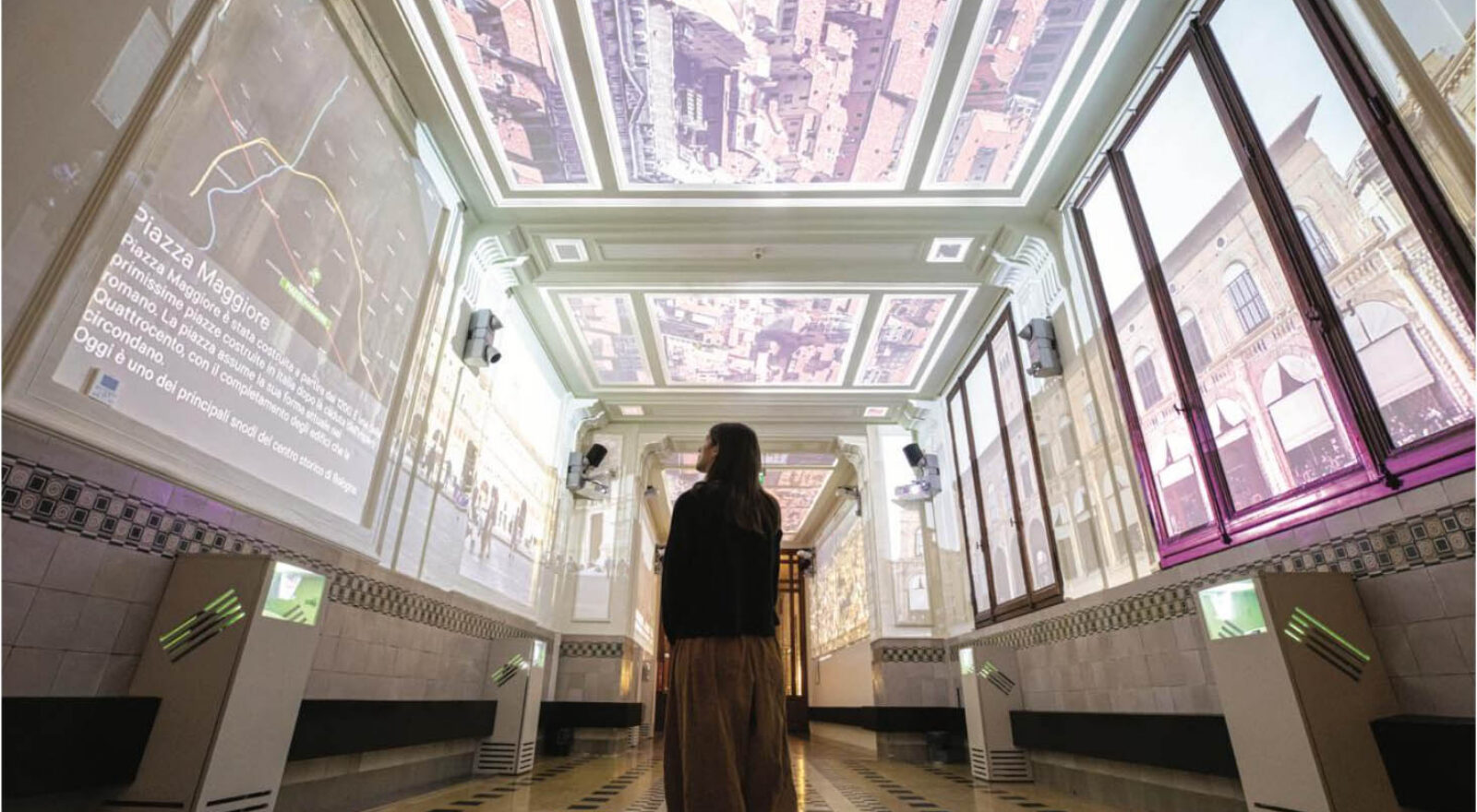
Integrates environmental and mobility data with statistical data, social vulnerability indicators, and socioeconomic data, creating a “civic layer” that makes it possible to understand the city not only in terms of its infrastructure but also in terms of its socioeconomic dimensions. The platform is open source, uses algorithms developed according to the principle of fairness by design, and is tested to ensure compliance with the AI Act and the latest European regulations on data and artificial intelligence.
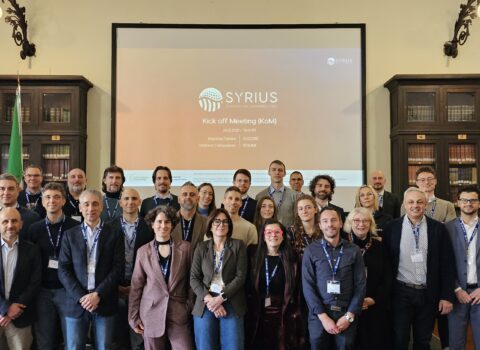
FBK is responsible for the scientific coordination of the project, particularly the development of the modeling component and the technological platform of the Civic Digital Twin, in collaboration with the Municipality of Bologna, the University of Bologna, CINECA, and the IU Rusconi Ghigi Foundation. The work focuses on representing urban and social dynamics and using data to build and simulate scenarios. The model thus makes it possible to create a virtual laboratory for the city in which to assess the introduction of new projects and policies on an urban scale, analyze their impact and sustainability, and compare possible alternatives. It is an iterative process that connects what happens in the real city, and in the lives of the people who live there, with the digital twin’s ability to interpret the data produced and transform it into knowledge useful for decision-making.
“With the Bologna Civic Digital Twin, we sought to combine two objectives: developing new approaches to address complex and still unresolved urban problems and, at the same time, translating them into concrete solutions that can be used by the city and its citizens. It is particularly significant that the project is being recognized precisely for its ability to contribute in an innovative and practical way to the digital, green, and sustainable transformation of urban environments. This recognition confirms that we are on the right track,” explains Marco Pistore, Head of Fondazione Bruno Kessler’s MoST Unit and Scientific Coordinator of the project.
Thanks to this new public infrastructure, the administration can simulate and assess the impact of public policies before they are implemented and understand in advance what effects they will have on different segments of the population. In addition, thanks to open technologies, the Civic Digital Twin can support engagement and co-design processes with urban stakeholders and citizens.
The platform is currently being tested in three priority areas: sustainable mobility, adaptation to heat waves, and regeneration of the historic center.
The project was funded under the European Union’s National Metro Plus and Medium-Sized Cities of Southern Italy Program 2021–2027 and received support from the National Research Center for HPC, Big Data and Quantum Computing (ICSC), backed by the Ministry of University and Research with PNRR – NextGenerationEU funds.
The author/s
-
 Marco Pistore
Lead researcher of the MoST research unit at Digital Society Center at FBK
MORE INFO
Related articles