Citizen Science and the Quadruple Helix model: collaborating for new policies on climate adaptation
July 10, 2026
Citizen Science (CS) is a participatory research approach that engages citizens, local communities, researchers, businesses, and public institutions in knowledge production and the co-creation of solutions to address complex societal challenges, including climate change. Within this context, the Horizon-Widera ScienceUs project, grounded in the Quadruple Helix model, sought to identify the key challenges that CS initiatives for climate adaptation must address to enhance their effectiveness across different scales.
Citizen Science (CS), is the practice of involving citizens, local communities, and informal groups in data collection, environmental observation, and the co-creation of scientific solutions. Coined in the late 1990s, the term has only gained widespread recognition in recent years. Today, discussions are underway on the importance of CS across different fields. There is considerable untapped potential in Horizon Europe and other EU funding programs dedicated to climate change adaptation, where only 12% of projects integrate CS practices.
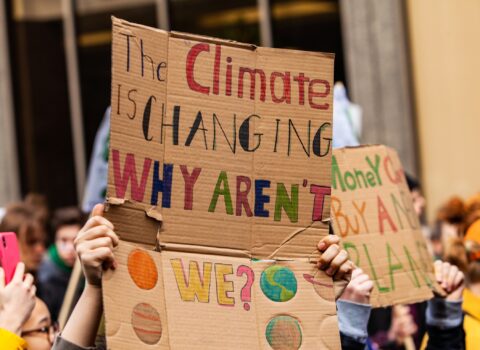
In this context, Citizen Science engages citizens by raising awareness of the effects of climate change. Extreme events, heat waves, biodiversity changes, and hydrological phenomena are just some of the processes that occur at the local level and require continuous, accurate data to be properly understood. The use of CS practices can help bridge both information and skills gaps (OECD, 2009). Projects such as ScienceUs (a European project funded through Horizon-WIDERA) explore the importance of this approach for implementing climate adaptation policies and demonstrate how CS can become a pillar of European climate policy by creating shared knowledge and co-designed solutions. ScienceUs assumes that this can only happen when CS projects involve the broader ecosystem of:
- citizens and civil society.
- Research and University
- Business and the private sector
- Policy makers and public institutions
This stakeholder network reflects the well-known “Quadruple helix” model, which brings together these four key actors to address complex challenges such as climate change through complementary perspectives, shared resources, and greater long-term impact. The quadruple helix approach is strongly supported by European Union policies and is incorporated numerous EU-funded projects. In the context of CS, this methodology aims to improve the scalability and effectiveness of projects by recognizing the unique contribution of each actor:
-
- citizens can observe local phenomena in their daily lives, drawing on their knowledge of the local area. Many also demonstrate a strong sense of place and responsibility, fostering greater care for their communities.
- researchers and universities contribute scientific expertise and methodological rigor, supporting data analysis, validation, and scientific credibility.
- companies contribute technological solutions and innovation.
- public institutions serve as a bridge between project outcomes and local policy and planning.
The working hypothesis that guided the benchmarking activities of the ScienceUs project is that a CS project involving all of these actors is far more likely to generate tangible change and to facilitate successful implementation. Specifically, a CS project supporting climate adaptation may address issues such as water quality, erosion, urban heat islands, energy poverty, and climate change education. However, it is essential that the definition of the problem itself is shared among all actors in the quadruple propeller to ensure scientific relevance, social value, and policy applicability.
In this context, it has become evident that the main challenges facing CS projects include:
- engaging the community (citizens and institutions) from the outset: encouraging participation in project design; building trust and motivation; providing simple and accessible tools; and clearly communicating objectives, benefits, and opportunities for participation.
- developing tools and methodologies suitable for non-experts: it is essential to collect high-quality data while ensuring that tools are accessible to everyone in terms of both usability and cost. This also requires simple but rigorous protocols, user-friendly apps and platforms, clear informational materials, and ongoing support from researchers and facilitators.
- ensuring transparent communication of results: data generated by citizens can inform public policy, technological innovation, and new community initiatives. It is therefore important to present data in an accessible way, share reports and recommendations, organize public discussions, and propose evidence-based operational solutions.
These challenges involve clear limitations and difficulties, but they can be overcome through effective project design and collaboration among the four groups of stakeholders. None of these actors can address the complexity of climate change on their own. By contrast, the quadruple helix approach in Citizen Science makes it possible to combine scientific expertise with local knowledge, accelerate the adoption of innovative solutions, develop more effective and legitimate public policies, and generate measurable and replicable impacts. At a time when climate change demands rapid, place-based responses, Citizen Science is therefore one of the most promising strategies for strengthening resilience and climate adaptation.
The author/s
Related articles