
Emotional, positive and generative leadership
September 29, 2026
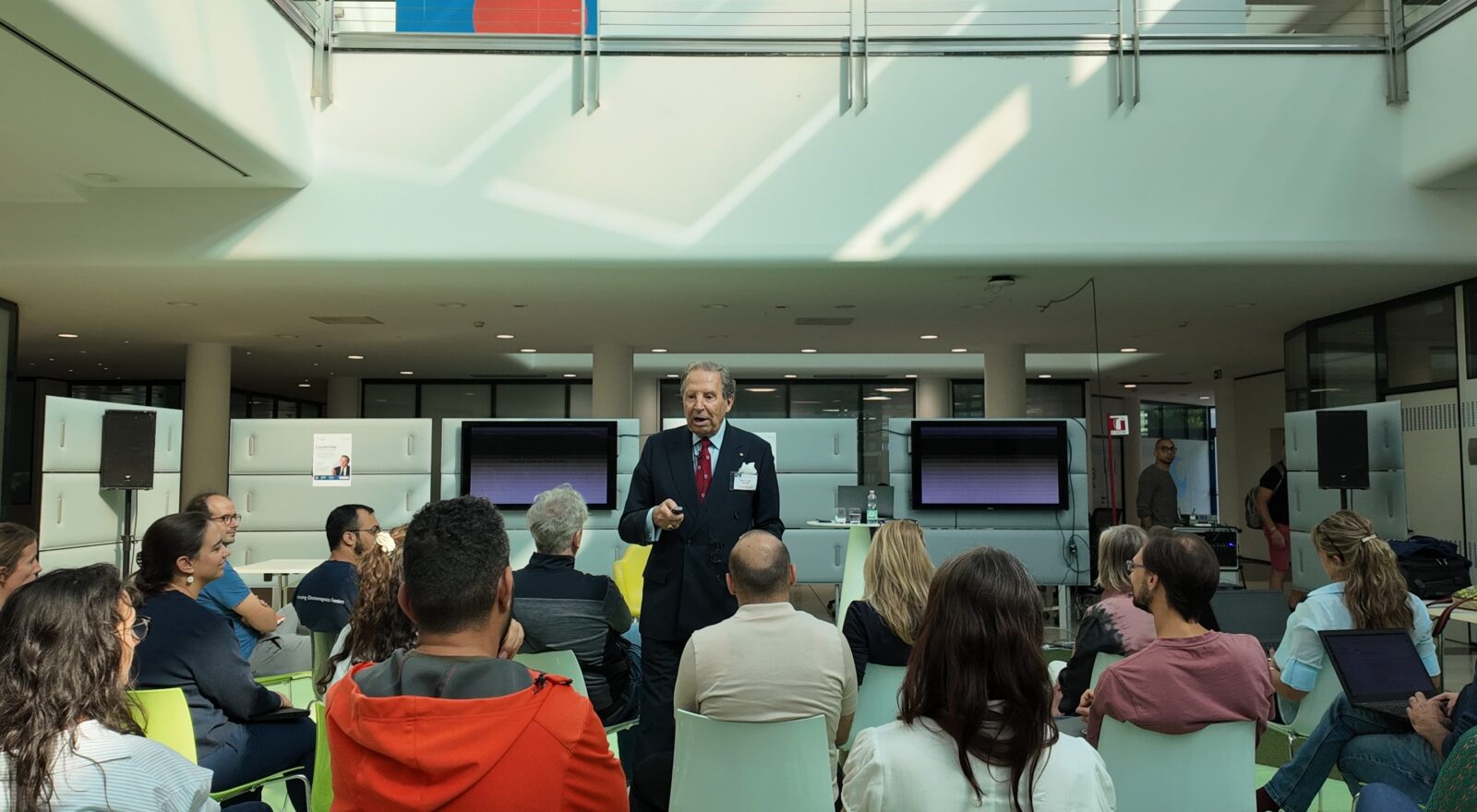
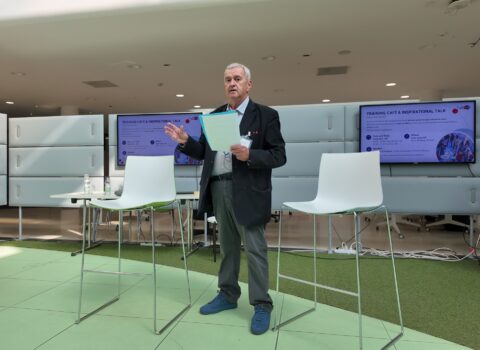
As a guest at FBK to give an inspirational talk, Arturo Maria Cardelùs shared his extensive experience in developing international companies, leading and training thousands of employees, revealing the formula for success through relationships, trust, credibility and the emotional drivers that must be cultivated.
We met with the long-serving manager and asked him to elaborate on certain aspects in order to gain deeper insight into his vision of leadership, through anecdotes and lessons learned.
Giancarlo Sciascia (GS): “A company is often mapped out through its official organizational chart, but there is an invisible infrastructure made up of personal relationships, trust and informal exchanges. In your experience, how does this invisible network determine the daily success or failure of a project, beyond the written procedures?”
Arturo Maria Cardelùs (AMC): For a project to succeed, it must first and foremost be a constructive project for the company, and not for the person who designed it. To this end, it must have strong endorsement, adequate resources and solid support. It is not merely a question of numbers but a comprehensive assessment in terms of “corporate weight.” This implies that it may not be enough to devise an initiative that promises concrete results; it is also necessary for the person leading it to ensure alignment with the organization, i.e., to establish a good relationship with management, since without the consent of superiors, the initiative will not move forward. In other words, we must ensure that the project brings about a positive change in the company; that it is viewed favorably by the people it will involve, and this applies to both direct and indirect relationships; and that it is presented with the involvement of other people who can “endorse” it and influence its perception and therefore its potential success.
GS: “How can a leader map, understand and ‘cultivate’ this relational infrastructure, especially now that hybrid work risks weakening spontaneous connections?”
AMC: Essentially, by taking care of personal relationships. To do this, it is very important to treat people with sincerity and loyalty, building bonds of trust at all levels. It is not enough to make decisions; you also need to take responsibility. Another important aspect is to establish collaborations with colleagues when the opportunity arises. Finally, for an intelligent, open-minded and collaborative person, it does not take long to read situations.
GS: “Can you tell us about an instance where the strength of internal relationships – and not a formal process – enabled your team to overcome a crisis or a time of intense pressure?”
AMC: There were three senior directors competing with each other to build a new factory in Europe. With the help and cooperation of colleagues working in the industrial and financial departments, and of interpersonal skills, I persuaded top management to build it where I wanted.
The constructive “No”: taking responsibility for creating value
GS: Have you ever had to take a stance against your supervisors in your career to protect the value of the work or the impact on the client? What led to your choice, and how did it turn out?
AMC: I remember a telling episode. I had put together a great deal, whereby one of our products – unknown in the US but very popular in Europe – would be marketed under the brand of a hugely popular US consumer products company. We had a very positive launch, and the signs of great success were clear. However, when a new CEO joined our company, the project was canceled.
GS: There is a lot of talk about alignment of values, but sometimes personal loyalty and the interests of the organization do not coincide. In your opinion, how and when should an employee find the courage to say “no” to hierarchical directives that are considered clearly dysfunctional?
AMC: Before you can express your dissent, it is essential to have established and recognized credibility. Without a credible personal history, there is no history. Secondly – but only secondly – you also need solid reasons. When both conditions are met, the likelihood of everything going smoothly increases significantly.
GS: What is the difference between destructive dissent and a “no” that actually creates value? How can you express strong disagreement without damaging the relationship of trust?
AMC: The only aspect of fundamental importance in cases like these is always to identify the real, non-personal reasons behind – or rather, within – the dissent. If this aspect is carefully considered, dissent can be reasoned and constructive; otherwise, the risk of negative and unpredictable consequences increases significantly.
Team spirit: the wild card
GS: Can you tell us about an instance where the strength of internal relationships, rather than a formal process, enabled your team to overcome a crisis or a period of intense pressure?
AMC: There were three senior directors competing with each other to build a new factory in Europe. Certainly, the help and cooperation of colleagues working in the industrial, financial, and human resources departments laid the groundwork for convincing top management to build it where I wanted. However, what truly made the difference was the morale and dedication to the cause that top management perceived in my team during their visits. What they saw in the team’s internal relationships led to the decision I had hoped for: the strength of the bonds between people, the cohesion in the drive toward the common cause, and everyone’s willingness to overcome obstacles in order to achieve the company’s goals. This led top management to believe that the gamble, with such a cohesive and motivated team, would pay off, as it was perceived as safer than the other options. Ultimately, this is what I mean when I say that the strength of internal relationships really makes a difference.
Influence without authority: putting forward good ideas from the bottom up
GS: It often happens that the most innovative ideas come from those who do not yet have the formal authority or role to impose them How do you go about building support for a good idea over time and getting people to accept it when you lack the authority to impose it?
AMC: The process simply begins by selling the idea to your immediate supervisor. This is the first step. If the manager accepts it, from that moment on, together, you can prepare the path to follow, which can be a vertical or horizontal path, always depending on friendships, alliances, and influences. I embrace Angela Duckworth’s maxim: “Research has shown that willingness to ask for help is key to success.”
Leadership defined
GS: From a manager’s perspective, how do you build an environment where people feel safe putting forward out-of-the-box ideas, and, more importantly, how do you ensure that hierarchy doesn’t become a filter that stifles the most promising voices?
AMC: First of all, the manager must be a true leader. What does it mean to be a true leader? A person who is open to everyone, who sets an example, who knows how to delegate and helps their team grow. These are my simple secrets of a successful person.
Discussion among leaders
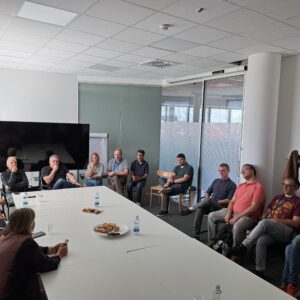
On the sidelines of the meeting for all employees, Cardelùs met with FBK’s Lead Community, which includes dozens of unit heads who meet periodically to share best practices and discuss the daily challenges related to the complexity of managing a research group, between constraints internal and external to the organization, under the pressure of competition and the rapid advancement of knowledge.
From “me” to “us”
After distinguishing between what is meant by a boss and a leader, with the former “based on authority deriving from one’s hierarchical role,” while the latter “is based on credibility and the ability to inspire and lead the group,” Cardelùs emphasized the importance of basing relationships on mutual trust, built through daily example, consisting of listening, a positive attitude and the ability to recognize merits and attribute successes to the team.
Another key aspect is the ability to select motivated as well as qualified people. Talent alone is not enough; it is crucial to maintain a high level of motivation. You need to surround yourself with the best people, delegate by giving up power, and help the group grow, approaching every discussion with honesty, integrity, and clarity, continually aligning values as far as possible and, only when differences cannot be resolved, coming up with reasonable “Plan Bs.”
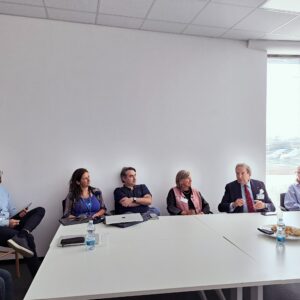
In particular, it emerged that, in the scientific and technological context, evaluation metrics are complex because they encompass aspects that are not easily linked to quantitative indicators. These metrics consider both the short term and the long-term evolutionary perspective, balancing academic impact and reputation, as well as work-life balance and sustainable, shared and measurable goals in terms of their real significance, highlighting the tangible benefits for the organization and all its stakeholders generated by each decision.
An interdisciplinary and intergenerational exchange of ideas, featuring anecdotes and questions that sometimes inevitably remain open, drawing on the long-standing experience of an international manager with high-level roles and responsibilities, and recognizing how organizational models have changed over time, and with them, the very meaning of work is also under discussion.
Amid the crisis of liquid modernity, in which accelerated digitalization and artificial intelligence are transforming our society and risk reducing human beings to isolated cogs in a machine, fostering genuine connections among peers and building communities is already, if not the answer, an important first remedy.
GS: What is your take-home message?
AMC: “The most important thing for me, my main commitment, was to help the people who worked with me grow, not to exploit them, to help them progress, to find the most suitable position for each person based on their individual characteristics. This applies not only to work but also develops through training activities. For example, I took my group abroad to study in the U.S., where they experienced a double shock: first, due to the contagious dynamism and cultural diversity of the place, and second, due to the intensity of the 15-day course spent side by side with other international talents. For me, the teaching of the Gospel parable of the talents applies: the success of a leader can be measured by their ability to foster the success of the people they lead.”
—————————————————————————————————————————
Bio
Born in 1942, Arturo Maria Cardelùs has been a figurehead of the Ferrero Group for decades. From 1999 to 2012, he served as CEO for South America, Russia and the CIS, growing the workforce from 150 people in 2001 to over 2,500 employees in 2010 and making the CIS market one of the Ferrero Group’s three most successful markets. After graduating with honors from Harvard Business School, he began his career as a salesperson at Johnson-Wax USA, later becoming Vice President for Latin America and Canada. He has held the positions of Executive Vice President for International at Estée Lauder USA, Managing Director at Barilla in Italy, and Managing Director of the Intercontinental Division at Iberia in Spain. He is currently Chair of the Supervisory Board of the Luxembourg School of Business.
The author/s
Related articles