
Speed or competence? The challenge of AI in organizations
June 27, 2026
The rollout of AI across organizations is often portrayed as a simple race toward optimization. But reducing AI to just another software upgrade underestimates its fundamentally "relational" nature. These systems do more than simply perform tasks—they generate recommendations that can profoundly shape our thinking. In a market that demands immediate responses, the real risk is trading speed for value.
With this first article, we launch a series of insights entitled “Does AI help us work better?”, exploring the relationship between artificial “intelligence” and workplace well-being.
In conversation with Federico Cabitza, Director of FBK’s research Center for Digital Health and Wellbeing, we examine the delicate balance between algorithmic efficiency and the preservation of human capital.
As Cabitza points out, these technologies possess a distinctive “interactional quality”: they speak, write fluently, and make recommendations in ways that foster deep cognitive trust and a constant temptation to delegate (outsourcing).
In an age increasingly driven by speed and fragmentation, to quote the recent encyclical Magnifica Humanitas, we must ask ourselves whether we are still capable of protecting spaces and contexts in which physical presence and attentive listening remain essential.
Giancarlo Sciascia: In business environments focused on maximizing productivity, there is often a trade-off between making faster (and immediately profitable) decisions and slowing down the decision-making process to preserve expert knowledge. Is there not a risk that management will view this slowdown as a disadvantage and ultimately choose to delegate decisions entirely to the algorithm—an investment that may prove less profitable in the long run?
Federico Cabitza: “Yes, the risk is real, and it is one of the most delicate aspects of today’s digital transformation. Many organizations evaluate AI primarily through the lens of immediate efficiency: saving time, cutting costs, standardizing processes, and boosting productivity. These are all legitimate objectives, and I certainly do not mean to dismiss them. The problem arises when this logic is interpreted too narrowly—as if the value of a technology were measured only by how quickly it enables decisions to be made or by how many decisions it allows to be automated.
In many high-responsibility settings—I am obviously thinking of healthcare, but also safety, people management, and strategic business decisions—expert knowledge is not a burden. It is an organizational resource; it is knowledge capital. It enables us to recognize unusual cases, interpret weak signals, contextualize an algorithmic recommendation, and understand when an output that appears formally plausible is, in fact, substantially dangerous.
Total delegation to the algorithm may seem convenient in the short term, but it creates fragility over the medium and long term. The risk is not only the occasional error made by the machine. The deeper risk is the gradual erosion of human and organizational competence—what we call deskilling. If people stop exercising judgment, they gradually lose the ability to evaluate, correct, and govern the system. At that point, the organization becomes faster, but also blinder.
This is why I believe the right question is not, ‘How much can we automate?’ The right question is, ‘What combination of human and algorithmic capabilities creates value in a way that is safe, sustainable, and governable?’ This is also the purpose of the work we are carrying out at the DHWB Center: producing evidence, methodologies, and prototype solutions to understand not only whether a technology works, but under what conditions it can be adopted without diminishing the expertise of healthcare professionals, increasing opaque risks, or transferring decision-making responsibilities to systems that cannot truly be held accountable.
So yes, in some cases, slowing down is not inefficiency. It is an investment in the quality of decision-making, organizational resilience, and the sustainability of innovation. The most forward-looking managers should ask not only how much time AI saves them, but also what capabilities they risk losing if delegation is poorly designed.”
Toward new management models
If human expertise is the true safeguard against organizational “blindness,” who should be responsible for protecting organizations from these emerging risks? In the next article, we will explore how corporate security roles must evolve to govern the growing opacity of algorithmic systems.
The author/s
-
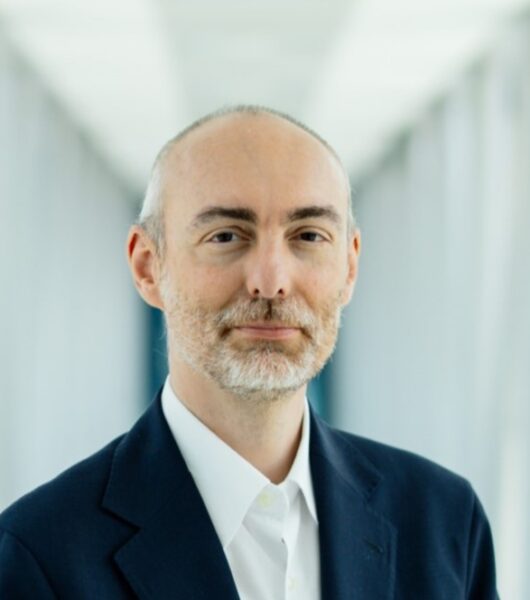 Federico Cabitza
Direttore Centro Digital Health & Wellbeing
MORE INFO
Related articles