


From ethics to genetics through AI
October 27, 2026
An interview with FBK-ISR PhD candidate Tommaso Ropelato to explore his research journey—which grew out of questions opening one inside another like Russian nesting dolls—and to discover his vision for science communication as an integral part of academic responsibility.
Your doctoral research focuses on bioethics. Specifically, what aspects are you investigating through your studies?
My interests lie at the intersection of ethics and genetics, with a specific focus on genetic testing. While genetic testing enables increasingly precise, personalized, and predictive medicine, it also generates a type of knowledge that forces individuals to redefine their identity, manage uncertainty, and navigate the weight of their own responsibilities. In reproductive healthcare, this interplay becomes even more profound because it directly touches upon reproductive freedom and the moral duty owed to an unborn child.
This research led me to the central philosophical question of my dissertation: what does it actually mean to be autonomous in a medical setting? It is a question as old as healthcare itself, but modern technology has made it far more urgent. I approach this primarily through a historical-genealogical lens, tracing how informed consent has established itself from Hippocratic paternalism to contemporary bioethics. The goal is to distinguish the formal right to choose from the underlying conditions that allow a decision to mature.
Building on these conditions, I explore comparisons with Catholic, Jewish, and Islamic ethical perspectives—traditions that are often framed as practically incompatible with secular bioethics. However, what sets them apart is also how they conceptualize the decision-maker: the role of personal bonds and community, the relationship between duty and freedom, and the continuity of choices with one’s own life history. Following an insight from Habermas, I believe religious traditions hold moral resources that can also enrich secular discourse. Examining them helps us return to emerging technologies with a more critical eye on the complexity of autonomy: how do our capabilities to understand, choose, and take accountability for our decisions evolve?
You also work on the application of artificial intelligence in medicine. From what perspective?
I study the risks and opportunities associated with AI when it mediates the clinician-patient relationship. In a study on chatbots in genetic counseling, I demonstrated that this mediation is never neutral: presenting a reproductive choice as the obvious consequence of a statistical probability introduces a hidden value judgment—one that the patient must be able to recognize and question.
A second focus area involves end-of-life care. For example, I have analyzed a recent proposal to use predictive algorithms to reconstruct advance care directives for patients who can no longer communicate. However, predicting a statistical preference is not equivalent to respecting a moral will. A more promising approach lies in simulation: as long as a person retains decision-making capacity, AI can help them explore complex scenarios, clarify doubts, and formulate truly informed advance directives by stimulating their moral imagination rather than replacing it.
Finally, I address a frontier that remains largely unexplored in current debates: conscientious objection applied to AI. A machine does not possess moral integrity to protect and cannot “object,” especially if—as has been proposed—it were to participate in sensitive practices such as abortion or assisted suicide. On the other hand, this does not mean it should blindly execute any request as a mere service provider. A clinical AI system should be able to refuse a command if clear patient-care reasons warrant it, provided it can recognize when those reasons apply and respond proportionally. That justified refusal serves to safeguard medical standards and must never be weaponized to impose the personal beliefs of the developers or implementers; in that scenario, it would simply be an attempt to sneak genuine human objection in through the back door.
Where did your interest in these issues come from, and what path led you to academic research?
It all started with gene editing during my master’s degree in philosophy at Trento, where I wrote my thesis on human enhancement. From that core topic, questions began unpacking one inside another, like Russian nesting dolls: what are we allowed to modify? Where does treatment end and enhancement begin? And what happens to our freedom when we can alter the biological traits that define how someone else’s life begins?
During my master’s program, an internship at CIBIO (the Center for Integrative Biology at the University of Trento) brought me into direct contact with field research for the first time, grounding those theoretical questions in practical lab work. I interviewed researchers about the relationship between science and bioethics, and we often realized that my philosophical “whys” did not align with their technical questions. That gap taught me a great deal: philosophy must closely understand the scientific practices it questions, but without ever relinquishing the freedom to challenge their goals.
Through my PhD program in Turin and my work at FBK in Trento, I expanded my research to include dialogue with religious traditions, while research stays abroad in Madrid and Antwerp further broadened my perspective. Yet, the underlying question has remained the same: how does what we can do—and what we think we are—change as the technologies we use to understand ourselves and make decisions evolve?
What is the added value of conducting your work at FBK’s Center for Religious Studies?
Working at the Center allows me to study religions in a genuinely interdisciplinary way: not as monolithic sets of positions to be categorized, but as complex traditions of thought and historical experiences. For bioethics, this approach is vital. A religious perspective defines the value framework within which an individual interprets their own vulnerability, understands their duties, and recognizes the authority of those offering guidance.
In addition, there is immense value in the dedicated bioethics research line that Lucia Galvagni leads within the Center, which successfully connects international debates with local academic excellence—from CIBIO to the philosophy department, from the Biolaw group in the law department to other FBK centers focused on technological innovation, such as Digital Health & Wellbeing. This interconnectedness creates an ecosystem where questions take on new meaning through different perspectives.
Lastly, the unique nature of an institution like FBK lies in the broad degree of intellectual and creative freedom it affords. For early-career researchers, this open environment carries significant responsibility, but it also offers an extraordinary opportunity to get directly involved right from the start.
In addition to your research, you have contributed to cancer prevention initiatives as a Horizon Europe Young Ambassador, founded Prismag (a magazine focused on innovation, culture, and society), created the award-winning blog AlterThink, and written for the daily newspaper L’Adige. Why is communicating science outside academia so important?
Public outreach and science communication are an integral part of a researcher’s responsibility, not optional add-ons. As a Horizon Europe Young Ambassador, I helped produce a 10-episode podcast on cancer, engaging in discussions with experts from the European Institute of Oncology, AIRC, and the Umberto Veronesi Foundation. Alongside scientific advancements, we addressed the psychological, social, and economic dimensions of cancer—topics that impact many of our lives and are often difficult to discuss openly. Designing that project meant identifying the questions that truly help people navigate such a complex experience.
It is an exercise in translation that I continued to refine through AlterThink, Prismag, and my writing for L’Adige. Writing for specialists relies on a shared vocabulary and common reference points; writing for the general public requires you to first explain why a question matters before offering an answer.
That is why public communication serves as a powerful test for research itself. Finding accessible language without sacrificing conceptual rigor is often harder than using technical jargon. Moreover, questions from people who view science through different lived experiences challenge underlying assumptions, helping researchers better understand the scope of their work and why it is worth pursuing.
Biography
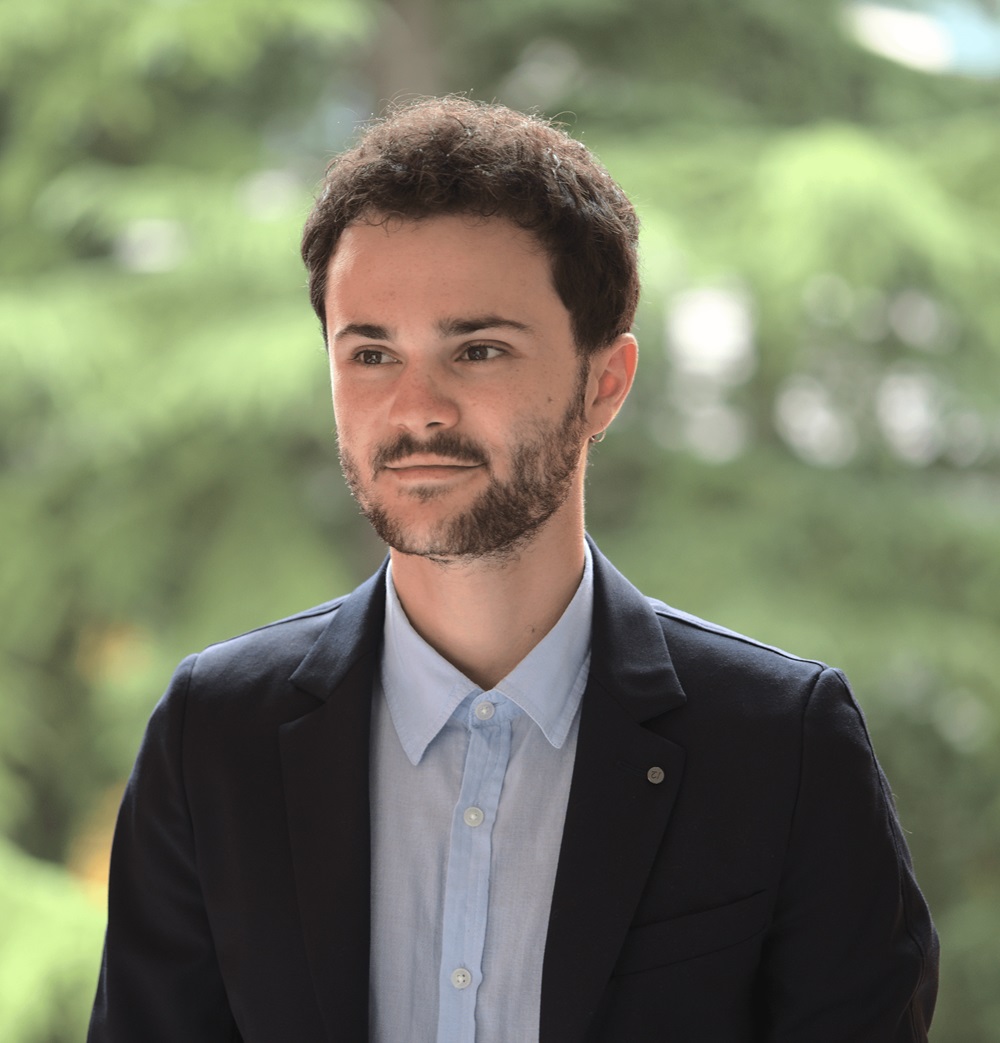
Tommaso Ropelato is a PhD candidate in Religious Studies (DREST) at the University of Turin and conducts his research at the Center for Religious Sciences at Fondazione Bruno Kessler in Trento. He holds a master’s degree in Philosophy from the University of Trento, focusing on informed consent, religious bioethics, and the ethics of genetic technologies, reproduction, and artificial intelligence. Formerly a visiting student at the Complutense University of Madrid, he is currently a visiting researcher at the Centre for Ethics at the University of Antwerp. He served as a Horizon Europe Young Ambassador in 2022, has written for the daily newspaper L’Adige, and is the founder of the blog AlterThink (awarded by Corriere della Sera in 2021) and co-founder of Prismag. He is passionate about music and cooking.