HARMONIE: Digital Twins for Healthier and More Sustainable Cities
November 27, 2025
FBK joins a new European initiative to reduce air and noise pollution and improve urban environments
Urban air and noise pollution are silent threats affecting millions of Europeans every day. To help cities address this challenge, the HARMONIE project (Health Assessment Refinement for Mitigating Noise and Air Quality Effects) brings together European experts in environmental science, public health and digital technologies to develop advanced tools that support cleaner, healthier and more equitable urban environments. The initiative is coordinated by the Barcelona Supercomputing Center – Centro Nacional de Supercomputación (BSC-CNS), with Fondazione Bruno Kessler participating through its MoST and MoDiS units within the Center for Digital Society
Funded under the Horizon Europe call “Zero-Pollution Cities,” which contributes to the EU Mission “Climate-Neutral and Smart Cities by 2030,” the project takes a holistic approach to support informed policymaking. It improves monitoring and modelling of air and noise pollution and provides tools to evaluate the health impacts of urban policies and actions in both the short and long term.
“Air pollution is one of the most urgent challenges for many cities. Tackling it requires not only better technologies, but also a deeper understanding of citizens’ behaviours—from those that generate higher or lower emissions to those that determine different levels of exposure to pollutants. This is why it is essential to have tools capable of analysing and interpreting such behaviours and suggesting effective ways to modify them. The citizen-centric digital twin that FBK will help develop within the project is designed precisely for this purpose: to understand and enhance the interaction between people, cities and the environment” says Marco Pistore, Head of the MOST Unit at FBK’s Center for Digital Society.
“In HARMONIE, we will leverage the MoDiS unit’s expertise in behavioural change and environmental awareness, with a particular focus on real-time feedback mechanisms and gamification techniques. The goal is to actively and continuously engage citizens by providing them with personalised information on both individual and collective contributions to reducing air pollution. Through the Citizen-Centric Digital Twin and the connected digital platforms, we aim to make behaviours more visible, understandable and motivating, thereby supporting urban interventions that are truly effective, adaptive and community-driven”, explains Annapaola Marconi, Head of the MoDiS Unit at FBK’s Center for Digital Society.
To achieve these goals, HARMONIE works across two interconnected environments: real-world pilot studies and advanced digital twin simulations. In its five pilot cities – Barcelona, Lausanne, Sarajevo, Gävle and Barakaldo – the project collects detailed data on air and noise pollution, including emerging indicators such as oxidative potential (OP), as well as citizen mobility patterns, exposure levels and health indicators, with particular attention to vulnerable populations.
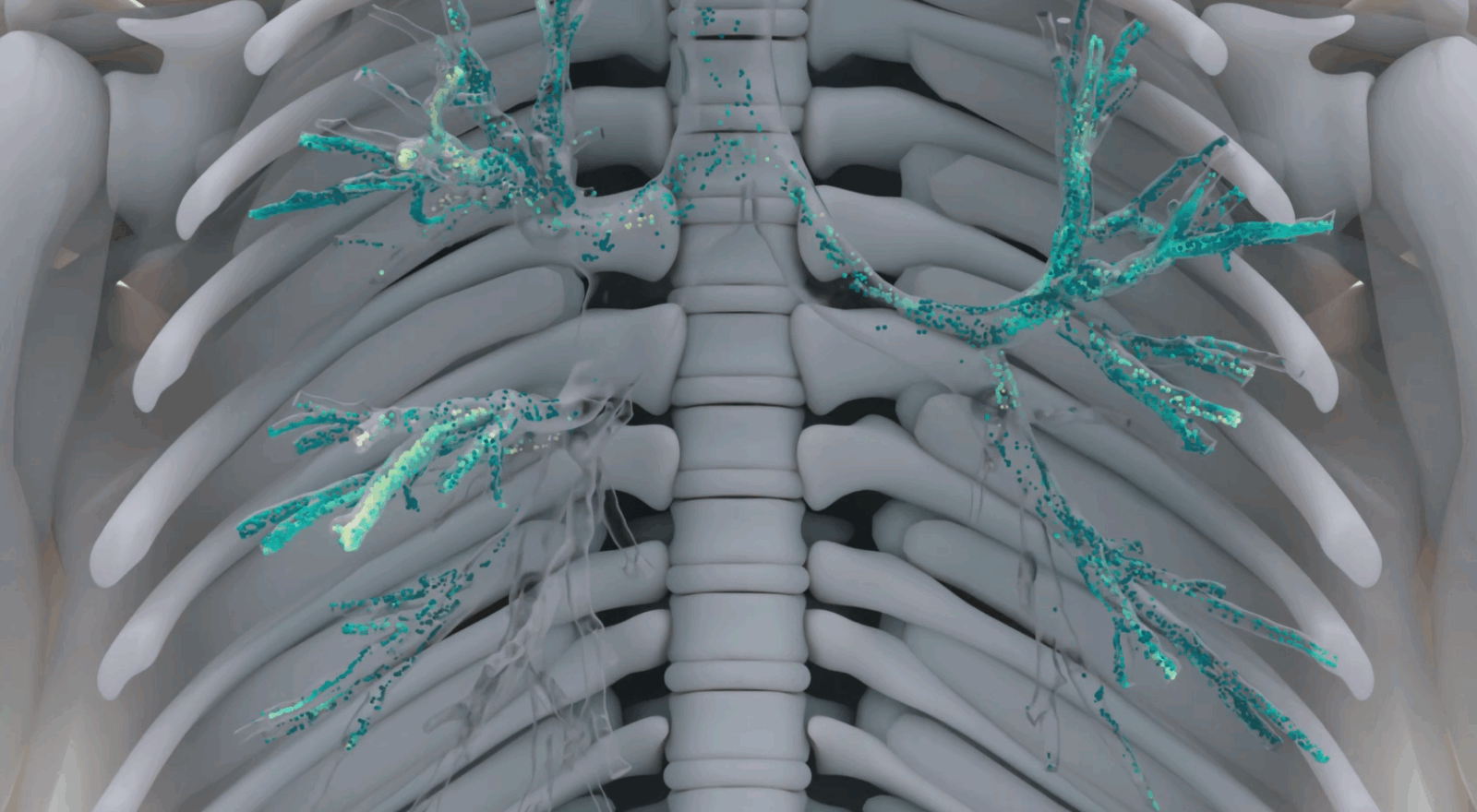
These real-world insights feed into two complementary digital twin systems. The first, the Lung Digital Twin (LDT), adds a unique physiological dimension by modelling how pollutants interact with the human respiratory system. Based on patient-specific geometries and high-resolution models of inhaled pollutants, it simulates airflow and the transport and deposition of inhaled particles inside the airways, enabling detailed assessments of inhaled dose, susceptibility, and health-impact pathways linked to oxidative stress.
In parallel, the Citizen-Centric Digital Twin (CCDT) provides an urban-scale perspective by integrating detailed pollution mapping with mobility patterns, social dynamics and exposure modelling. It shows not only where people are exposed to pollution, but also the health impacts attributable to that exposure. The CCDT enables “What-If” simulations that allow policymakers to test potential urban measures in a safe, data-driven environment, helping them evaluate alternatives and design interventions that are both effective and equitable in terms of health benefits.
The HARMONIE consortium includes 19 partner institutions: Barcelona Supercomputing Center, Universidad de Deusto, Bettair Cities SL, Agencia Estatal Consejo Superior de Investigaciones Científicas (CSIC), Fondazione Bruno Kessler (FBK), University of Bristol, Factual Consulting SL, Max Planck Institute for Chemistry (MPIC), Pompeu Fabra University (UPF), Swiss Tropical and Public Health Institute (Swiss TPH), Unisanté – University of Lausanne, Air Quality Consultants (AQC), the City of Sarajevo, University of Gävle, Diputació de Barcelona, the Barakaldo Municipality, University of Nova Gorica, University of Basel and the Lausanne Municipality.
“Health should be a priority in any urban planning effort and not be left exclusively to the medical profession,” said Beatriz Eguzkitza, project coordinator and researcher at the Barcelona Supercomputing Center (BSC). “Many air pollutants that harm people’s health also contribute to climate warming. Putting health at the centre of urban decisions drives measures that reduce pollution, enhance well-being and contribute to more resilient, equitable and sustainable cities.”
HARMONIE’s holistic approach not only advances environmental monitoring and modelling but also places citizen engagement and behavioural dynamics at the heart of zero-pollution strategies. The initiative provides open-source, scalable digital solutions for all cities and populations, supporting the EU’s broader ambitions for climate neutrality, health equity and zero pollution in at least 100 European cities, with the potential for global scaling.
EU Funding Acknowledgment
The HARMONIE project has received funding from the European Union’s Horizon Europe programme under grant agreement No. 101238943. Funded by the European Union. Views and opinions expressed are however those of the author(s) only and do not necessarily reflect those of the European Union or the European Climate, Infrastructure and Environment Executive Agency (CINEA). Neither the European Union nor the granting authority can be held responsible for them.
The author/s
-
 Annapaola Marconi
Annapaola Marconi received her Ph.D. in Computer Science at the University of Trento in 2008. She is currently Senior Researcher at Fondazione Bruno Kessler (FBK), where she directs the "Motivational Digial Systmes (MoDiS)" Research Unit at Digital Society Center of FBK. Her research interests include distributed adaptive systems, persuasive and motivational systems based on gamification and gameful design techniques. She is actively involved in the implementation and dissemination of initiatives and projects aimed at applying the research results in concrete applications that can create an impact on the local area and improve the quality of life of its citizens.
MORE INFO -
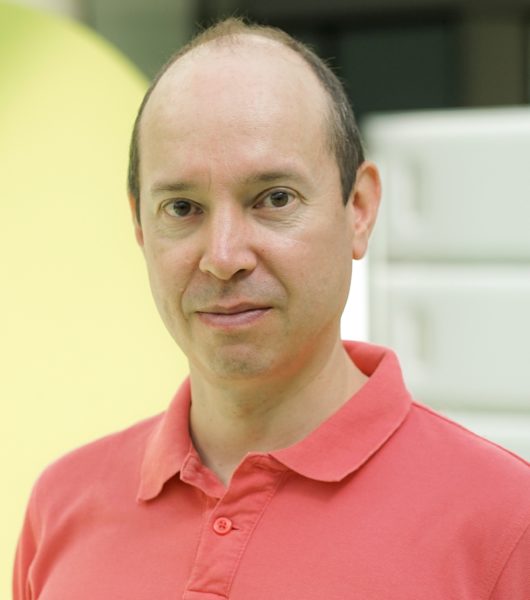 Marco Pistore
Lead researcher of the MoST research unit at Digital Society Center at FBK
MORE INFO
Related articles