


HATEDEMICS wraps up, opening new paths against hate and disinformation
March 30, 2026
The final conference of the HATEDEMICS project in Granada presented results and innovative tools developed by FBK to counter online hate speech and disinformation. ECLIPSE, a new project focused on personalized counter-narratives and broader impact, was also launched.
In a digital world where hate speech and disinformation spread faster than ever, the HATEDEMICS project marks a significant milestone in the effort of countering them. The project, coordinated by Fondazione Bruno Kessler and funded by The EU as part of the Citizens, Equality, Rights and Values (CERV) program, held its final event at the University of Granada on March 26, 2026, focusing on how artificial intelligence can be effectively leveraged to curtail the growing spread of online hostility.
By leveraging artificial intelligence and human expertise, the project has developed innovative tools to monitor, detect, and counter harmful content across social media platforms, while promoting inclusive and democratic digital spaces.
The conference will showcase the main results of the HATEDEMICS project and will feature panel discussions,presentations, and interactive workshops. It will bring together over 100 delegates – policymakers, academics, civil society organisations, technology professionals, young people, fact-checkers, and journalists – offering a unique opportunity to exchange perspectives and reflect on current challenges and future strategies at European level.
Beyond technology, the conference emphasizes education and citizen engagement; in fact, the project has developed methodologies and tailored training programmes aimed at equipping young people, NGOs, and public authorities with the skills needed to detect threats and respond appropriately.
This is what Marco Guerini, coordinator and head of the LAND unit at the FBK Center for Augmented Intelligence, said: “This project represents a pioneering landmark: for the first time, we are integrating the specialized expertise of fact-checkers and NGO operators into a unified AI framework to combat misinformation and hate speech. This initiative does more than just optimize response strategies through human-machine collaboration; it democratizes critical knowledge, making these sophisticated tools and insights accessible to the general public.”
The conference promises not only insights and innovation but also opportunities for collaboration, ensuring that the tools and knowledge developed within the project continue to generate sustainable impact across Europe.
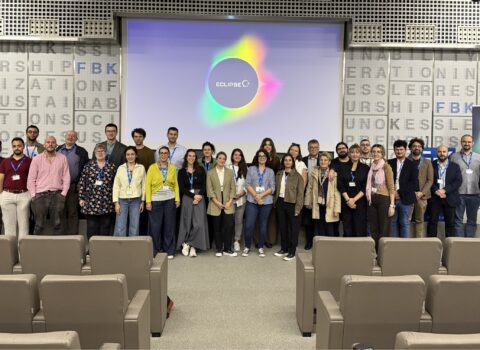
This commitment does not stop here. Activities will continue and be further developed within the ECLIPSE project, which began last fall and is also coordinated by Marco Guerini. In this new context, counter-narratives will be further refined through personalization based on specific situations and individual users, taking into account emotions, perspectives, and the most effective and empathetic response strategies. The project, which will run for three years and has a broader scope, aims to generate impact both online and offline, engaging an even wider and complementary audience that includes law enforcement actors, policymakers, and civil society organizations.
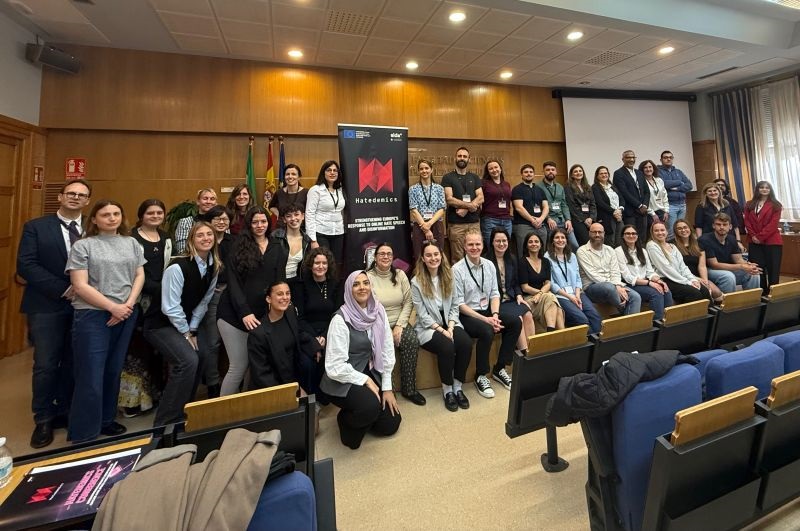
Hatedemics final conference
The author/s
-
 Marco Guerini
Researcher in Computational Linguistics and head of the Language and Dialogue Technologies group at the Digital Society Center (FBK-DIGIS)
MORE INFO
Related articles