
New avenues for agriculture and research in Trentino
August 19, 2026
Irrigation, climate, pruning, and technology transfer: four FBK projects featured in four episodes of the TV33 show " Nuove Strade - l'agricoltura che cresce (New avenues – growing agriculture)
Four episodes of the show “Nuove strade – l’agricoltura che cresce”, (New avenues – growing agriculture), broadcast on TV33, share a common thread: Trentino agriculture does not simply undergo innovation; it builds it together with those who work in the field every day.
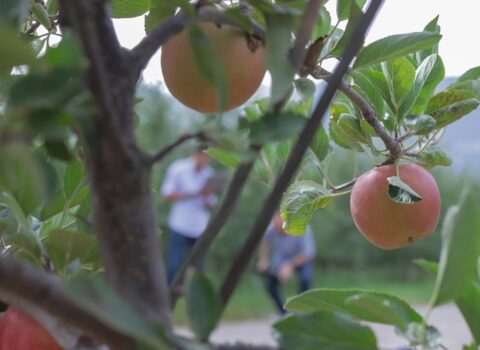
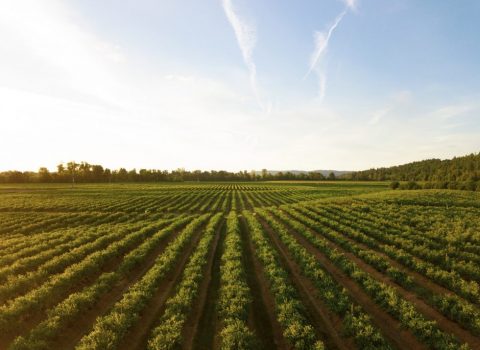
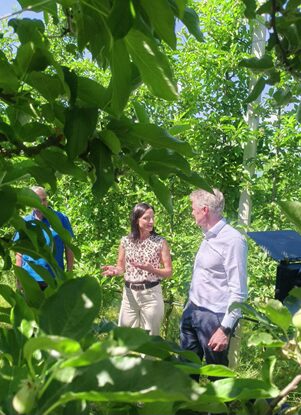 It starts with water, a resource that is often taken for granted. Fabio Antonelli, head of FBK’s OpenIoT unit, discusses the Irritre project in the episode “Acqua in Agricoltura: tra risparmio e tutela della qualità” (Water in Agriculture: balancing saving and protecting quality). Through sensors in the field, communication networks, and artificial intelligence algorithms, it is possible to monitor crop conditions almost in real time and apply so-called precision agriculture—that is, to supply water where it is needed, only when it is needed. The project, promoted by the Autonomous Province of Trento together with the Edmund Mach Foundation and Trentino Digitale, has now been validated at three pilot sites representing Trentino’s main crops: apple orchards in Tres in Val di Non, vineyards in Roverè della Luna, and olive groves in Varone on Lake Garda. The long-term goal is to turn Irritre into a service available to more than two hundred irrigation consortia in Trentino.
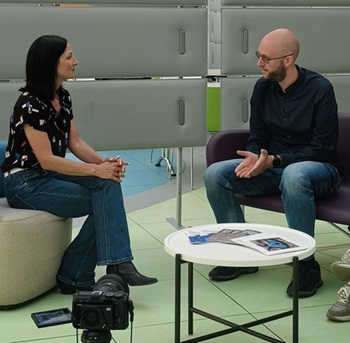 “Cambiamento Climatico: coltivare nell’incertezza” (Climate Change: Cultivating in Uncertainty) is the episode that takes a closer look at the Agriclima project. Funded by the PNRR and developed by FBK together with dozens of Italian partners, Agriclima collects and integrates climate, weather, and territorial data, often scattered across public and private sources, to build scenarios and analytical tools useful to the agricultural sector. Mattia Antonini, a researcher at FBK’s OpenIoT unit, explains how the platform makes it possible to study phenomena such as heat waves and their impact on communities, helping guide the decisions of those who must plan investments in irrigation techniques or structural interventions. The goal is not to directly combat climate change, but to give agricultural operators the tools to make informed decisions in a context of increasing uncertainty.
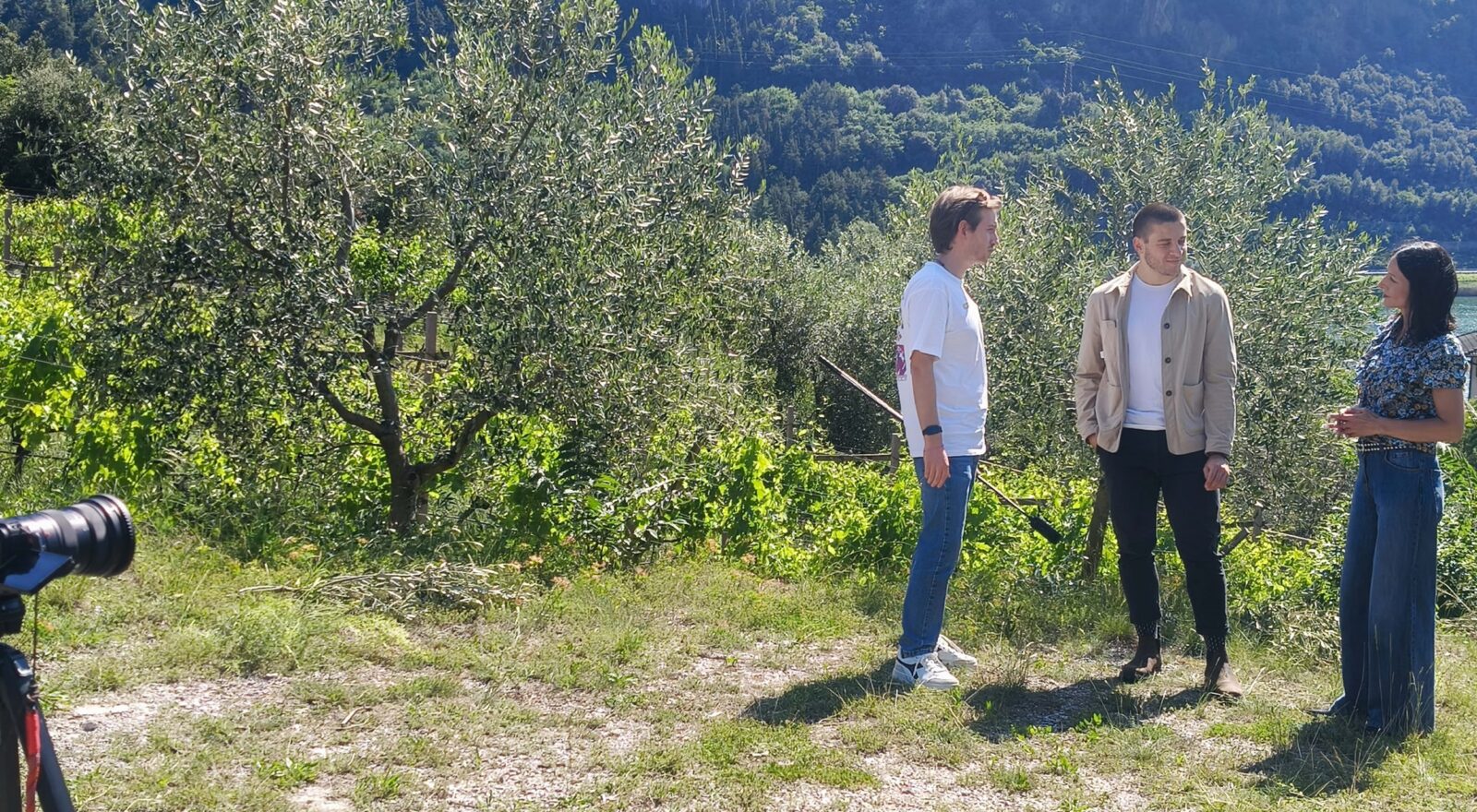
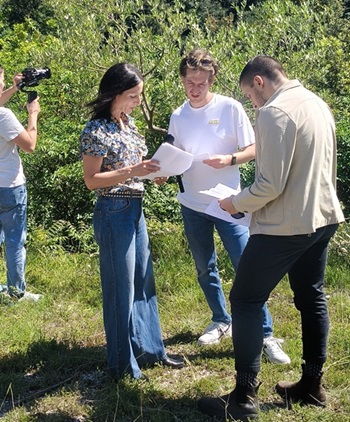 Then there is knowledge that risks being lost not because of a lack of data, but because it is not being passed on: the knowledge of pruning. AgRimate “Coltivare il futuro: il passaggio generazionale”, (Cultivating the Future: The Generational Transition) is a European Horizon Europe project in which FBK participates through its Technologies of Vision – TeV research unit, contributing its expertise in computer vision, three-dimensional data, and the reconstruction of digital environments. Researchers Sergio Povoli and Olmo Baldoni explain how 360-degree cameras are being used to scan olive trees before and after they are pruned by an expert, creating three-dimensional models that will be used to train algorithms capable of recognizing the decision-making patterns of an expert pruner. The ambition, they explain, is to develop, in several stages, a virtual environment for training new farmers, augmented reality glasses that overlay virtual cutting instructions directly onto the tree during work, and, ultimately, robotic solutions capable of performing complex cuts autonomously. The mission is to preserve centuries-old agricultural skills while adapting them to the challenges of the present.
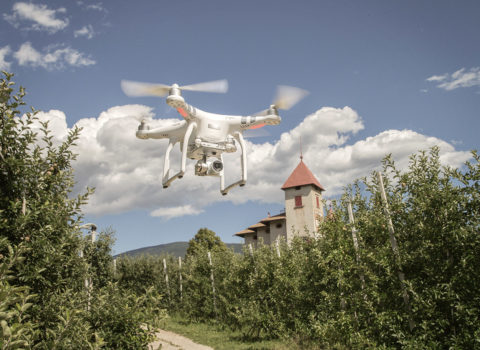
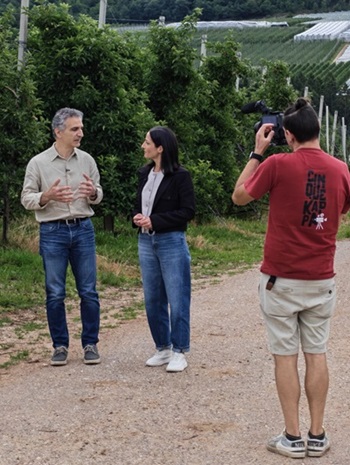 The final story “Innovazione in agricoltura: un percorso condiviso”, (Innovation in Agriculture: A Shared Path) focuses on the very method by which innovation is built. Raffaele Giaffreda, researcher and coordinator of the AgrifoodTEF project, explains that technological solutions only work if they emerge from direct collaboration among researchers, companies, and farmers, who must be able to contribute to the development of solutions as end users. AgrifoodTEF provides technology companies with infrastructure to test artificial intelligence and robotics solutions for the agri-food sector in the field, under real-world conditions. The Italian node, Giaffreda explains, focuses on the quality of Made in Italy agri-food products and on supply chain traceability.
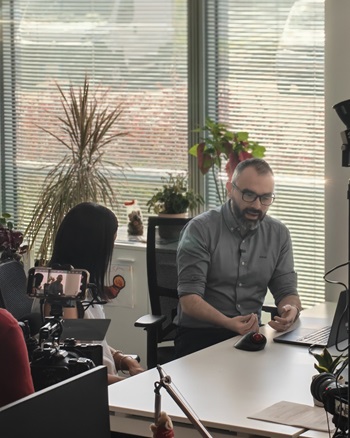
Completing the picture is CEADS ( Common European Agricultural Data Space), discussed by FBK researcher Luis Miguel Pincheira: a European infrastructure involving more than thirty partners that aims to create a marketplace for agricultural data, both public and private, so that the data can be shared, combined, and transformed into useful tools for researchers and individual farmers alike.
More efficiently managed water, climate risks analyzed through data, skills passed down through new tools, and innovation developed together with those who work the land: four different stories with a common thread—agriculture and research in Trentino evolving without losing their roots.
The author/s
Related articles