
Latest articles
-
 October 21, 2026The rediscovered voice of a leading figure of the Italian Republic. The National Edition of the Works of Aldo MoroWith President of the Republic Sergio Mattarella and Speaker of the Chamber of Deputies Lorenzo Fontana in attendance, the National Edition of the Works of Aldo Moro—the result of a decade of work—was officially presented to the Chamber of Deputies on September 23.
 -
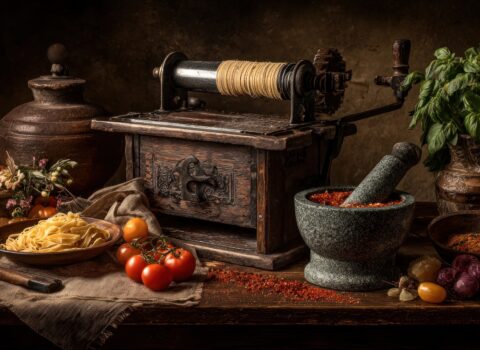 October 19, 2026Pasta, saffron, and Malvasia wine: Discovering food trends of the pastWe interviewed researcher Julia Seeberger, winner of a Marie Skłodowska-Curie postdoctoral fellowship, who chose FBK-ISIG to carry out her research project
 -
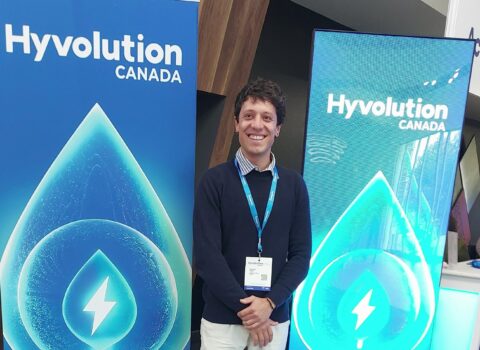 October 15, 2026Sandro Zorzi named among the winners of the 2026 Canada–Italy Innovation AwardThe FBK researcher was honored for HyWeCAN, a project dedicated to developing materials and technologies for green hydrogen production.
 -
 October 15, 2026A hot autumn at A.R.O.The New Book Recommendations in Issue IX, 2026/2 of Annali.Recensioni.Online.
 -
 October 12, 2026Forecasting demand when the market changes: Afliant’s AI models put to the test with FBKAs part of AI-MATTERS, FBK validated Afliant's forecasting models and tested the latest generation of deep learning to estimate sales, even with sparse or irregular data.
 -
 October 12, 2026“Financial education as a new public good”FBK-IRVAPP Director Mirco Tonin—Full Professor of Economic Policy at the Free University of Bozen-Bolzano and member of the Edufin Committee’s Scientific Panel—recently attended the General Assembly on Financial Education at the Ministry of Economy and Finance. The event honored organizations that have demonstrated exceptional quality and impact through their financial literacy initiatives. We caught up with Director Tonin to learn more.