

IMAGINE brings new tools to preventing youth crime
September 9, 2026
The European project coordinated by FBK focuses on gamification, digital storytelling and AI to develop innovative approaches to preventing juvenile crime
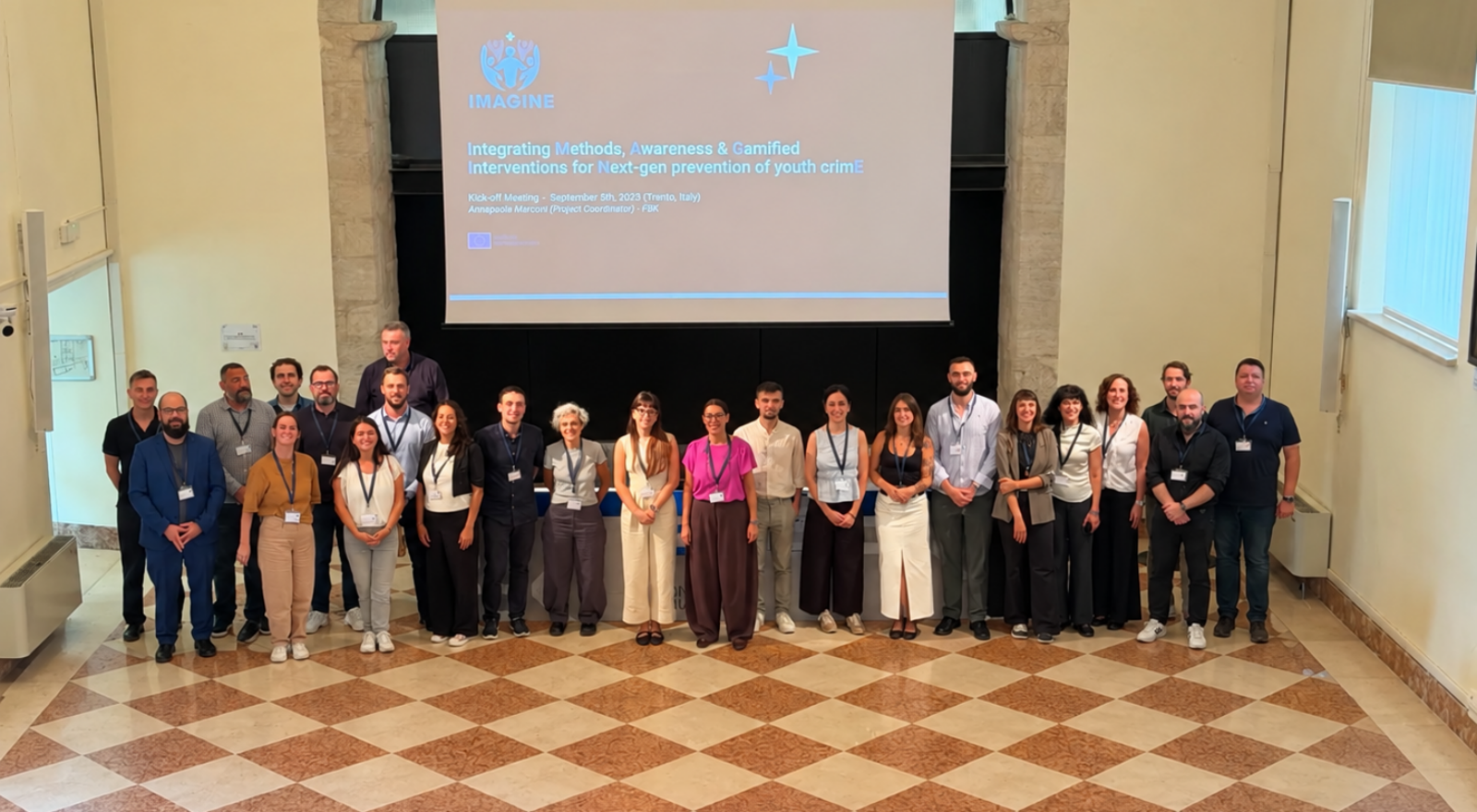
How can we prevent juvenile crime using tools that genuinely engage adolescents and young adults? IMAGINE starts from this question, combining gamification, digital storytelling, serious games and artificial intelligence to develop new approaches to education, awareness-raising and training. Coordinated by Fondazione Bruno Kessler, the European project officially began with a kick-off meeting held in Trento on September 9 and 10.
IMAGINE will run for three years, with a budget of €3 million, and initially brings together 13 partners from 11 European countries. The consortium will later expand through cascade funding: around 10% of the European contribution will be allocated through two open calls to involve an additional five to ten organizations. At FBK, the project involves the MoDiS and PMG Units of the Center for Digital Society, as well as the I3 unit of the Center for Augmented Intelligence.
“Building on the experience of MoDiS, we will develop tools based on gamification, digital storytelling and AI-powered narratives that can help further motivate this particular segment of the population. AI will also enable users of these tools to access personalized and continuously updated educational content,” explains Annapaola Marconi, coordinator of IMAGINE and head of the MoDiS Unit.
Funded under Cluster 3 of Horizon Europe, the project focuses on the new ways in which adolescents and young people aged 14 to 19 may be approached, influenced or recruited into criminal activities. The IMAGINE toolsuite will combine gamified learning pathways, digital storytelling, serious games and an AI-powered narrative engine with non-digital activities such as role-playing, classroom exercises and workshops. The content will address topics including peer pressure, cognitive biases, empathy, self-regulation and de-escalation. The tools will be designed for both young people and professionals working with them, including law enforcement officers, educators and civil society organizations. Reflecting this multidisciplinary approach, the consortium brings together universities, research centers, companies, civil society organizations and public security authorities, including Portugal’s Polícia Judiciária.
The first three pilot projects will take place in Belgium, Portugal and Romania and will involve law enforcement agencies, civil society organizations, schools and youth services. Their evaluation will combine quantitative data collected during the trials with qualitative methods such as interviews and focus groups.
The kick-off meeting in Trento marked the start of the partners’ joint work, bringing together research, digital technologies and field expertise to test new ways of designing prevention initiatives with and for young people.
The author/s
-
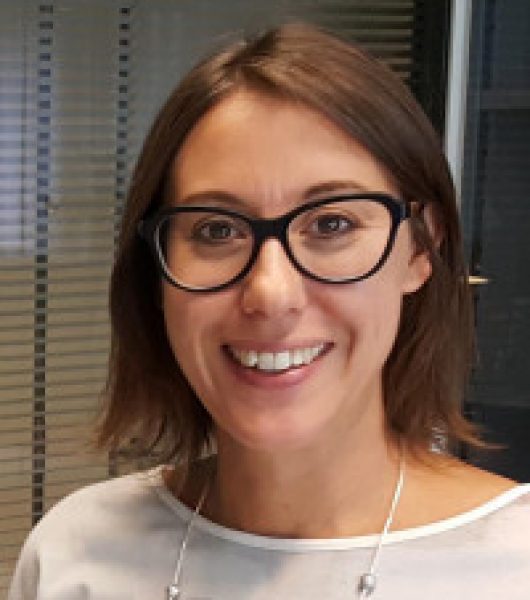 Annapaola Marconi
Senior Researcher at Fondazione Bruno Kessler (FBK)
MORE INFO
Related articles