
Play to understand: From GamiFIN 2026, new tools and visions for learning and ecology
April 21, 2026
From serious games about forests affected by climate change to tools for designing gamified experiences
What happens when games become tools for understanding the complexity of the world, from alpine forests to digital education systems? At the GamiFIN 2026 international conference, dedicated to gamification and gameful design, research from Fondazione Bruno Kessler presented concrete examples of how playful dynamics can be transformed into tools for awareness, design, and learning.
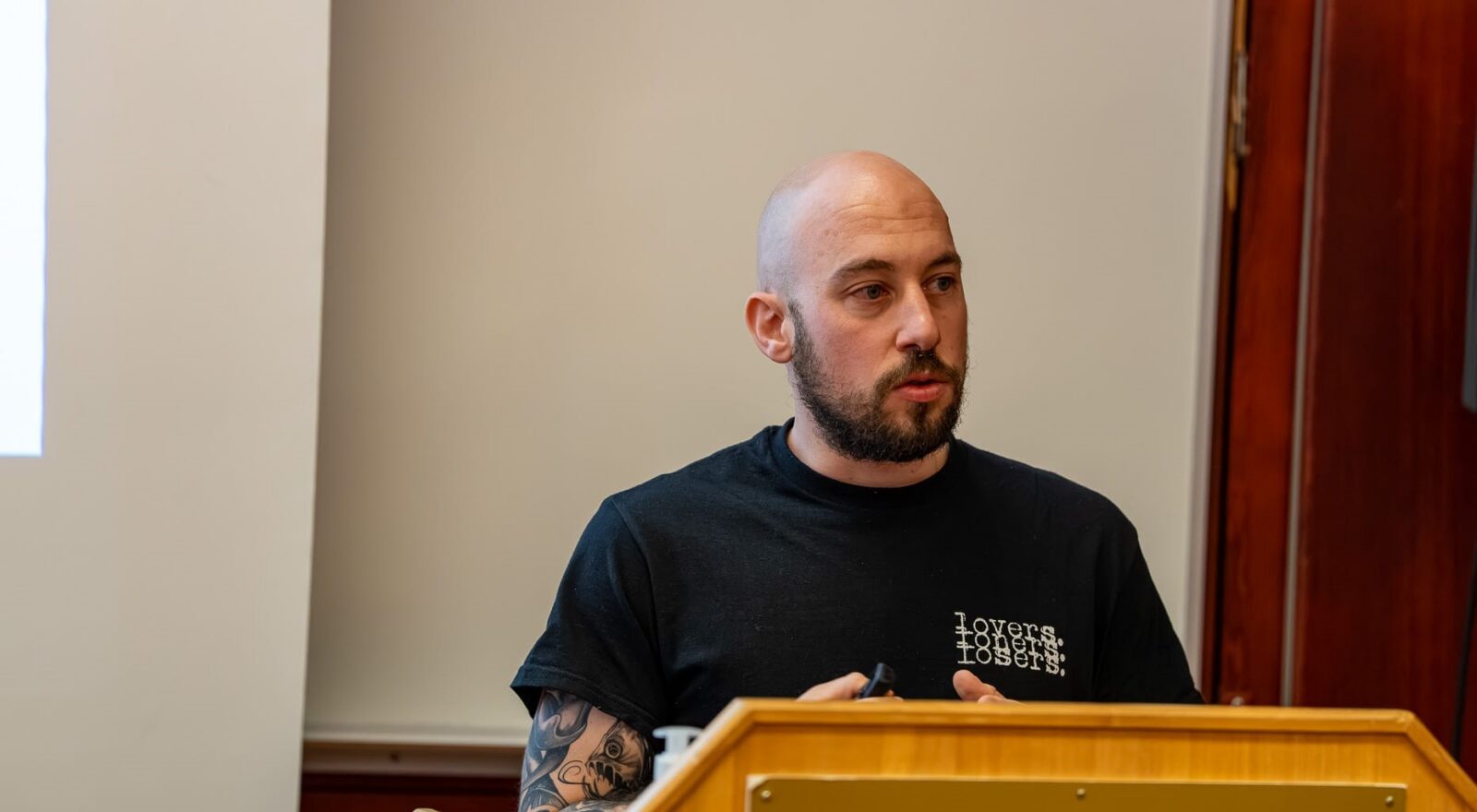
Simone Bassanelli, researcher and Science Ambassador at FBK, presented work on developing tools to support gamification designers. The paper introduces an interactive archive of UX methodologies designed to support the design and analysis of gameful experiences. The prototype includes an initial validation through a preliminary study and represents a step toward more accessible and structured tools for those working in digital experience design. The goal is to develop an advanced platform that can be practically used in both design and research. Simone Bassanelli also presented a second contribution focused on the role of game elements in educational pathways. Through a systematic review of the literature, the study questions the traditional approach based on points, badges, and rankings, highlighting the need for richer and more meaningful models. In particular, it emphasizes the importance of integrating narrative and storytelling into design to foster deeper and more engaging learning experiences that go beyond simple extrinsic motivation.
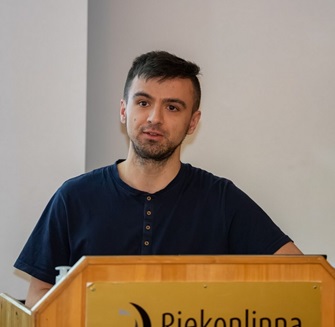
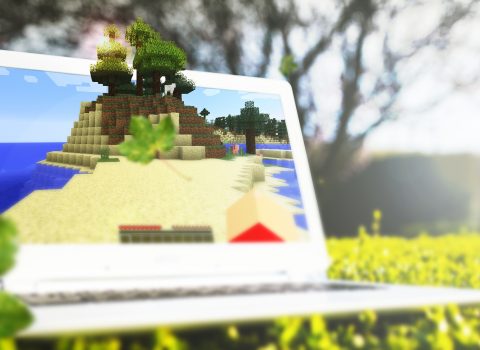
The educational and environmental dimensions come together in the work presented by Federico Bonetti, which introduces a serious game focused on forest management and owl ecology. The project, titled “Beetle Migration Game: Balancing Ecosystems as a More-than-Human Play Practice,” offers an experience in which players engage with the complexity of ecosystems and the coexistence between human and non-human agents. The game, already subject to an initial evaluation, provides promising ideas for raising awareness about issues such as extreme weather events, including Storm Vaia, and strategies for ecological balance. Development will continue with further refinements, with the aim of expanding its educational impact.
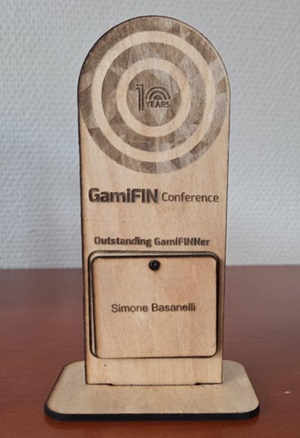
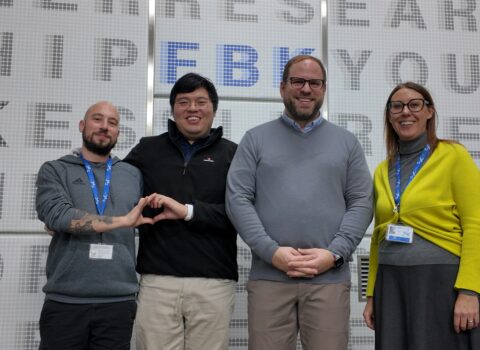
To complete this trajectory, the recognition awarded to Simone Bassanelli as “Outstanding GamiFINner,” reserved for those who have participated in at least five editions of the conference, highlights both continuity and his commitment to the international gamification community.
Taken together, these works point to a clear direction: using games not only as tools for engagement, but as means to understand complex systems, design more effective experiences, and build new forms of learning. This perspective emphasizes the relationship between technology, people, and the environment, and finds in FBK research a fertile ground for experimentation and development.
The author/s
-
 Simone Bassanelli
Simone Bassanelli is a researcher at the Motivational Digital Systems (MoDiS) unit of Fondazione Bruno Kessler.
MORE INFO
Related articles