AI supporting healthcare professionals: from knowledge to expertise
November 19, 2026
Artificial, generative, augmented, super... Intelligence. Regardless of what you call it, how do healthcare professionals actually use it? How much trust do they place in AI, and how mindfully do they use it? What is their perception of it, and how can they integrate it into their work safely and effectively?
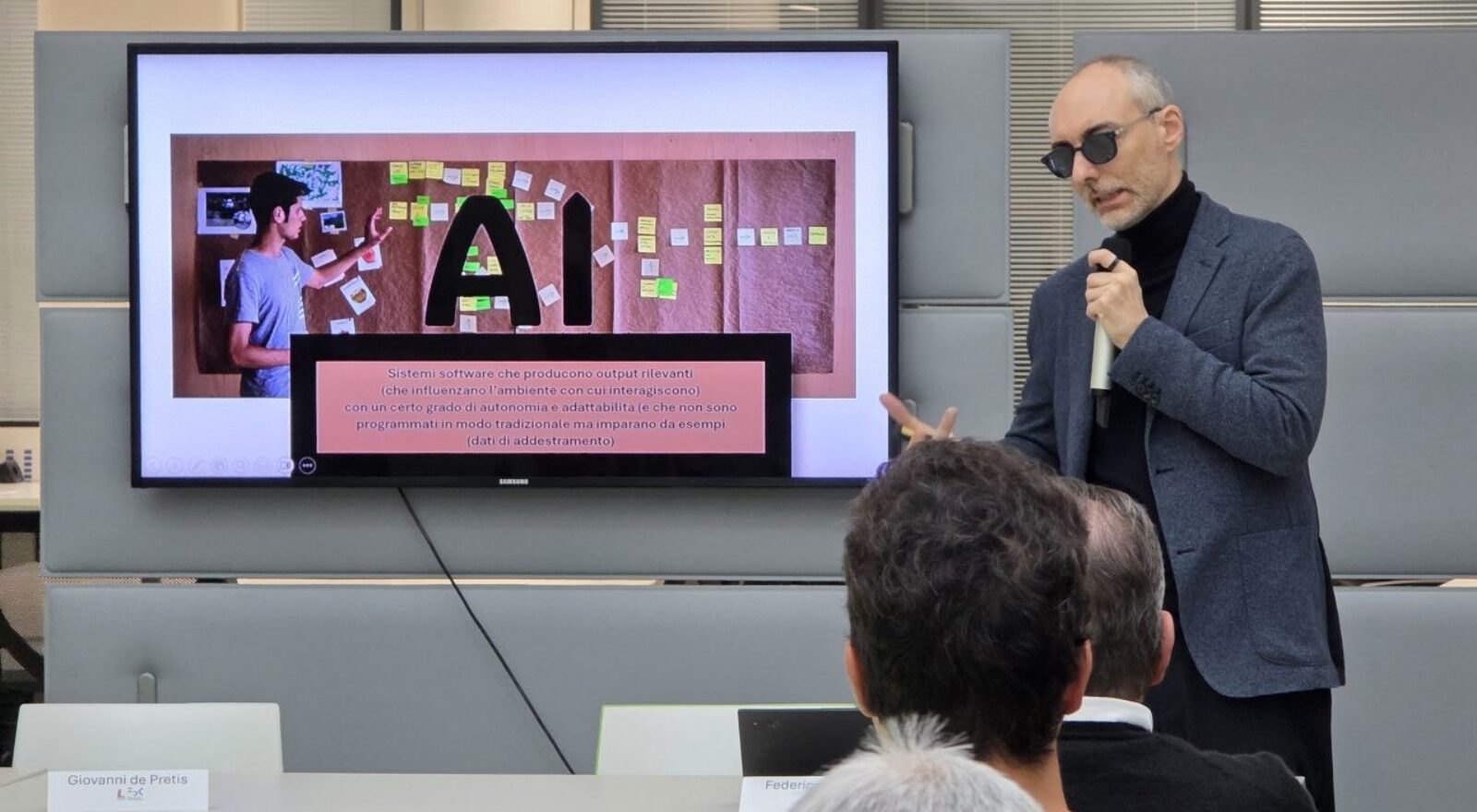
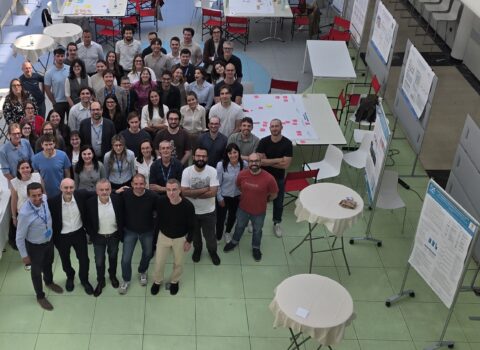
Federico Cabitza, Director of the Center for Digital Health and Wellbeing at Fondazione Bruno Kessler (FBK), addressed these questions on Saturday, November 7, during the training workshop “AI supporting physicians: from knowledge to competence,” organized by the Association of Medical Doctors and Dentists of the Province of Trento (OMCEO) with the support of FBK.
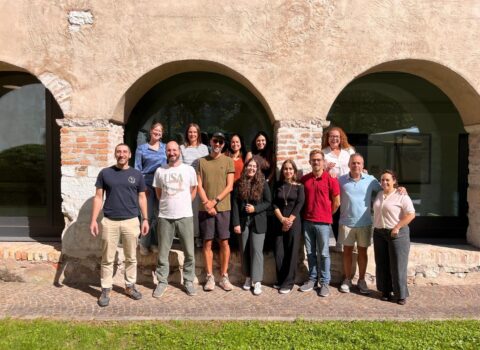
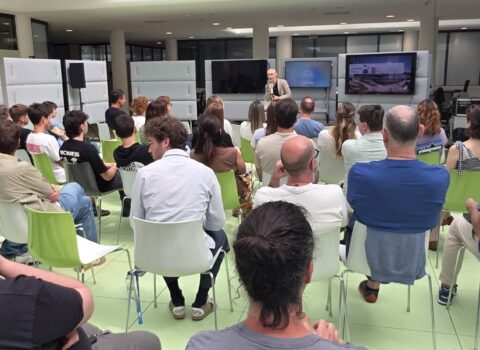
The training day brought together around twenty professionals—including physicians, dentists, and researchers—to explore the informed use of artificial intelligence in clinical settings.
The topic fits squarely within the research led by FBK’s Center for Digital Health & Wellbeing, whose themes and objectives align with the strategic guidelines of TrentinoSalute4.0, aimed at developing and validating safe, measured technological solutions tailored to the real needs of healthcare professionals, patients, and the provincial healthcare system.
Local data and the role of medical organizations
The event opened with the presentation of data from a survey conducted last summer by OMCEO among physicians, dentists, and nurses in the province. The findings show that the technology is already well established in professional practice: 66% of respondents (over 1,000 physicians and more than 300 nurses) regularly use generative AI systems, and 80% consider them fairly or very reliable for supporting diagnostic reasoning, summarizing documents, or drafting communications.
In light of these findings, Giovanni de Pretis, President of the Trento OMCEO, highlighted the need for structured institutional support: “The main role of the Association is to guide our members through a highly challenging project that encompasses several key aspects: from ethical considerations to professional responsibility, and the practical ways to apply and use this important resource in daily clinical practice. That is precisely why we launched two complementary initiatives: first, a survey conducted with the Bruno Kessler Foundation to assess the current landscape among doctors in Trentino; and second, today’s training session, which focuses on the practical skills needed to explore this issue in depth in the field.”
Maurizio Del Greco, coordinator of the Trentino Medical Association’s (OMCEO) Digital Medicine Commission, emphasized the need to move from theoretical concepts to guided clinical application: “First and foremost, there is an urgent need to put into practice something that is already widespread, yet has so far been used in a somewhat haphazard way. Our provincial survey fully confirmed our initial impression: AI use among doctors is widespread. Precisely for this reason, we felt that beyond theoretical concepts and lectures, it was necessary to spend a day with a group of physicians of different backgrounds, ages, and specialties to share practical applications and work through real clinical cases.”
Federico Cabitza, Director of FBK’s DH&W Center, underscored the importance of methodological awareness in adopting digital tools: “A great many people talk about artificial intelligence, and in medicine, it is one of the hottest topics for understanding whether we can make medical practices safer, more effective, and more sustainable for our healthcare system. At the same time, while there is a lot of talk about it, it is still applied with little methodological awareness. In our view, it is essential to offer physicians practical, hands-on experience that enables them to turn theoretical knowledge into genuine practical skills. Today, we are at ground zero: there is strong interest and confidence in these technologies, and it is up to institutions to ensure that this trust translates into certified, validated tools that genuinely improve patient care.
Practical experimentation: clinical roundtables
Participants were divided into four working groups coordinated by tutors from both the hospital and general practice sectors to test major large language models (LLMs) on complex clinical cases, focusing on three areas:
- Prompt formulation: crafting precise questions without redundancies.
- Diagnostic reasoning: evaluating the differential diagnoses generated by the algorithms.
- Critical verification of sources: identifying inaccuracies in the outputs and spotting unverified bibliographic citations (“hallucinations”).
In the afternoon, the feedback session turned into a genuine forum for listening and open discussion. The alliance between medicine and research came through clearly, warmly reaffirming the irreplaceable value of the judgment, expertise, and clinical wisdom of healthcare professionals. Watching doctors from different generations and disciplines engage in dialogue alongside FBK experts underscored just how valuable these gatherings are.
Truly encouraging possibilities emerged from the roundtables: for clinicians, AI has proven capable of lightening the information load, acting as a valuable ally and a powerful force multiplier—including in its ability to communicate complex diagnoses to patients in a more empathetic and accessible way. At the same time, the discussion did not shy away from the most sensitive challenges surrounding ethics, privacy, and safeguarding medical practice.
“This type of workshop allows us to closely observe the mental and cognitive processes doctors engage in when interacting with such powerful tools. For us technicians, engineers, and computer scientists, it is an invaluable opportunity to understand their real needs and ‘cognitive traps,’ enabling us to design technologies that fit seamlessly into real-world clinical practice rather than forcing doctors to adapt to the machine,”Director Cabitza said.
The event concluded with a clear, reassuring message: technology can accelerate processes and deliver answers in record time, but guidance, intuition, active listening, critical questioning, and the final decision about a patient’s health remain firmly rooted in the clinical expertise, empathy, and human judgment of the healthcare professional.
The author/s
Related articles