
Digital health and the importance of sentinel signals
July 19, 2026
In an age where AI permeates every aspect of work, the concept of health must expand beyond physical integrity to include social and mental well-being. Risks such as techno-complexity (cognitive fatigue) and stress caused by opaque decision-making are real threats that can undermine human dignity. These dynamics often begin almost invisibly, for example through the unauthorized use of unvalidated tools—the so-called "Shadow AI"—which can increase anxiety and uncertainty.
We conclude our three-part series, Does AI help us work better?, with Federico Cabitza, Director of the Center for Digital Health and Wellbeing at FBK, exploring how to prevent harm before it becomes visible.
True technological progress comes from intelligence that is willing to listen and from a shared commitment to finding common ground. From this perspective, workers’ health can no longer be understood solely as the absence of physical illness, but also as the protection of physical and mental integrity and the quality of services in a digital work environment.
AI is fundamentally transforming the workplace and, if left unmanaged, can create forms of “technological invisibility”—such as Shadow AI—that increase performance anxiety and uncertainty about responsibility. To ensure that innovation does not become a threat to human dignity, we must move from a reactive approach to an anticipatory one.We conclude our series, Does AI help us work better?, with Federico Cabitza, examining the early warning signs that precede visible harm.
GS: Health is not only the absence of disease but also a state of physical, mental, and social well-being. AI can compromise that well-being through subtle risks such as surveillance stress and loss of agency. What are the main “sentinel signals” (similar to near misses) that the Occupational Health Physician or the Prevention and Protection Service should monitor to detect early signs of declining mental well-being caused by interaction with algorithms?
FC: The concept of a “sentinel signal” is extremely useful because it encourages us to act before harm becomes evident. In the workplace, many AI-related risks are initially subtle. They do not immediately result in an accident or injury, but gradually change the relationship between workers, their tasks, their responsibilities, and the organization.
A first signal is increasing discomfort associated with surveillance in the sense of continuous monitoring. When people feel they are constantly measured, classified, evaluated, or compared by automated systems, they may develop specific forms of stress: excessive self-monitoring, performance anxiety, reduced professional spontaneity, and fear of being penalized by metrics they do not fully understand. The issue is not simply the amount of monitoring, but its opacity. Being evaluated according to criteria that are not understood increases people’s sense of vulnerability.
A second sign is the loss of agency, which, paradoxically, can be fueled by surveillance—but in the sense of “oversight” (as it is unfortunately translated in the AI Act), that is, the kind of supervision of the behavior and output of AI systems that many employees who use such systems will be required to exercise constantly. The loss of agency, as described in the English-language literature, becomes evident when workers begin to say, explicitly or implicitly, “The system decides,” “There’s nothing I can do,” “There’s no point in challenging it,” or “It’s better to follow the algorithm even if I’m not convinced.” This is a critical indicator because it suggests that technology is no longer simply supporting work—it is redefining who has the authority to judge, decide, and take responsibility.
A third signal is the deterioration of professional judgment, often referred to as deskilling. It may become apparent as a diminished ability to justify decisions without the system’s support, a reduced inclination to verify automated outputs, or increasing difficulty in handling non-standard cases. It is the cognitive equivalent of a near miss: not yet an actual error, but a sign that the socio-technical system is becoming less resilient.
A fourth signal concerns the gap between formal responsibility and actual control. When workers remain formally responsible for a decision but, in practice, lack the time, information, authority, or skills to challenge an algorithmic output, a highly problematic gray area emerges. This situation can generate moral stress, frustration, disengagement, and a sense of unfair exposure.
Occupational Health Physicians and Prevention and Protection Services should therefore monitor not only traditional indicators such as stress, burnout, absenteeism, or turnover, but also more specific indicators related to human-AI interaction and human factors engineering. These include perceived control, the comprehensibility of decision-making criteria, the ability to challenge algorithmic outputs, cognitive workload, calibrated trust in AI systems, the quality of human oversight, and the maintenance of professional skills. Within my research group at the University of Milano-Bicocca, we developed the concept of appropriate reliance, or appropriate entrustment, along with a tool to measure it (available at https://www.entechne.com/metimeter/haiassessment/). I plan to integrate this approach into the clinical evaluations conducted by the Center for Digital Health and Wellbeing, and I hope it will become a standard component of assessments wherever AI-based decision support systems are used in organizational settings.
In summary, every digital technology—and AI in particular—should be understood as transforming work practices and, therefore, the work environment itself, rather than as simply another piece of software. For this reason, prevention must shift from a reactive to an anticipatory approach—one that identifies early warning signs, evaluates real-world conditions of use, designs effective control mechanisms, and addresses problems before individual discomfort or organizational errors result in actual harm.
FBK’s role in the future of work
This reflection emerged from the research and innovation community at the Fondazione Bruno Kessler, which has long been committed to exploring technological frontiers while keeping a close focus on their social impact. Through its Center for Digital Health and Wellbeing (DHWB), FBK aims to turn these challenges into opportunities by developing methodologies and prototype solutions to ensure that digital innovation generates value in a safe, sustainable, and, above all, responsible manner for the health and dignity of workers.
The author/s
-
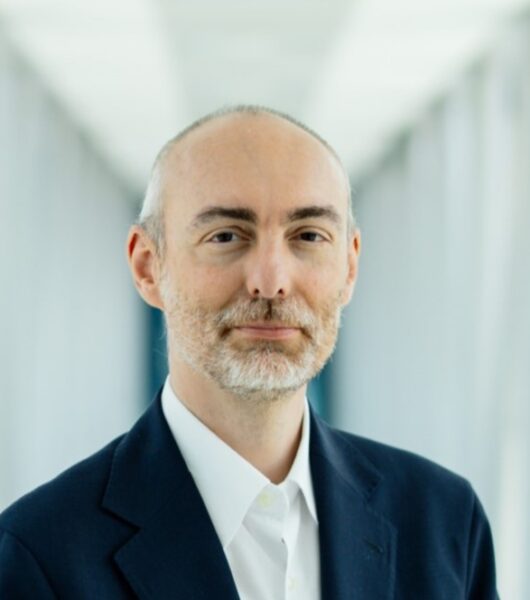 Federico Cabitza
Direttore Centro Digital Health & Wellbeing
MORE INFO
Related articles