Artificial intelligence and oncology: the research of two FBK doctoral students
March 6, 2026
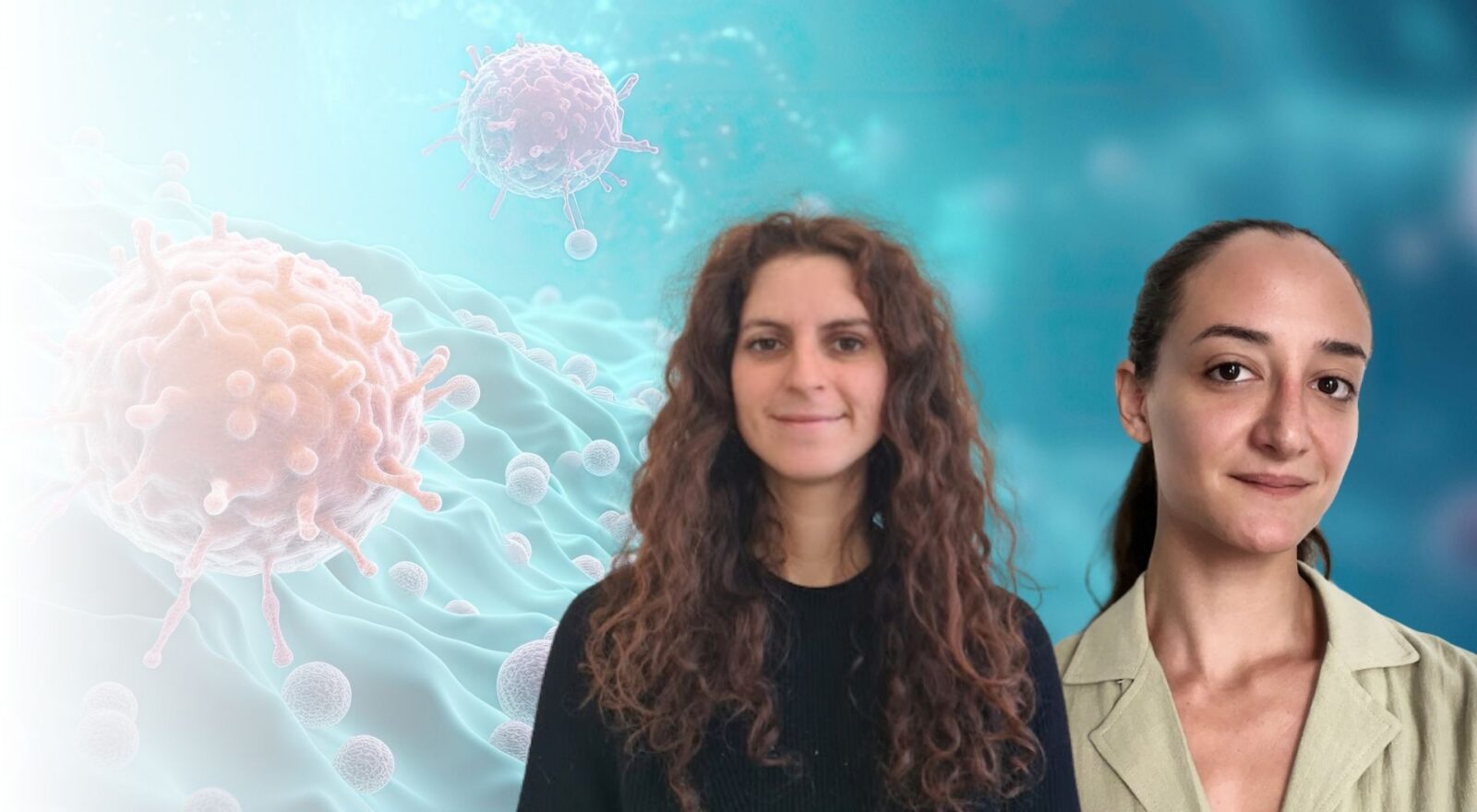
Federica Rignanese and Annarita Barone work at FBK's Center for Digital Health and Wellbeing to develop artificial intelligence models that predict cancer progression. From the analysis of medical images to the study of the voice as a potential biomarker, the goal is to support clinicians with tools for increasingly predictive and personalized medicine.
Two young PhD students have chosen to use artificial intelligence to fight cancer. They come from different educational backgrounds but share a research path in predictive oncology, also motivated by personal experiences. They are carrying out their work at the Center for Digital Health and Wellbeing at FBK as part of a PhD program at the University of Pavia, focusing on multimodal integration: the goal is to develop artificial intelligence models capable of integrating heterogeneous data and providing doctors with more precise tools to understand how diseases evolve.
Concretely, the research covers different types of cancer. Federica Rignanese works on the analysis of medical images such as CT and PET scans in patients with lung cancer and particularly aggressive brain tumors such as glioblastoma. The goal is to develop models that can predict patient survival and identify those most at risk in order to improve and increasingly personalize treatment pathways. Annarita Barone, on the other hand, focuses on cancers of the pancreas and larynx, integrating clinical data, images, and also nontraditional signals: for example, the voice, which may contain early signs of changes in the vocal cords. It is a minimally invasive and low-cost approach, potentially usable even outside the hospital.
The common thread is predictive and personalized medicine. No longer a single therapy that is the same for everyone, but increasingly targeted treatments based on the specific characteristics of the individual patient. Artificial intelligence can become a fundamental support tool for clinicians: it helps identify risk factors, choose more effective treatments, and avoid unnecessary therapies, with benefits both for patients and for the organization of the healthcare system itself.
Annarita, why did you decide to work at the intersection between artificial intelligence and oncology?
My interest in artificial intelligence began during my studies, but it immediately seemed natural to direct it toward medicine. It is the area where the impact can be most tangible. I have always had a strong curiosity about medicine and, unfortunately, some related family experiences have also strengthened my desire to work in this field. The possibility of developing tools that can help doctors and, in the long run, improve people’s lives was my main motivation.
Federica, what does it mean for you to do research today in such a delicate and complex area?
When you have had to deal closely with these diseases, you feel even more strongly the potential impact of this work. At the same time, it is a very complex field. There are aspects related to regulation, privacy, and access to real patient data that make research more difficult. Interdisciplinary collaboration is also challenging: we work with doctors, bioinformaticians, engineers, and researchers with very different skills. Bringing these perspectives together takes time, but it is also one of the most stimulating aspects of the job.
Annarita, what is the most innovative or promising aspect of your research?
One of the most innovative elements of my work is the introduction of data that is not normally considered clinical data.
An example is voice: by analyzing certain vocal characteristics, very early signs of alterations in the vocal cords and larynx can be detected. The idea is to develop tools that can help detect these abnormalities in advance through minimally invasive, inexpensive, and easily accessible tests, potentially even in a general practitioner’s office. This could bring benefits not only from a clinical perspective but also from an organizational one: fewer invasive tests, lower costs, and more efficient use of healthcare resources. Throughout this process, the role of clinicians remains central: the work always starts from a medical question and develops through ongoing collaboration. Building a common language between different disciplines is not immediate, but it is an essential part of the research.
Federica, how can artificial intelligence contribute to cancer prevention, diagnosis, or treatment?
In our work, we try to develop models capable of integrating different types of data and applicable to multiple diseases, such as lung cancer or glioblastoma. The main objective is survival prediction: identifying patients at higher risk and detecting the most critical scenarios early. This allows us to move toward increasingly personalized medicine. It is not only about choosing more targeted therapies but also about avoiding unnecessary treatments for those who may not really need them. In general, we are moving beyond an overly generalized clinical model: today we have a lot of data available, and the real challenge is integrating and using it in the most effective way. In a context where the population is aging and healthcare workers are increasingly under pressure, support tools based on artificial intelligence can become very useful in helping doctors make clinical decisions.
Annarita, where is your research today and what results do you expect in the medium term?
The research is still at an early stage. We have conducted a preliminary study, and now the priority is to expand the work and obtain new data. We are also working with public datasets, and this has already allowed us to achieve some encouraging results: for example, we presented a poster at the Pezcoller Prize on a study related to pancreatic cancer. Cancers such as pancreatic cancer or glioblastoma are among the most difficult to treat and are still poorly understood, so every step forward in understanding these diseases can be very important. In the case of the larynx, however, we are talking about a condition with a significant incidence, where early diagnosis tools could have a major impact.
Federica, where do you imagine yourself in a few years, after your PhD?
I would like to continue working between academic research and practical applications, therefore between universities and industry. Sometimes research can create the feeling that its impact lies far in the future, but contexts such as Fondazione Bruno Kessler already allow us to collaborate closely with hospitals and clinics, which makes the work much more tangible. I am interested in continuing to explore new ideas and staying up to date with the latest developments. During this period I am also spending time abroad, at the University of Utrecht and in collaboration with the Netherlands Cancer Institute in Amsterdam, where I am working closely with radiologists and clinicians. It is a valuable opportunity to understand the main challenges in applying these technologies in clinical practice. Today cancer is increasingly a disease that many people live with for a long time: the goal is not only to cure, but also to improve patients’ quality of life, and technology should move in this direction as well.
Annarita, if you were to explain to a reader why investing in research today is critical, what would you say?
There are many reasons, but the simplest is that research can truly make a difference in people’s lives. The more we invest in research, the greater the chances of developing new knowledge, new technologies, and new treatments. It is a time-consuming investment, but the results can have a huge impact on society.
Federica, what do you hope this research can leave behind in terms of knowledge or impact?
I hope this work can lead to models and technologies that are truly applicable in clinical practice. If we could translate these tools into solutions that help improve patients’ diagnosis, treatment, and quality of life, that would be the most important result. Today many tests are still invasive and complex: being able to speed up diagnosis or reduce the impact of treatments could make a big difference for many people.