

Children’s rights in the digital age
May 23, 2026
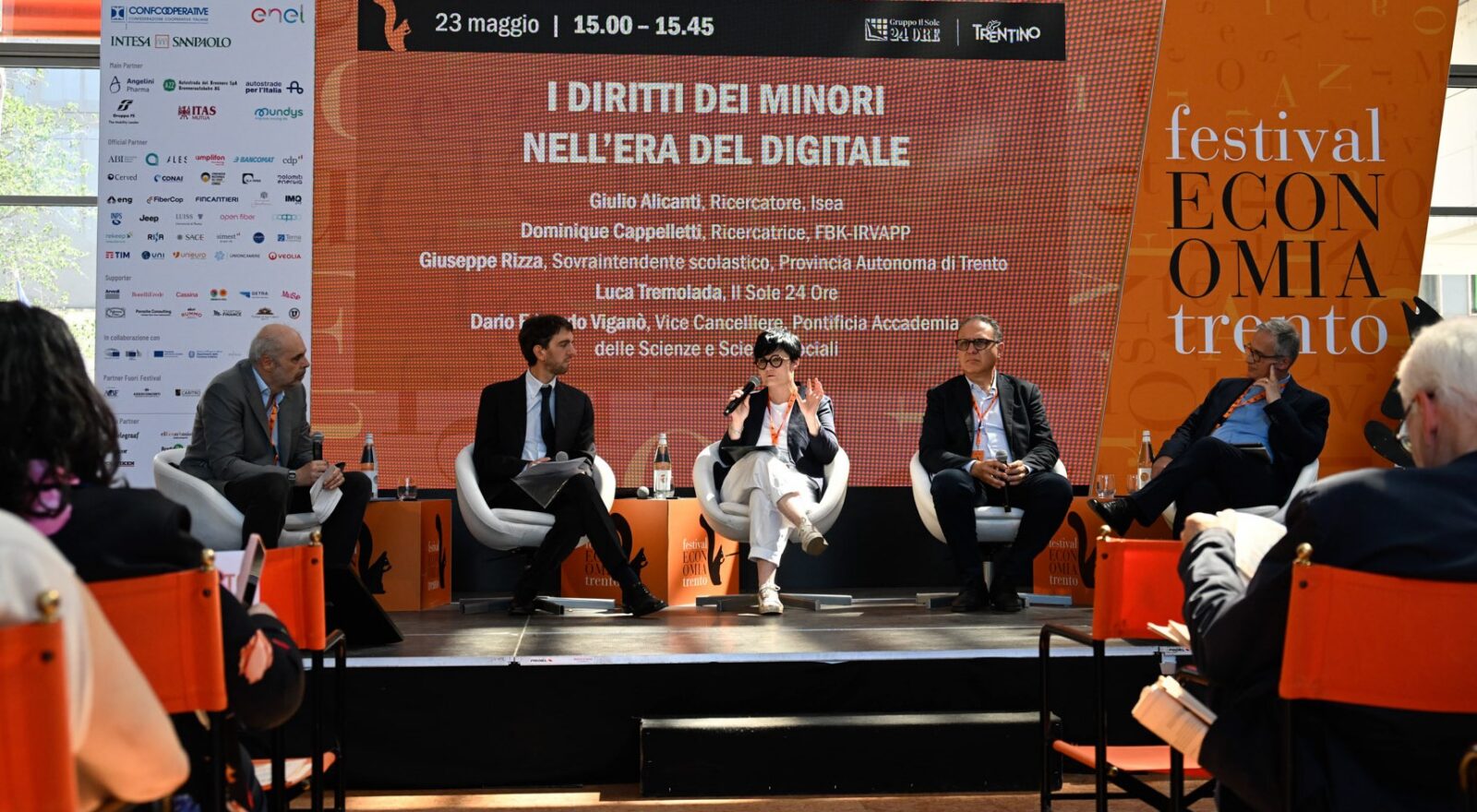
MUSE hosted a panel organized as part of the Trento Festival of Economics featuring FBK-IRVAPP researcher Dominique Cappelletti.
“Current studies show that when you ask an artificial intelligence system to generate educational materials for schools, the character with the problem is almost always portrayed as a woman, while the one who solves it is almost always a man. And when the request is to recommend a course of study, girls are significantly less likely than boys with the same grades and results to be directed toward STEM fields. These are not random errors, but the result of systems trained on data that reflect decades of inequality.”
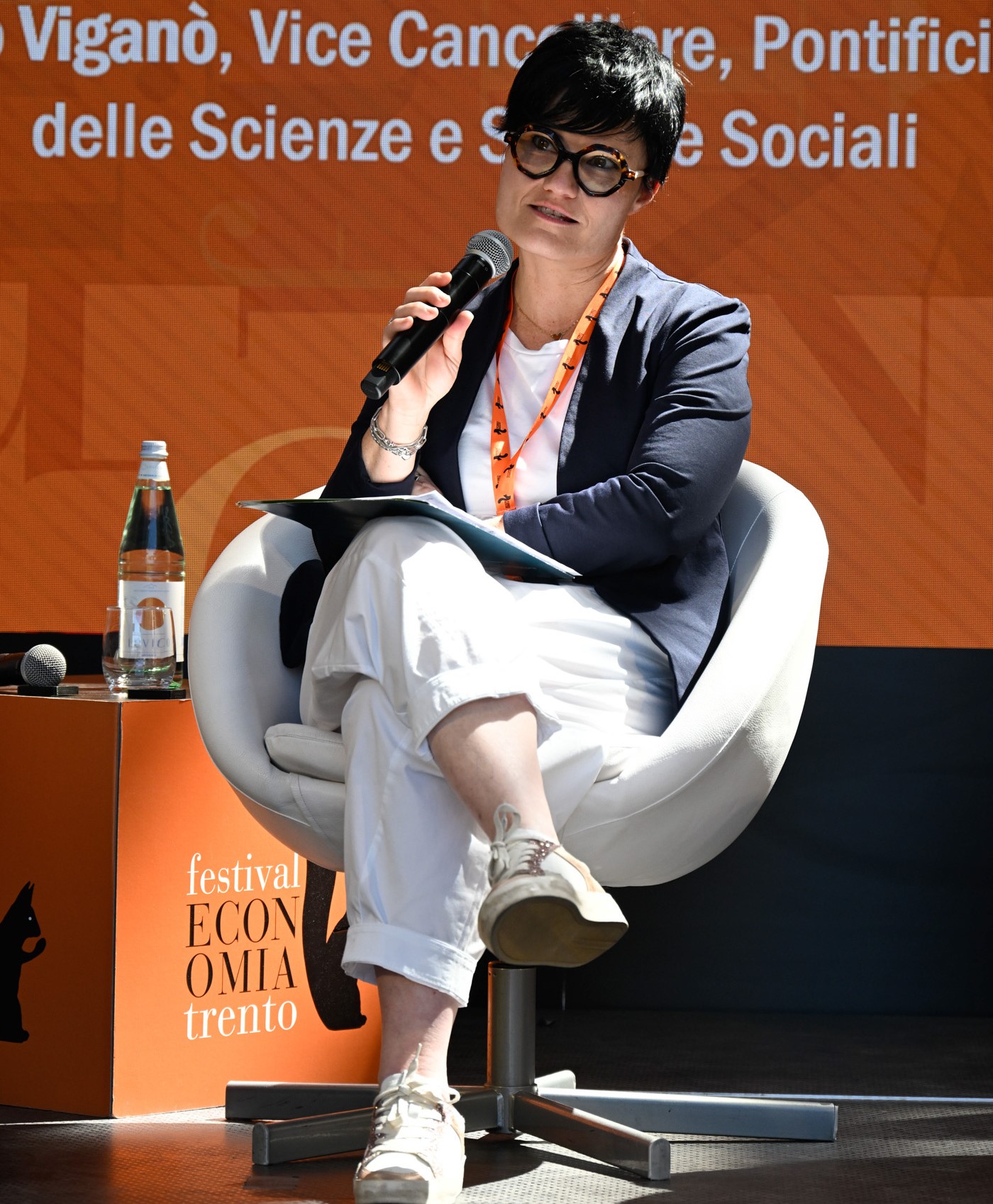
This was stated by Dominique Cappelletti, a researcher at the Institute for Evaluative Research on Public Policies (FBK-IRVAPP) at Fondazione Bruno Kessler, during her talk this afternoon at MUSE as part of the panel “Children’s rights in the digital age” at the Trento Festival of Economics.
Children’s rights in the digital age
Photo: Dominique Cappelletti
“The debate on minors’ digital rights,” Cappelletti stressed, “almost always focuses on protection from harmful content, platforms, and online risks. But there is another right that receives far less attention: the right of every girl and boy to receive equal guidance in shaping their future. And today, that guidance increasingly passes through artificial intelligence tools that are not neutral.”
During the panel, which also featured Giulio Alicanti (Researcher – ISEA), Giuseppe Rizza (Superintendent of Schools – Autonomous Province of Trento), Luca Tremolada (journalist, Il Sole 24 Ore), and Dario Edoardo Viganò (Vice Chancellor – Pontifical Academy of Sciences and Social Sciences), Dominique Cappelletti also offered a practical perspective: if digital systems risk amplifying existing inequalities, schools must increasingly become the place where those inequalities are addressed before educational paths are shaped in ways that are difficult to reverse.
This is the rationale behind the SPARKLE project (STEM Practical Activities to Raise Knowledge, Learning and Exploration), carried out by Fondazione Bruno Kessler in 12 school districts in Trentino and Veneto: bringing engaging activities into schools that foster dialogue between education and the research world, making science equally accessible and inspiring for both girls and boys.
“Because,” Cappelletti concluded, “children’s rights in the digital age also include the right to play an active role in the future that digital technology and innovation are shaping, according to their own talents and aspirations, free from prejudice and external influences.
Dominique Cappelletti is part of the group of economics and sociology researchers with international experience at the FBK-IRVAPP Center of Fondazione Bruno Kessler, directed by Mirco Tonin and recognized as a leading center in the evaluation of public policies based on solid scientific evidence.
The author/s
-
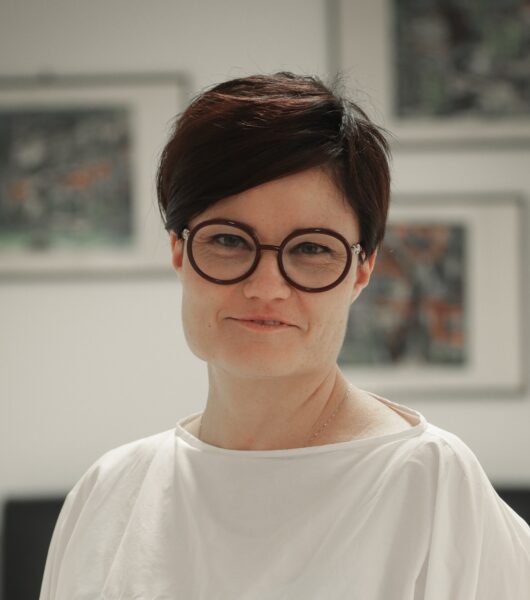 Dominique Cappelletti
Researcher at FBK - IRVAPP
MORE INFO
Related articles