

WebValley 2026: a chance to shine
July 13, 2026
A close encounter with the participants of the 26th edition of WebValley. What do the participating young students' experiences have in common with those of their tutors? Let's discover it through their own words gathered during the camp
A great challenge requires a lot of energy and a special talent to be faced, or to put it better, a method that allows the encounter among cultural and personal differences to transform the individualities through an eye-opening experience for the participants.
Easier said than done, but how do you do it? From this point of view, WebValley is not only a laboratory that every year explores in depth some technology trying to find a solution to a urgent matter, but also a community of expert knowledge that during 26 years has refined a series of solutions to fit in a short time an accelereted program to dive into research.
What are the main ingredients of this effective recipe?
First of all, it is important to balance competences. To create a collaborative environement it is necessary to properly select the participants: smart students, above all – but not only in STEM subjects – who are at the same time motivated and capable, curious and willing to work in group with their peers.
They can’t just email their cv but they are required to attach a video to present themselves genuinely and apply to the school through their perspective and sensitivity, opening up to other people and the unknown.
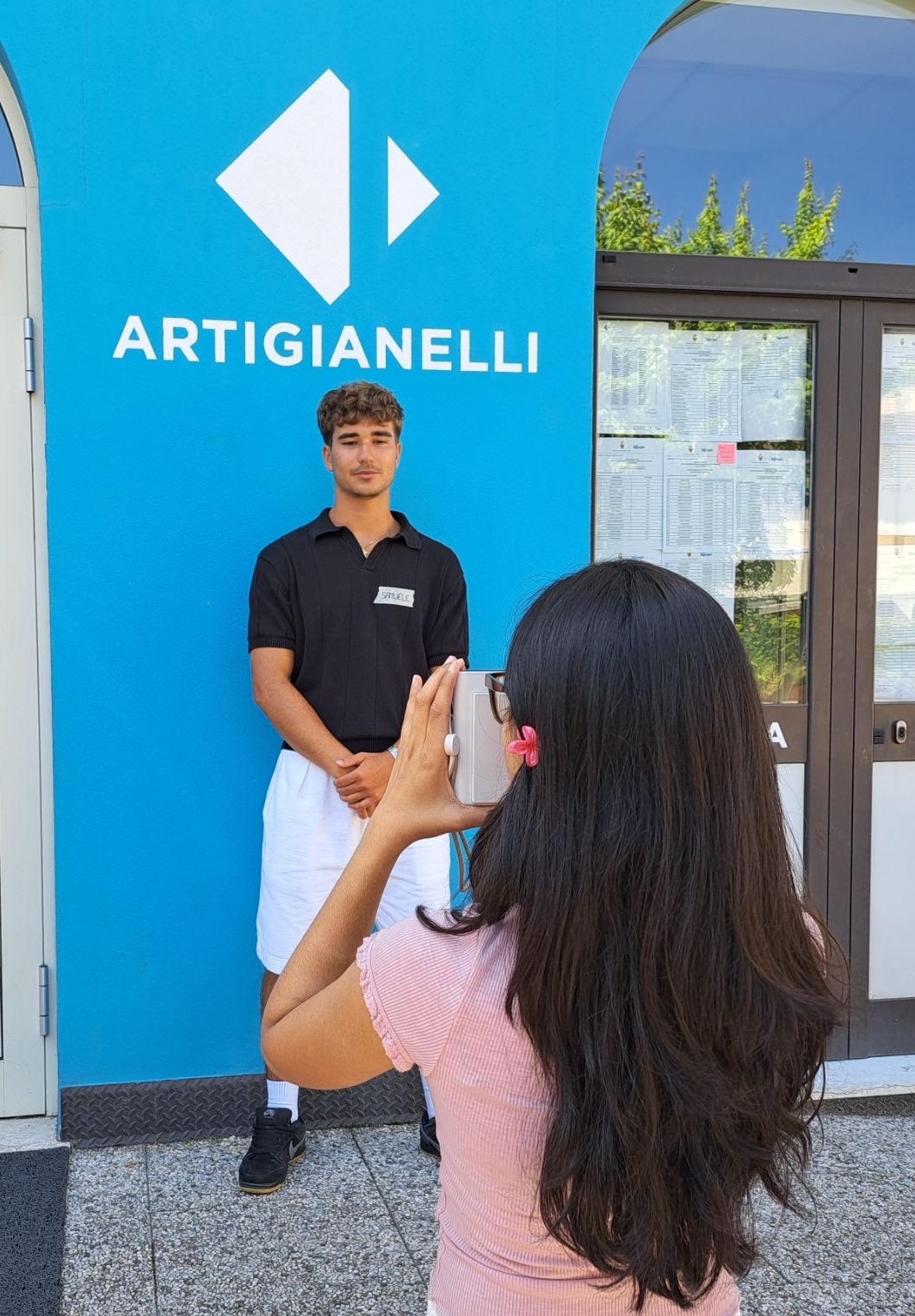 Once in Trento, they share a lot as for 2 weeks they sleep, eat and study together, supervised by a dozen of senior and junior tutors who step-by-step present the segments of knowledge they will be dealing with, explaining the target to focus on and sharing with them the working tools. No, it was not a typo: a tutor is actually available every two students.
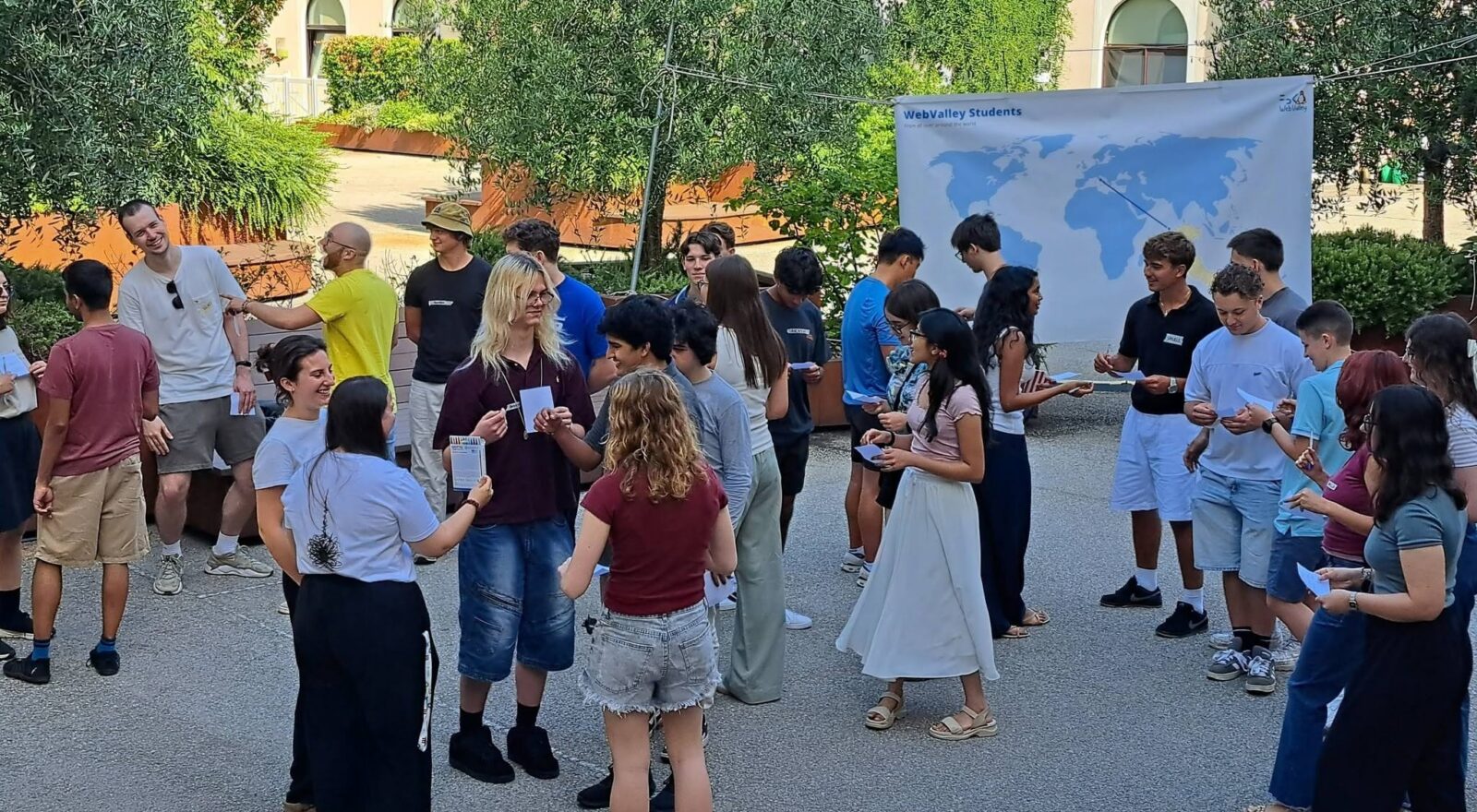
Four days of an intense, paced, creative and on-the-go activities to get a first overall idea of the topics and build up mutual trust, for example through a game, the escape room organized by Istituto Artigianelli, strategic partner of the uttermost importance.
By playing together, the psychological traits animating this temporary community surfaced, an alchemy to build up skilfully to have groups with mixed genres, skills and cognitive features, in the name of a diversity which is a value that 17-year-old students starting to travel around the world moved by their curiosity embrace scientifically and with entropy.
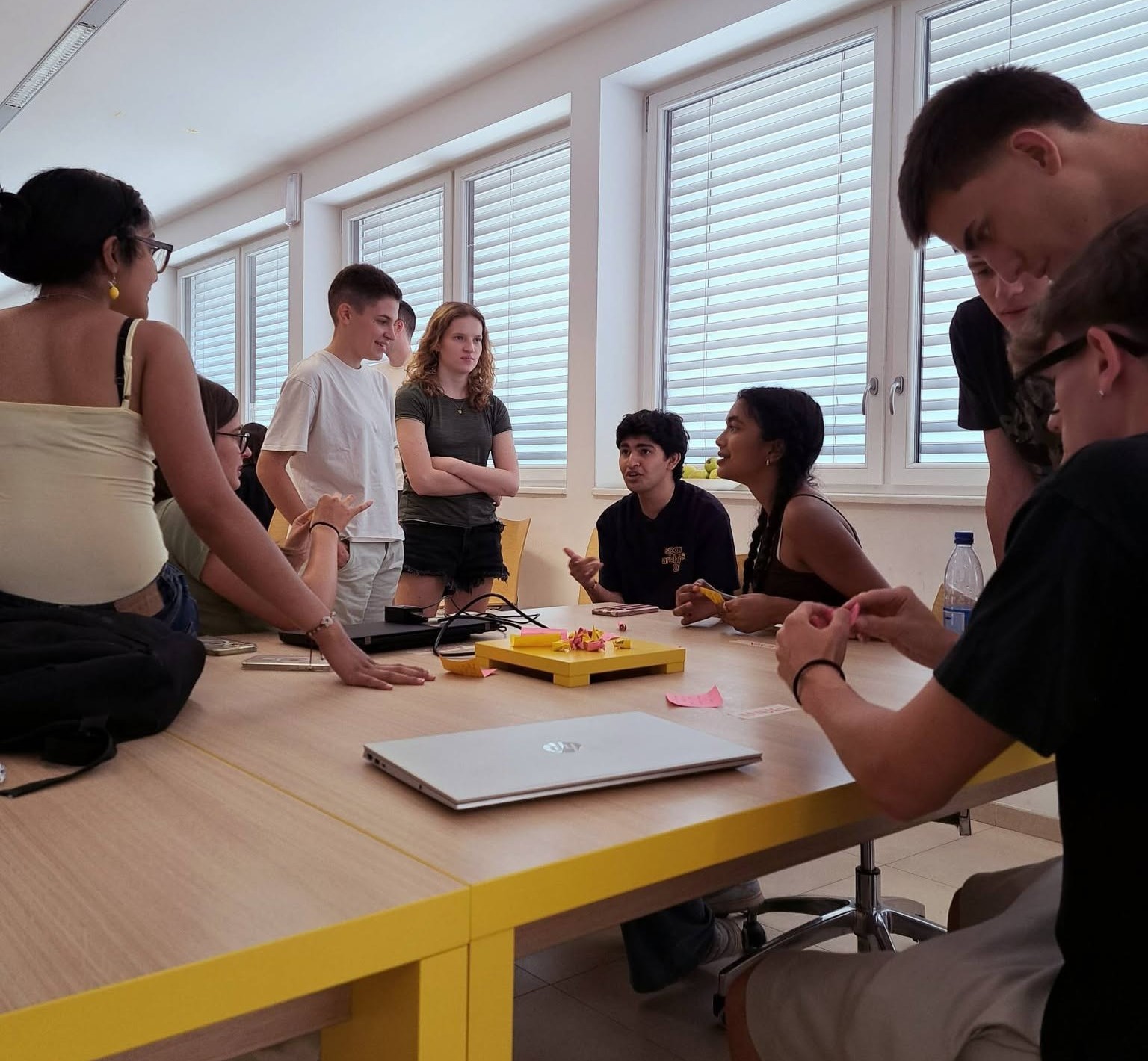
Only after this coming-of-age ritual the challanges were announced: divided into 5-people groups, the students were asked to make a jigsaw puzzle in which DATA, MODELS, VISUALIZATION and COMMUNITY ENGAGEMENT converge to give meaning, interpretation, functional infrastructure, and visual appearance to the outcome of this joint work.
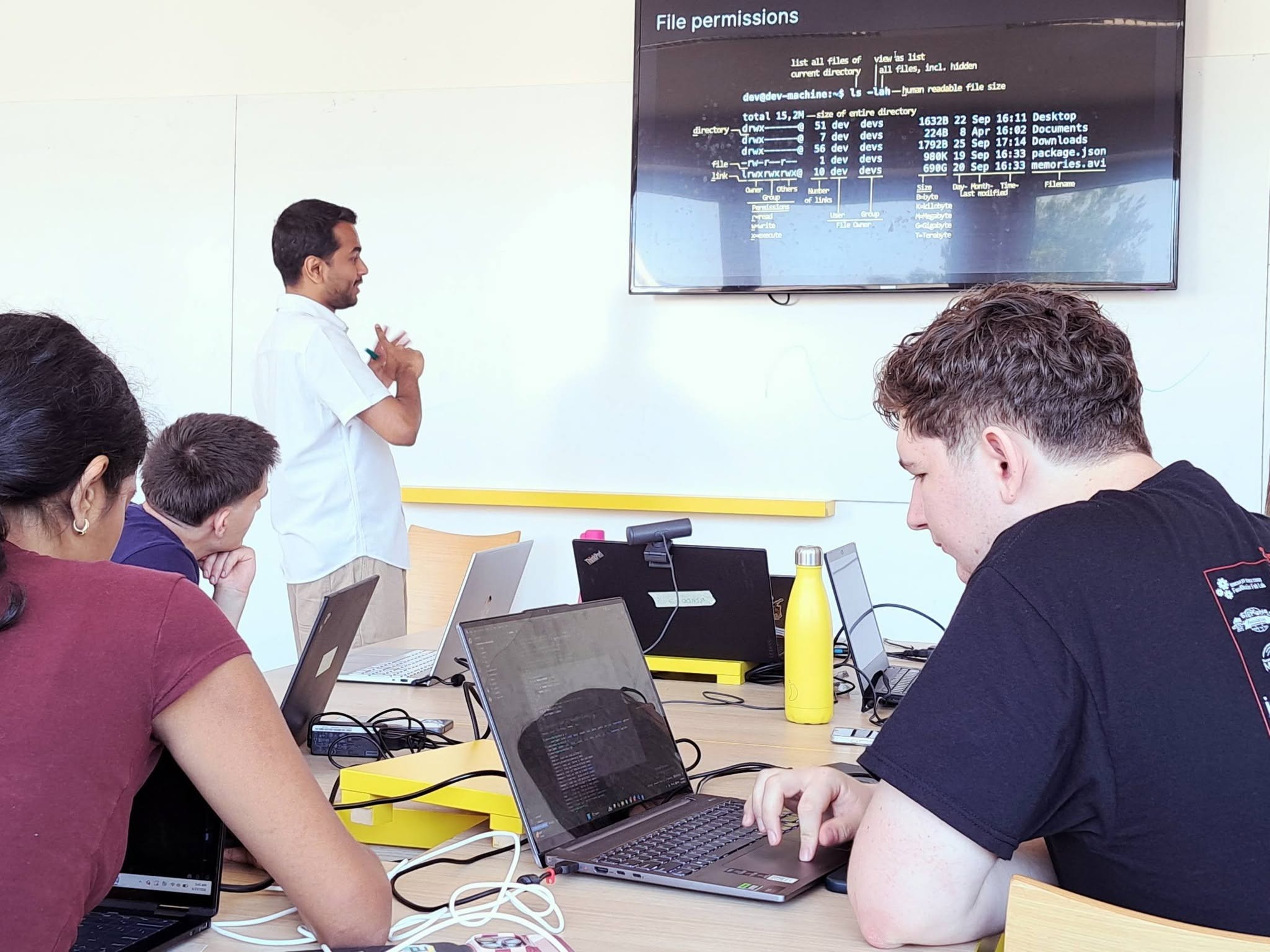
Deconstructing to bring together again, listening to the advancements and the questions of the fellow participants, helping each other because there’s always someone shining bright ready to support for each necessary skill.
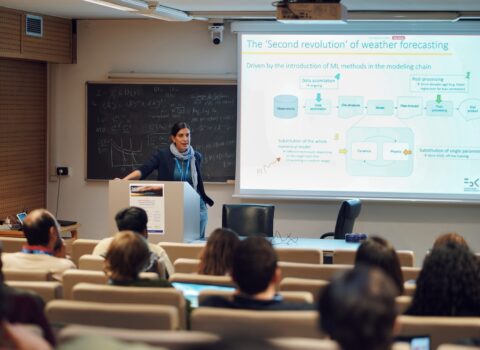
We took part in the first days of the 2026 edition of the summer school, a stifling summer and a related subject: the weather forecasts evolving thanks to the use of AI and machine-learning-based models. With a focus – which is not a frill – representing a higher gear: the open science, which means the possibility to join a global academic discussion about climate change, a complex problem weaving together many systems which needs the osmosis and the contributions of experts in different disciplines.
 Starting from this participated observation, we interviewed two students (Anna from Bozen and Krish from Florida) and two FBK tutors (Gabriele Franch and Rishabh Wanjari). We were surprised by a central element shared between them. Let’s read their accounts.
“This year’s edition – Franch and Wanjari state – with respect to the previous ones, last 2 weeks instead of 3. This time reduction translates into most paced and focused lessons, but this is not necessarily a limit, it rather is a creative constraint: in three weeks, participants may get too tired at the end of the course.
In two weeks, on the contrary, despite the swifter pace, participants are more eager to concentrate more for a shorter time and they apparently turn out better. However, 2 weeks may not be enough for participants to bond significantly. We cannot say yet which is the best option: at the end both the participants and the tutors will give their feedback and, starting from that, we will decide how to plan next years.
What’s been new in this edition is the selection criteria and where the international students came from. Whereas in the past few years students had been selected according to the ISEF index, this year the strategic partnership with the Sarasota-Manatee Science and Technology Society of South Florida has been reinforced and six students were selected following our criteria. Also the partnership with the Collegio Dante Alighieri di San Paolo has been renewed: as in the last five years, a girl from Brasil was selected by them.
 To participate and get the most from WebValley, you need to be strongly motivated, both for following and understanding lessons, and for keeping up with the tight pace of the activities which takes place every day from 9 am to 10 pm, going on also after dinner.
To keep the participants’ attention high and so as not to tire them out too much, the tutors perform some strategies, such as changing classrooms and scheduling short breaks between one lesson and the other to help them restoring their concentration. Another important example is the continuous shift from theoretocal lessons to practical exercises to fully understand the application of the studied topics.
Moreover, the tutors prepare the lessons in advance very carefully: in fact, students usually notice when lessons aren’t properly prepared and get distracted more easily. The lessons are prepared and planned so as to follow a consistent thread and are taught by order of difficulty.
Some lessons are difficult and have to be taught quickly (the program of a whole university term is covered in one week), so students are not expected to understand everything. What is important is that they get the main key topics they will later use to face the challanges. Of course tutors are always at hand to help them, but they cannot explain the topics all over again for lack of time.
This is why students are encouraged to help each other: those who are more competent because of previous abilities or because they have better understood some topics are encouraged to help their classmates, guiding them in overcoming the difficulties they face.
The forming of the challanges groups happens in two moments: at first, the students choose personally which challenge they want to join and with whom. These original groups are later reviewed and eventually rearranged by tutors to have them as much balanced as possible in terms of genres, personalities and capabilities of the students, their origin and relationships among them. At the moment there isn’t a program for former students giving them the chance to work together again but the organizers are reasoning about it. However, many students keep in touch anyway and present the projects carried out during WebValley for presentations on the occasions of fairs. or exams. They sometimes develop in a more advanced way their projects, showing how this workshop is important also for their school and university career.”
“This experience is highly meaningful for tutors also, especially the younger ones – adds on Franch. -In fact, they have the chance to experience teaching and how to present some topics to a classroom of people less competent than them, which is more challenging than presenting to an audience of researchers at their same level. 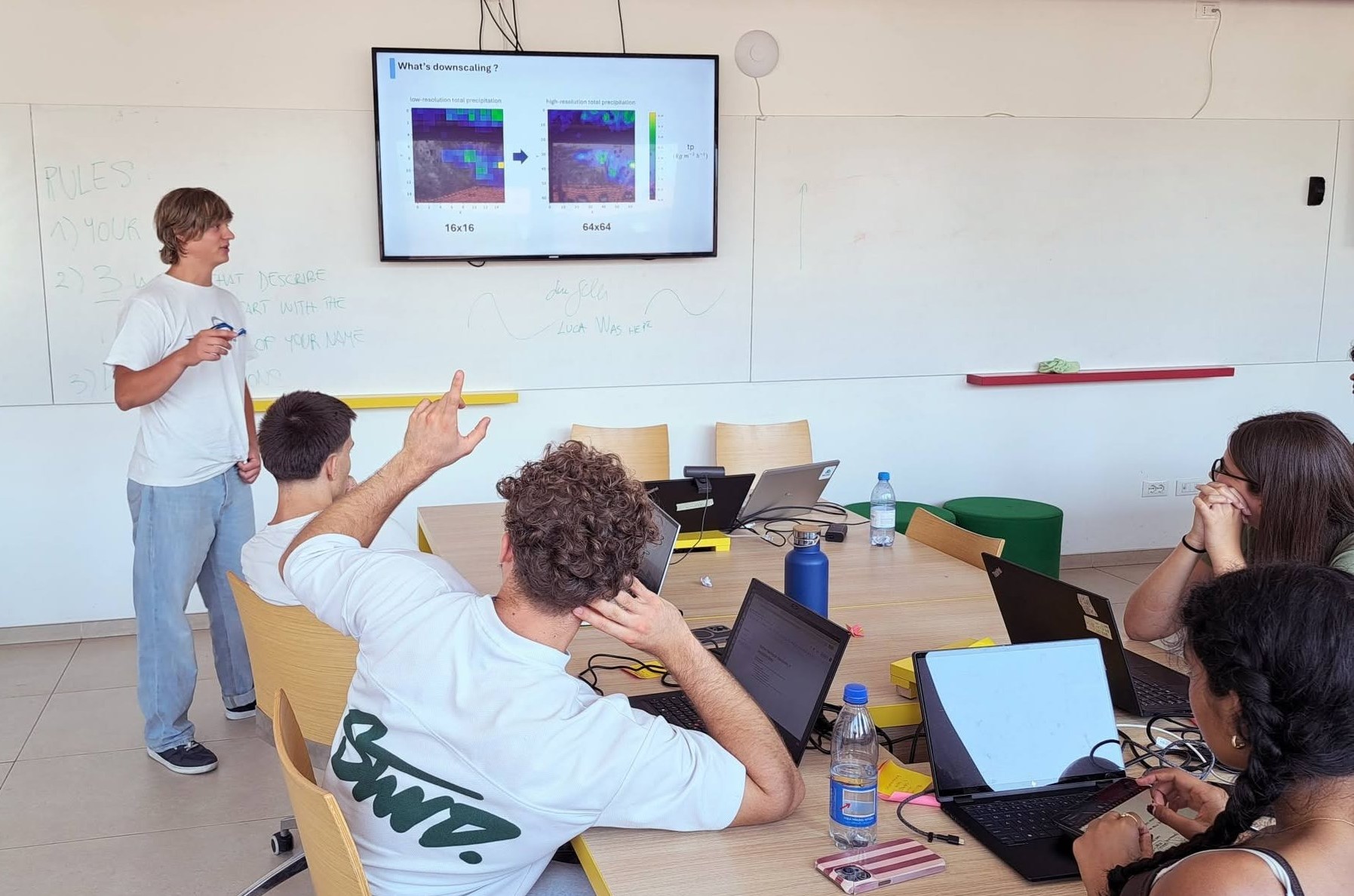 They also develop a great responsibility towards the students, who consider them reference points and friends at the same time, as they are closer to them with respect to “older” teachers”. It’s important then to create a welcoming and engaging environment so that students can feel at ease and fully enjoy the experience not only for what they learn but also for the friendly relationships they create. This is why it is very important that the organizing group gets along well and collaborates so as to inspire students and take care of them as best as possible. This aspect is not to be taken for granted, but this year it has been fully accomplished.”
WebValley: the longing for research and the power of the group in Anna’s account. From the curiosity sprang at school to the AI challenge.
Anna, tell us about your origin and how you discovered about WebValley.
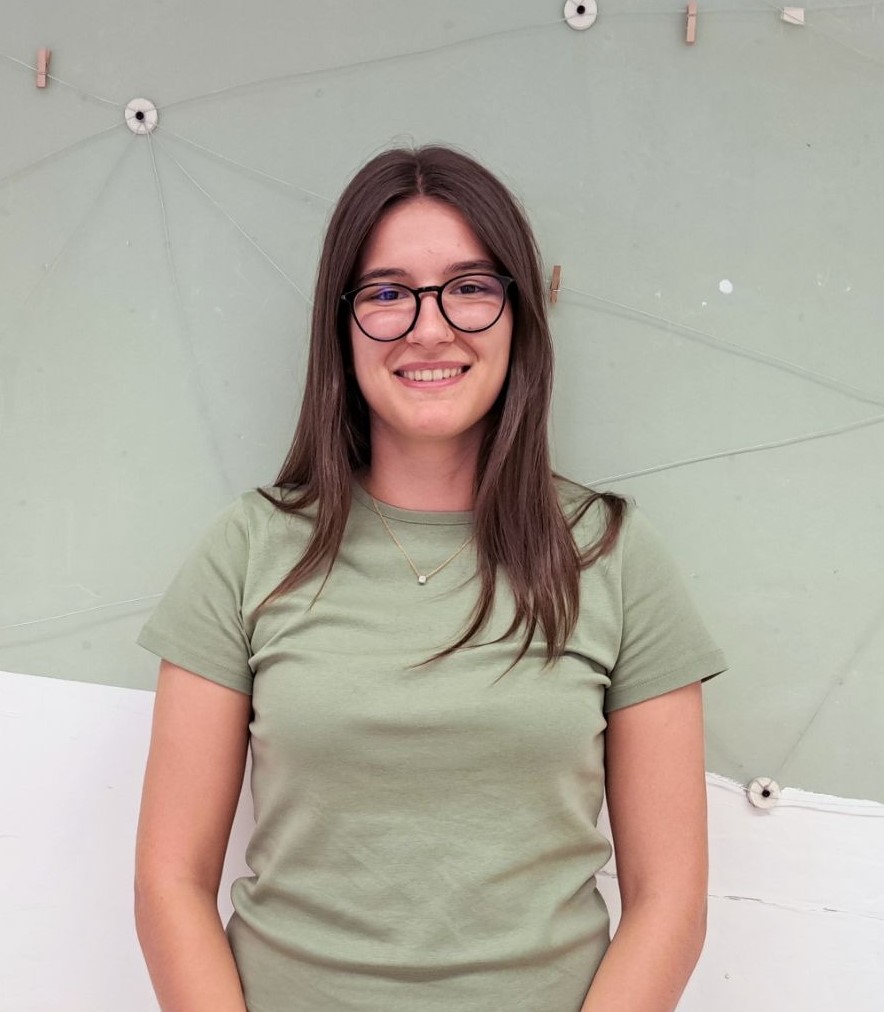 I am from Bozen and I attend the scientific high school. I dind’t know about this initiative but then one day, when we were in our physics lab, our teacher called three of us to her desk. At first I worried a little bit, but when she told us about WebValley I got thrilled immediately. My wish is to be a researcher in the future and I immediately realised that this would be the perfect chance for me to test the environment and see how it works inside a research team. Up to then I had worked alone in this field, but now I’m discovering how pleasant it is to be part of a group sharing my same interests and objectives.
At WebValley learning is not only technical but social as well. How was the impact with the international community?
It’s something so very enriching. I love getting to know different cultures and discovering how poeple live outside Italy; talking with guys such as Krish or Marina is wonderful. I felt part of the group even before the program officially started because I went to the train station to pick up some of my colleagues. I’m not shy, I actually like talking, I’m curious by nature and sharing bedrooms and common spaces has helped to create a sinergy which would not have been possible otherwise, if lodging in single bedrooms for example.
From the research point of view, how have you faced the technical challenges, such as programming?
This method is very balanced: there is not a single teacher explaining but rather a continuous exchange amongst peers. In case I have a doubt, I just need to turn and ask anyone, without interrupting the lesson. For example, I had never programmed in Python, whereas I already knew C++, and at first I struggled a little bit. But I’m very determined: when I want to understand something, I don’t give up until I fully uderstand it. Yesterday, after a difficult lesson, I joined a fellow student who had better understood and we went over it in the evening until I got it all.
The WebValley pace is known to be very intense. How are you coping with such a tight pace?
It’s exactly how I had been expecting it: days are full and intense but it’s ok with me, at least in the evening I’m tired and I fall asleep immediately! I really like the atmosphere: I feel 100% at ease and it helps you to instantly get into the right mood to focus and work hard.
What would you say to a student who is thinking about applying next year?
I would definitely recommend it, but only to people who are genuinely keen on putting their nose to the grindstone and are very curious. For the Italians, this is vacation time and I admit that at first I worried I wouldn’t be focused enough to work, but then the energy of the group drags you along. It’s the perfect experience for whoever is passionate and willing to seriously get involved.
WebValley: AI as common ground for social learning
From Florida to team work: Krish’s experience “searching for common good”.
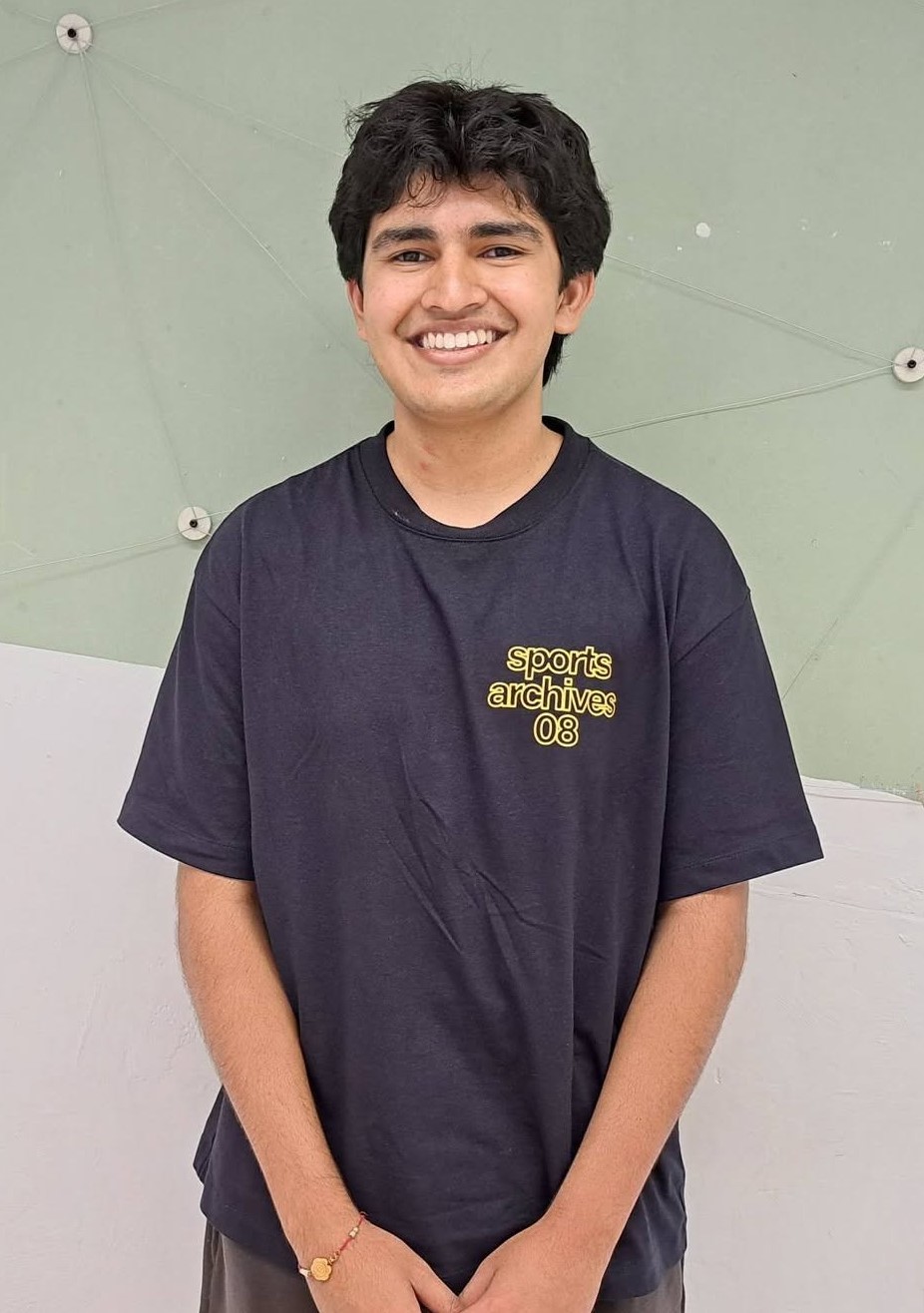 Krish, tell us how you ended up at WebValley and what pushed you to take part in this international summer school.
I attend the last year of high school in Florida and a friend of mine who had already been selected told me about the school, I was also recommended it by my teachers. Differently form the Italian system, we were interviewed by some local coordinators. What really got me was the website: I was interested in applying AI to the topics I love, such as nature and weather forecasts, but what lured me above all was the prospect of using AI for a practical and useful goals, to do some good.
One of WebValley’s pillar is the creation of a research community. How did it feel meeting your fellows coming from such different settings?
It’s been incredible staying in a shared space with people having different backgrounds, such as Marina from Brazil or guys coming from around the States. The most surprising thing has been how straightforward was to “break the ice”: already during the car drive we started playing together and, once arrived, the first activities allowed us to get to know each other even more. I immediately felt at ease because, in spite of the differences, we all share a very strong motivation for the project and the same interest for the topics covered. This lays the foundations for a “common ground” which extremely helps bonding.
What are the effects of this inter-personal harmony on practical work and on learning technical competences?
Lessons are very engaging but the real value is the way we learn to collaborate. For example, I had not experienced the Python language much at school but it was so well explained that I got the basis in record time. What now thrills me most is feeling at last confident at working on a task together with a group of people. It’s not limited to your personal study: it is a process in which technical knowledge is necessary to start creating something new as a group.
WebValley is reknown to be an intense experience, almost a joint “challenge”. How do you experience such a tight pace?
It’s very different from the US programs I’m used to, where the first week is dedicated to a step-by-step integration. Here it’s a “go, go, go” from the very first day. At the beginning I wasn’t expecting that, but now I really appreciate this method: I’ve learned so much in three days only exactly because we are constantly engaged in the activity. Also living together and having a room-mate to discuss with at the end of the day contributes to making this an educational experience not only from the technical point of view, but also from the relational one.
What would you say to a student who is thinking about applying next year?
I would tell them not to be held back by the fear of not being experienced enough.
You don’t need to be the best in everything before starting: here you are given the tools to get at the same level of your mates, so that you are all sailing together on a discovery journey. It’s an experience I recommend to people with a great work ethics and a strong desire to get out there. If you are duly motivated, WebValley gives you the chance to turn individual committment to common success, starting from scratch to build something really important with other people.
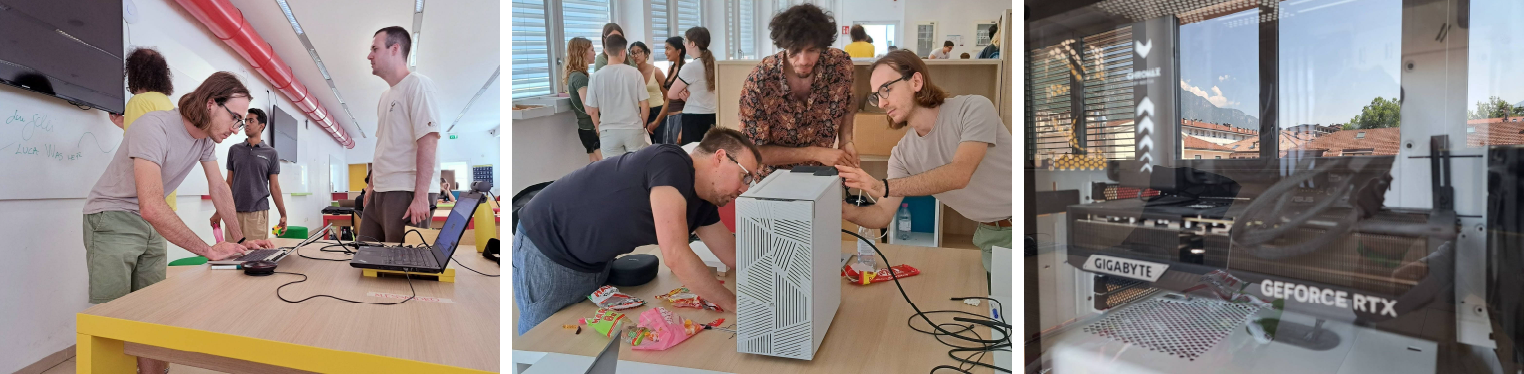
What do students and tutors have in common?
If it may seem obvious that at seventeen you have much to learn, the amazing thing is that tutors themselves, in front of such a demanding audience, need to go beyond and learn in their turn something more, adjusting until the very last minute the right words and images to express a concept, encourage to go in depth, explaing the logic at the base of it to bring back home as a key message, aware that the views and background competences of the students are different and so, inevitably, nobody is likely to have a full knowledge on one topic, but working together as a group gaps will be filled in and different attitudes will complete each other mutually. Don’t knowledge and culture come down to this, in the end? The chance to face challanges bigger than us harbouring and listening to our personal stories, each of one unique, linking our knowledge and sensitivities to succeed together rather than individually.
“WebValley is then a chance to shine – Wanjari highlights – both for students and their tutors, sia per i ragazzi che per i tutors, both from the scientific and the relational point of view, in a friendly setting, welcoming and collaborative, where scitnfic knowledge, frindships and relationships may blossom.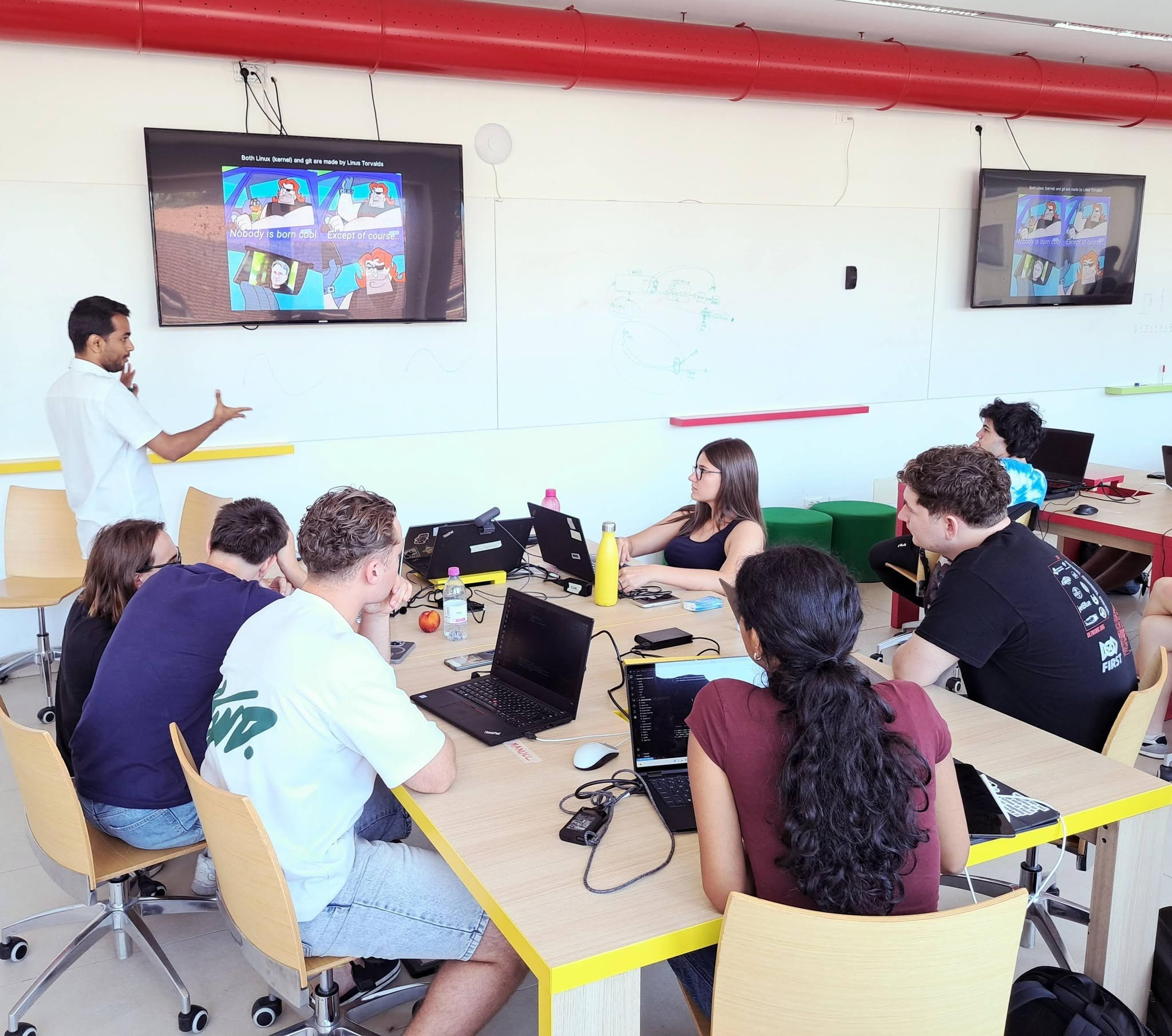 After this time spent together the participants will form an opinion about climate change, more in-depth disciplinar competences and, last but not least, the memory of a wonderful educational experience.”
——————————————————————————————————————————————————————————-
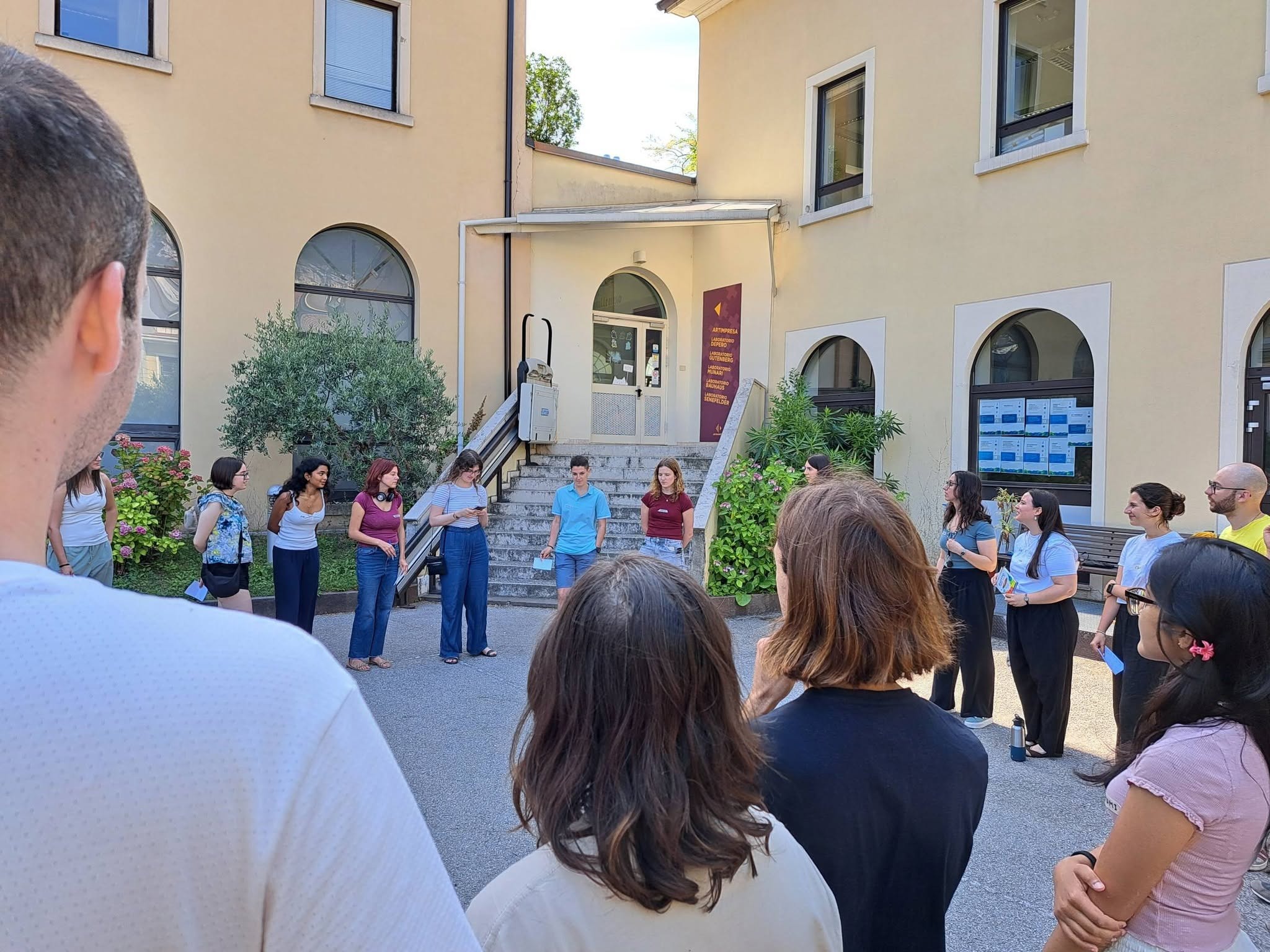
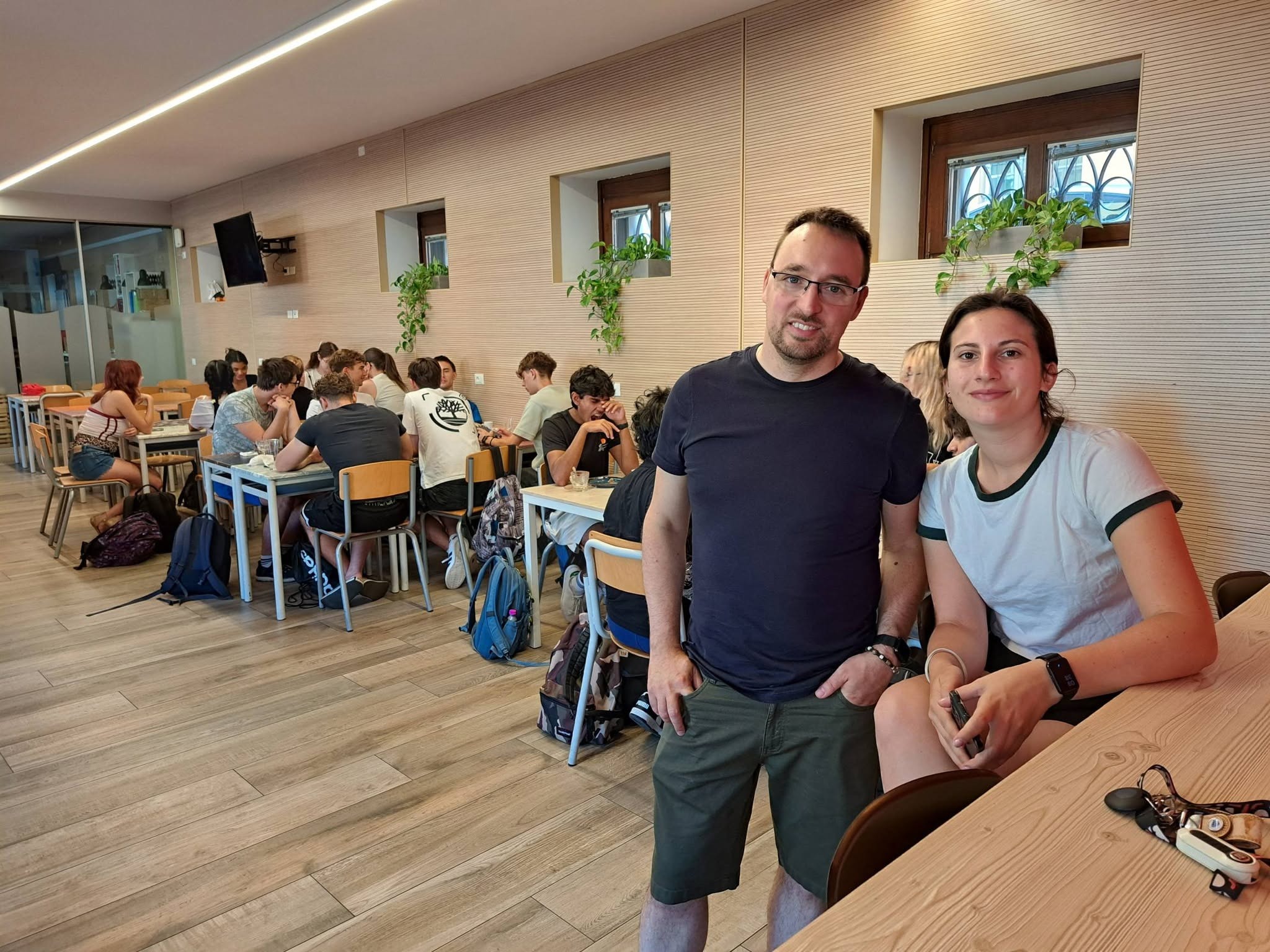
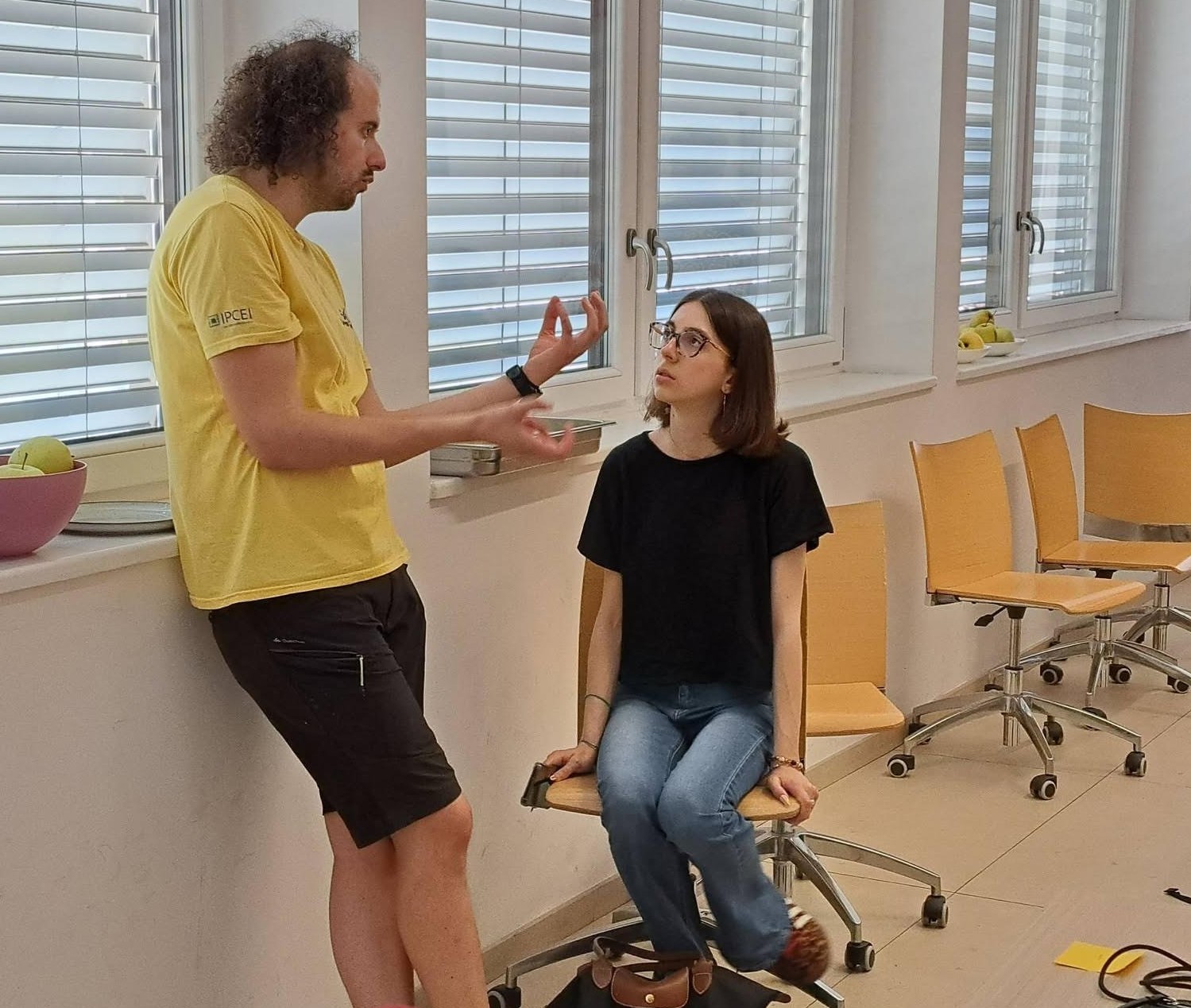 This article has been written in collaboration with Matilda Zancanaro, whom you can see speaking with Luca Coviello (scientific coordinator of this edition together with Gabriele Franch and Elena Tomasi) in the picture. Matilda is a Liceo Prati student engaged in the Alternanza scuola lavoro program: an opportunity of “learning by doing” for her and the possibility for the readers of the article to get dclose to the accountof this experience also through her questions and writing.
——————————————————————————————————————————————————————————
WebValley is the result of the on-going committment of the Foundation and of the school organizers (historically led by Claudia Dolci and Giuseppe Jurman). Bringing along such a project means truly believing that high research is not limited to universities exclusively but may be a resource available at 17-18 years old already. For FBK, it is not merely education, it furtherly means cultivating a “practicing community” lasting in time and impacting on the territory and beyond.
The WebValley’s long-term success is proved by the Alumni network. Many students who took part in teh school in the past now go back to WebValley as scientific tutors or successful researchers (i.e. the FBK researchers Gabriele Franch -2002- or Luca Coviello -2012-, who were once students at the camp). This year also Tommaso Oss Emer and Luca Galli participated from the 2023 edition.
From year 2020, the collaboration with Istituto Artigianelli of Trento has redefined the logistic and educational model of WebValley. Not only does Artigianelli host the camp in a top-quality and technological school building, but also a real educational philosophy, with a Design Thinking approach and sensitivity for people inclusion.
The author/s
-
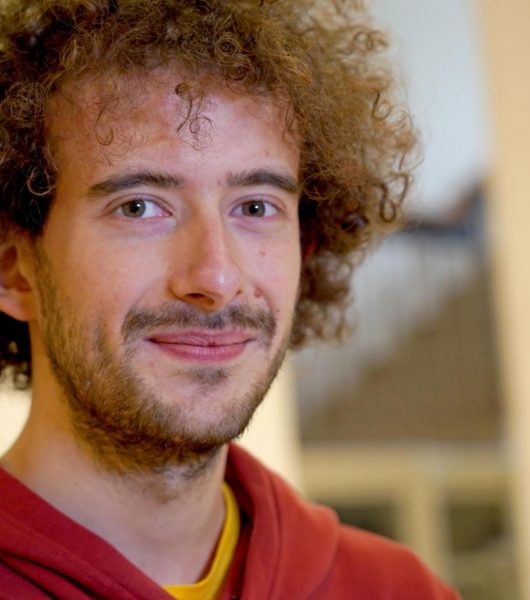 Luca Coviello
Researcher in the Data Science for Industry and Physics (DSIP) unit, Digital Industry Center
MORE INFO -
 Gabriele Franch
Senior researcher at DSIP (Data Science for Industry and Physics), Digital Industry Center - FBK.
MORE INFO -
 Elena Tomasi
Ricercatrice Unità DSIP, Centro Digital Industry
MORE INFO -
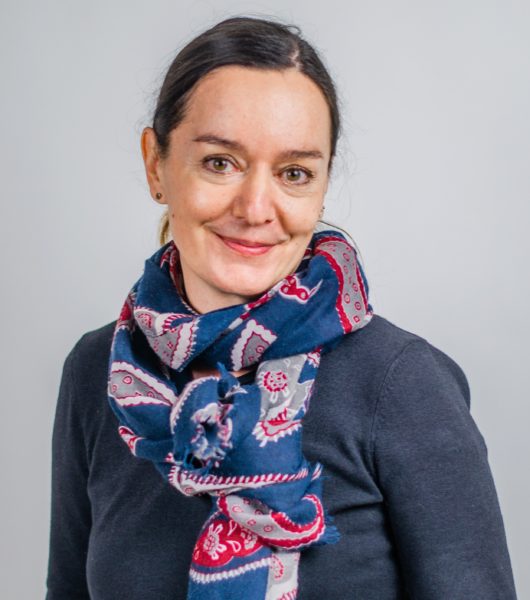 Claudia Dolci
Head of the Scholars and PhD Programm Unit
MORE INFO -
 Giuseppe Jurman
Head of Unit at Data Science for Health (DSH) unit at FBK.
MORE INFO
RELATED VIDEO
-
Recording of the Webvalley 2026 closing event
Related articles