Artificial intelligence: balancing efficiency and responsibility
August 21, 2026
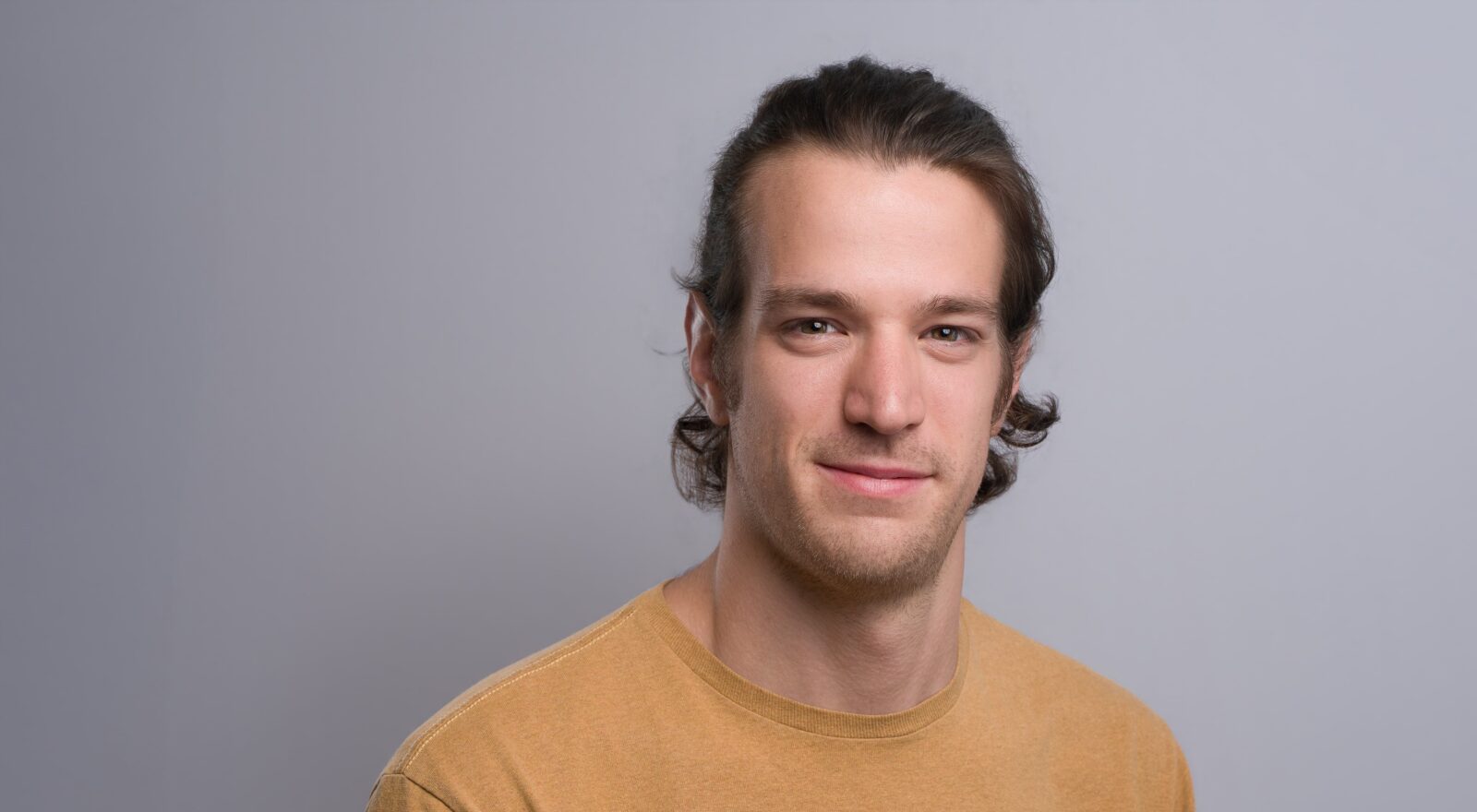
Starting at FBK and now a PhD student at Mila in Montreal, with several professional experiences in the United States, Francesco Paissan studies how to make AI interpretable and safe.
Francesco Paissan first became involved in research at FBK while he was still in high school. Today, he is a doctoral student at Mila in Montreal—where he was admitted directly after graduating from the University of Trento—and is currently completing an internship in Boston. It has been a direct path, built through commitment and determination, that has brought him into contact with some of the leading international centers in the field of artificial intelligence, taking him from the design of low-power AI systems to the study of interpretable and responsible artificial intelligence.
It also confirms a connection we previously discussed in our interview with Mirco Ravanelli: the relationship between FBK and Mila in Montreal, which grew out of scientific collaborations between the two institutes and continues to create new opportunities for young researchers.
How did your journey at FBK begin, and how did your passion for the topics at the heart of your research today develop?
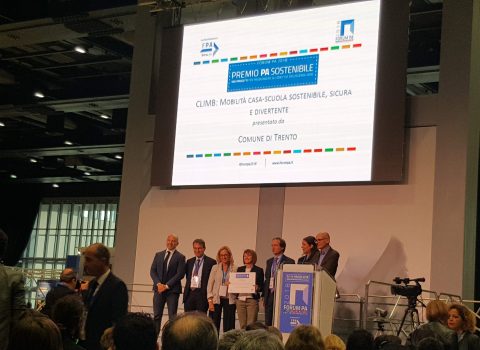
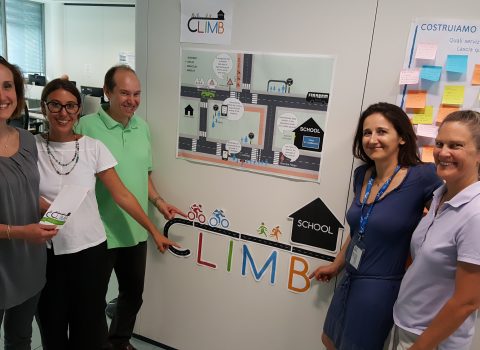
My journey at FBK began very early, in the summer of 2017, when I was still in high school. I took part in a school-to-work program with the E3DA group, Energy Efficient Embedded Digital Architectures—led by Elisabetta Farella—which focuses on designing and developing low-energy digital architectures for electronic systems within the Center for Digital Society. Even then, I had the opportunity to work hands-on on a prototype for the Climb project: a pedometer based on wearable sensors that operated directly on the device.
After enrolling at the University of Trento, I continued to collaborate with the same group for about six years. The common thread was always the same: bringing artificial intelligence to very small devices with extremely limited computing capacity and energy consumption (a field now known as TinyML). The goal was to develop algorithms capable of operating directly at the source of the data, without depending on the cloud, using minimal energy resources and, in some cases, capable of powering themselves. It was a journey that gave me a great deal of freedom to explore new ideas and understand which aspects of research I was most passionate about.
How did the opportunity to move to Mila come about, and what motivated you to take it?
The collaboration with Canada began almost by chance. In 2020, I started working remotely with one of my current advisors, Mirco Ravanelli—who also has a background at FBK—on a project focused on the analysis of electroencephalographic signals. It was something I pursued alongside my work at the Foundation because I found the opportunity to engage with a different field of research very stimulating.
That collaboration led to an internship at Mila in 2022. Once back in Italy, I continued working with the Canadian group and maintained the relationship. When the opportunity arose to begin a PhD, looking to Canada was a natural evolution of a path that had developed over time. Before starting my PhD, I also spent a few months in Boston at Mitsubishi Electric Research Laboratories, working on topics related to the interpretability of AI models. Today, I’m back in the US for another internship, this time at Google.
Two major themes run through your work: making AI more efficient and making it more understandable. How closely connected do you think these two aspects are?
I have often asked myself this question. For me, they are two sides of the same responsibility. On the one hand, there is the issue of efficiency: building models that require less energy and fewer resources also means reducing the environmental impact of artificial intelligence.
On the other hand, there is the issue of controllability.
Today, it is not enough for a model to be powerful: we must also be able to understand how it makes decisions and ensure that it is used safely.
This means, for example, preventing it from producing problematic content or behaving unpredictably in sensitive contexts.
Ultimately, the principle is the same: developing responsible artificial intelligence, from both an environmental and an ethical perspective.
Even after moving abroad, your connection with FBK has continued through scientific collaborations. How important is it for a young researcher to maintain these relationships?
I believe it is essential. Research today is increasingly international, and no one really works alone. In Trento, there is an ecosystem in which different organizations and research centers are in constant dialogue. It was precisely this environment that made my first contact with Canada possible and, more generally, gave me the opportunity to build an international network. Continuing to collaborate means bringing together different ideas, skills, and perspectives. For these reasons, even after beginning my PhD in Canada, my relationship with FBK continued.
You have worked in very different research environments, from Italy to Canada. What changes in the way research is conducted, and what remains the same?
The strongest impression has to do with the ecosystem. In North America, you are immersed in an extraordinary concentration of universities, companies, and research laboratories. For example, in Boston—where I am now—it is possible to interact daily with institutions such as MIT and Harvard.
At the same time, this experience has made me appreciate even more the quality of the training I received in Italy. The University of Trento, where I earned my bachelor’s degree, prepared me extremely well, and FBK gave me the opportunity to put my scientific creativity into practice and express it. Both of these factors contributed to my being admitted directly to the doctoral program after completing my three-year bachelor’s degree.
Perhaps the main difference is that there are more opportunities and greater investment in research abroad, while in Italy competition is often higher precisely because there are fewer positions. But in terms of scientific quality, I believe that Trento and, more generally, the Italian system have a great deal to offer.
If we spoke again in ten years, what future would you like to tell us about—for yourself and for artificial intelligence research?
On a personal level, it is still too early to imagine where I will be. I try to take advantage of every opportunity that can help me grow as a researcher and learn from the people I work with, whether they are professors, colleagues, or other researchers. However, one day I would like to be able to return to Italy.
From a scientific perspective, I hope that artificial intelligence will become increasingly interpretable and safe. I would like to help develop models whose operation we truly understand and that we can control and direct toward the objectives we choose.
Ultimately, this is what motivates me: continuing to be curious and contributing, in my own small way, to research that has a positive impact on society.
The author/s
Related articles