
From WebValley to MLCast: the new portal for the European nowcasting community is now live
August 6, 2026
Developed as part of WebValley 2026, the site combines open science and artificial intelligence to make very short-term weather forecasting models more accessible
A project born during WebValley has become a practical tool for an international scientific community. The new website for MLCast is now live. MLCast is the European community that develops open-source tools based on artificial intelligence for nowcasting—that is, very short-term weather forecasts—which are essential for anticipating the development of severe weather events in the coming hours.
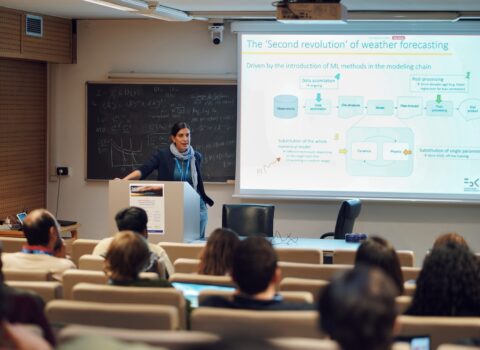
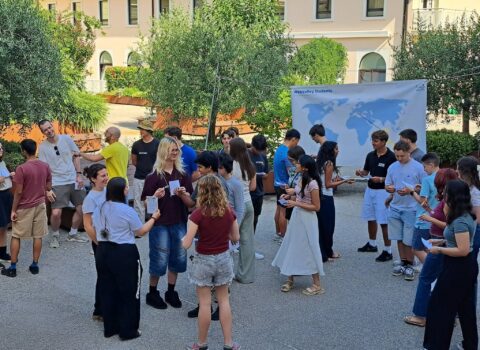
The portal is the outcome of the Challenge at the twenty-sixth edition of WebValley, the summer school organized by Fondazione Bruno Kessler. This year’s edition, dedicated to the theme “Weather Meets Artificial Intelligence: Building Tomorrow’s Earth Science,” took place over two weeks at the end of June and involved 20 students from Italy and abroad. Participants were challenged to apply artificial intelligence to meteorology and Earth observation according to the principles of Open Science. During the camp, they worked on real-world data and scientific challenges alongside researchers from the Data Science for Industry and Physics (DSIP) unit of FBK’s Center for Digital Industry, as part of the MLCast initiative within the EUMETNET E-AI program. The project also benefited from contributions by the Danish Meteorological Institute, the Civil Protection of the Autonomous Province of Bolzano, Meteotrentino, and CINECA, which provided GPU computing resources, as well as use cases, expertise, and practical experience from the fields of research and weather forecasting, enabling participants to tackle challenges focused on applying artificial intelligence to climate science.
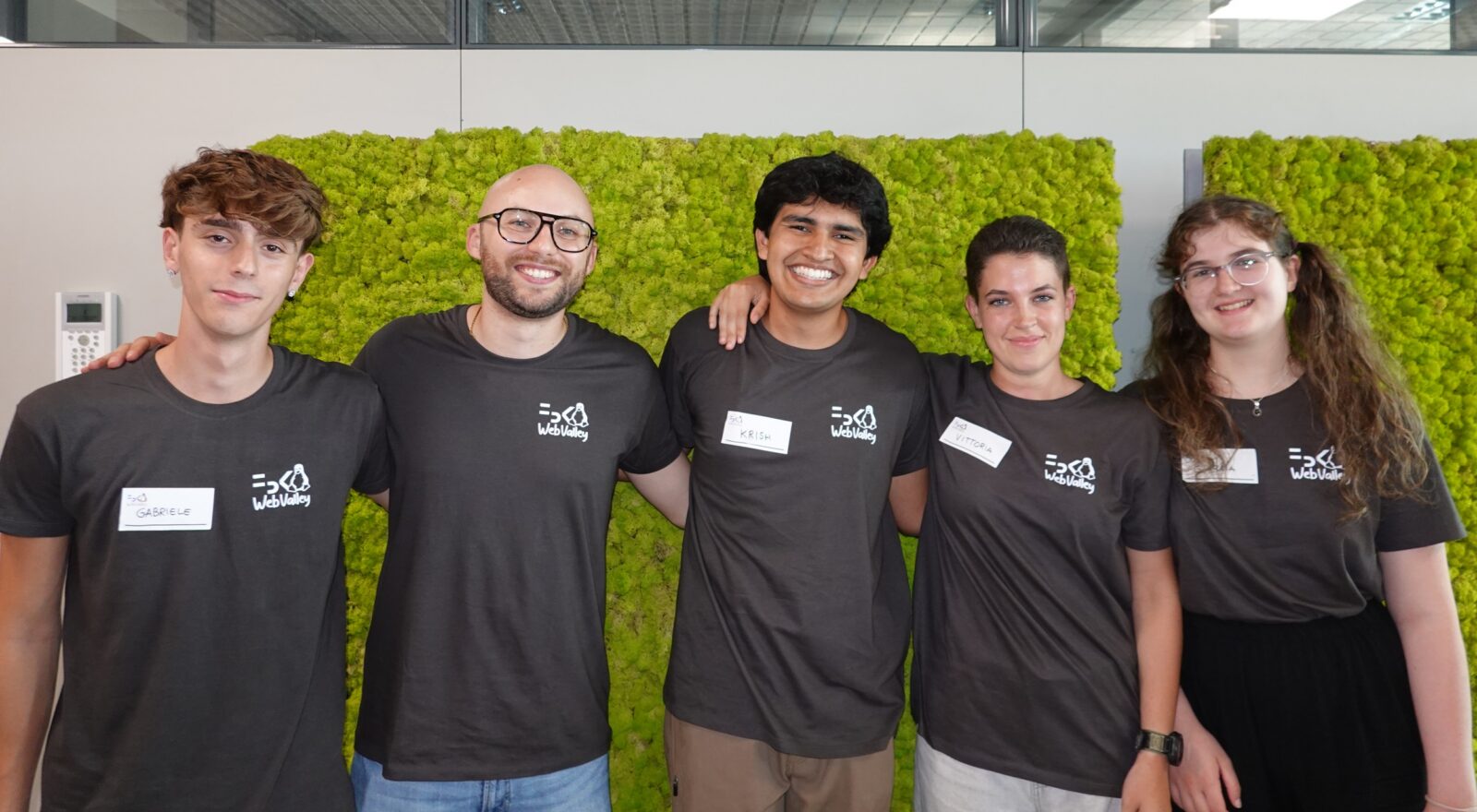
Alongside projects focused on building a new cloud coverage dataset for France, training a nowcasting model, and developing a meteorological data visualization library, one of the four working groups concentrated on designing MLCast’s new digital ecosystem. The team developed its website, documentation, and branding, transforming a need within the scientific community into a practical resource.
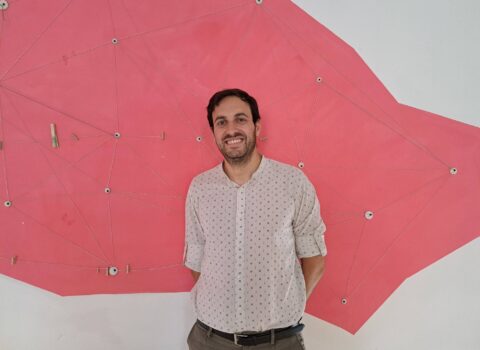
The project was developed by a group of four students, led by FBK tutors Mattia Varagnolo, Luca Coviello and Gabriele Franch, in collaboration with researchers Leif Denby and Irene Livia Kruse from the Danish Meteorological Institute. “It was truly a joint effort: we researchers shared a common vision for the project, and together with the students we turned it into a practical solution, working through every stage, from designing the site’s structure and branding to implementing it. The final result reflects continuous collaboration between research, development, and creativity,” says Mattia Varagnolo.
The goal was not simply to create a new website, but to rethink how MLCast presents itself and welcomes new contributors. Until now, information had been scattered across technical documentation, software repositories, shared documents, and various collaboration tools, with no single entry point clearly explaining what the community is, the challenges it addresses, and how people can contribute. “We wanted to tell the MLCast story more effectively. On the one hand, it was important to explain what the community is and the scientific challenges it addresses. On the other, we wanted to convey that it is not a project for a select few, but an open community where anyone with the interest and skills can contribute,” Luca Coviello explains.
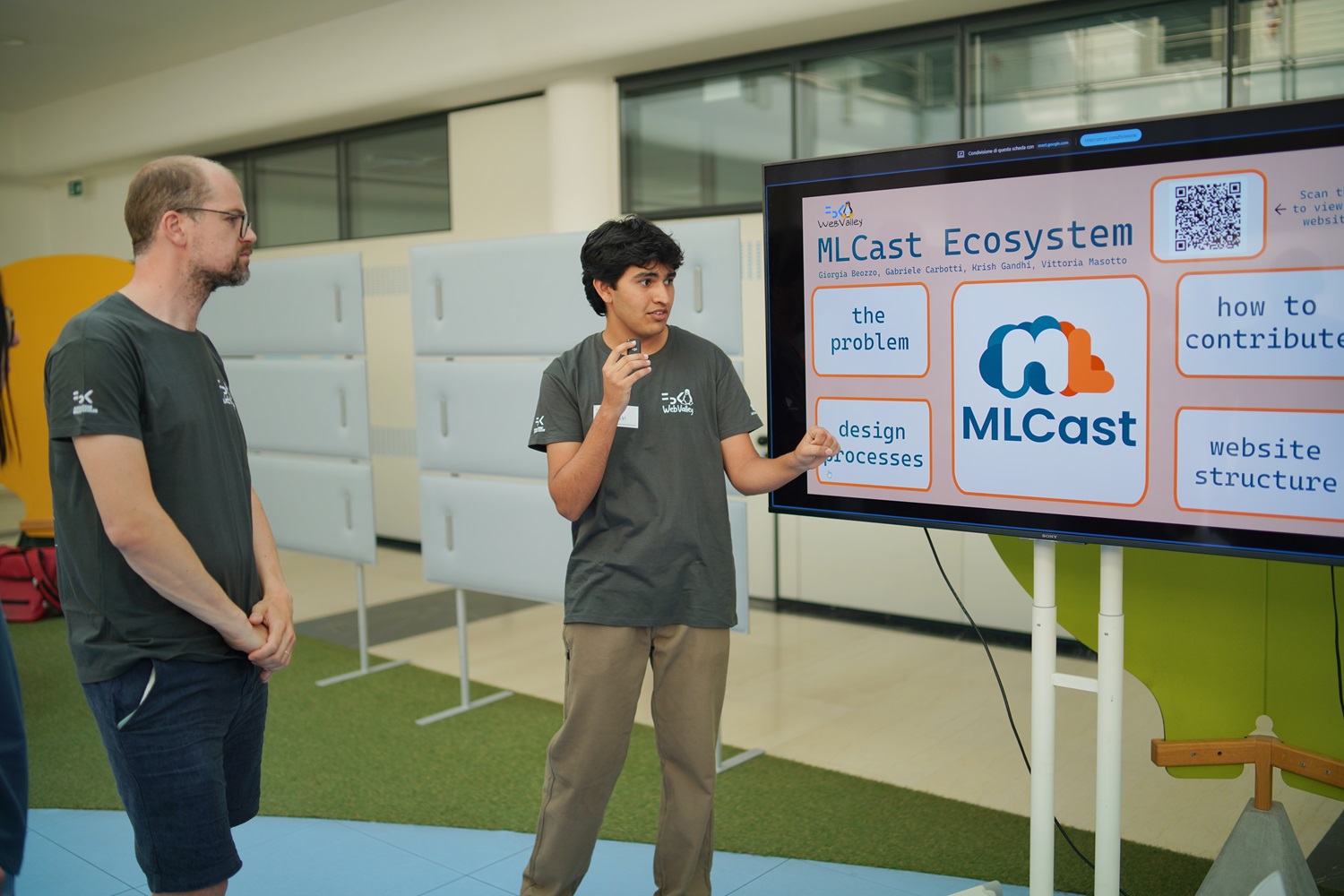
The new portal places these goals at its core. Organized around the three pillars of the community, software, and datasets, the site guides users through the MLCast ecosystem, bringing together technical documentation, the Python libraries developed by the community, the dataset catalog, and guidance on how to start contributing. The new information architecture, designed during the Challenge, makes navigation easier and streamlines the onboarding of new community members, fully embracing the open-source spirit.
Particular attention has also been given to shared datasets, which are essential for training and validating artificial intelligence models. The community currently provides high-resolution weather data from five European countries and aims to expand its geographical coverage progressively by encouraging new partners to contribute data and expertise.
The work carried out during WebValley also included defining MLCast’s visual identity through the design of a new logo and a graphic language that reflects a young, dynamic, and collaborative community. The result is a portal that serves not only as a showcase but also as a working tool designed to strengthen the connection between research, software development, and international collaboration. For a community founded just two years ago and already growing rapidly, the new website marks an important step toward increasing its visibility and attracting new contributors. It is also a tangible demonstration of the value of the WebValley model: involving highly motivated high school seniors with a passion for data science and STEM in real research projects creates an extraordinary learning experience.
Each year, these young talents show that they can make meaningful and lasting contributions to the international scientific community, transforming a learning opportunity into valuable resources for the future of research.
The author/s
-
 Mattia Varagnolo
Data Scientist in the Data Science for Industry and Physics (DSIP) unit, Digital Industry Center at FBK
MORE INFO -
 Luca Coviello
Researcher in the Data Science for Industry and Physics (DSIP) unit, Digital Industry Center
MORE INFO -
 Gabriele Franch
Senior researcher at DSIP (Data Science for Industry and Physics), Digital Industry Center - FBK.
MORE INFO
Related articles