
New Gender Equality Plan (GEP) approved
February 11, 2026
To mark the International Day of Women and Girls in Science, Fondazione Bruno Kessler reaffirms its commitment to gender equality through concrete action: the Board of Directors has approved the new Gender Equality Plan (GEP). The document is the result of a collaborative process that involved listening to and engaging with the internal community and various stakeholder groups.
On February 3, 2026, the Board of Directors approved the 2025–2028 GEP. The new plan builds on a careful analysis of evidence collected over the previous three years and ensures continuity with the 2022–2024 GEP. Its goals for the new three-year period focus on valuing female talent and reducing gender gaps, strengthening the Foundation as an inclusive environment aligned with European research standards. The initiatives will be implemented over the 2025–2028 period and will be regularly reviewed using monitoring indicators to support updates and adjustments over time.
The activities are coordinated by Manuela Bacca and Alessandro Dalla Torre, respectively Diversity & Inclusion Officer and Head of the People Innovation for Research Service. The work also benefited from the technical and scientific support of IRVAPP researchers Dominique Cappelletti and Sonia Marzadro, who reviewed the relevant scientific literature to inform policy choices.
What does recent research tell us about the causes of gender inequality? What mechanisms are at work, and how can disparities be reduced?
What inequality means
At the European level, the Gender Equality Index, developed by the European Institute for Gender Equality, allows comparisons across EU Member States by breaking gender inequality down into six domains: Work, Money, Knowledge, Time, Power, and Health. It also enables in-depth analysis of specific issues such as gender-based violence, stereotypes, and the intersection of gender with other factors—such as disability, age, education level, country of birth, and family structure—that shape people’s life paths in different ways across Europe.
One fact captures the scale of the issue: on average, women in Europe need to work 15 and a half months to earn what men earn in one year. And in Italy? After 15 years of gradual improvement, a country historically well below the European average now sits just slightly under it.
A challenge for research
In the research sector, women’s careers in Italy often resemble an obstacle course.
If we imagine an academic career as a long marathon, the starting line appears fairly balanced. Data from the University of Trento for 2022, for example, show near parity among students: 51.4% women and 48.6% men. At this stage, career paths appear similar.
The gap begins to widen just after graduation. Women account for 40.8% of PhD students and 45.6% of research grant holders. From these often fixed-term positions, competition intensifies for permanent academic roles.
From the very first researcher positions, the gender gap starts to grow and continues to widen as careers progress toward professorships.
Notably, many academic roles are traditionally referred to using only masculine forms—an indirect reflection, at the level of language, of long-standing gender imbalance. Language choices matter: failing to pay attention to words can subtly reinforce discriminatory outcomes.
National data from the Ministry of Universities and Research confirm this trend. While gender balance is reached among research grant holders (50.2% women), the share drops to 45.5% among researchers and to 42.4% among associate professors. This decline is not random. It results from a complex interaction between internal barriers—such as confidence gaps, risk aversion, and self-censorship, often shaped by social norms—and external obstacles, including work–life balance challenges and the burden of “invisible” work embedded in academic structures.
The Glass Ceiling: Access to Top Positions
At the highest levels of academia, disparities are stark. Nationwide, only 27.3% of full professors are women.
When merit Is not enough: system-wide bias
Gender gaps are often explained by claims that women are less productive. Research clearly disproves this idea. Several recent studies, including Brunetti et al. (2023), show that promotion gaps persist even when scientific output is equal. Filandri and Pasqua (2021) quantify the effect: with the same publications and merit, women are 8 percentage points less likely to become associate professors and 17 percentage points less likely to become full professors. Bias affects the entire career path—not just promotions. It influences access to research funding, peer review processes, recognition through citations, and the attribution of credit within research teams.
“The scientific literature clearly indicates that action is needed on several fronts,” explain the IRVAPP researchers. “It is not enough to focus solely on individual behavior or system-wide discrimination: a mix of integrated policies is needed to address the various dimensions of the problem simultaneously.”
FBK ‘S NEW GEP
This is where Fondazione Bruno Kessler’s new GEP comes in. The GEP is a strategic document that defines goals and actions to support the full participation of everyone who works and studies at FBK. Its aim is to promote equal opportunities, reduce gender gaps, foster a culture of respect, and actively prevent discrimination.
The GEP is one of the tools designed to support cultural change within the Foundation and to strengthen an inclusive work and learning environment where fairness and the absence of discrimination are clearly perceived. Such an environment should foster trust, a sense of belonging, shared goals, and opportunities for growth across the FBK community.
The Plan is flexible and fully integrated into FBK’s organizational framework, aligning closely with other initiatives and programs such as the 2024–2027 Strategic Plan, the 2025–2028 POE Staffing Plan, the Work Organization Model, the FBK@ease project on work-related stress, welfare and wellness initiatives, Family Audit certification, the Talent Development Program, and the Sustainability Plan.
The plan is structured around five areas:
- Integration of gender aspects into research and teaching and training programs
- Work–life balance and organizational culture
- Gender equality in recruitment and career progression
- Gender balance in leadership and decision-making bodies
- Prevention and response to gender-based violence
The proposed actions both ensure continuity with past initiatives under the previous GEP and introduce new goals and measures to address remaining barriers to gender equality and diversity.
Compared with the previous plan, the new GEP places stronger emphasis on improving—and, where necessary, developing—data collection tools to enable continuous gender-based analysis and transparent communication. A key innovation is the expanded focus on organizational well-being and generational diversity, viewed through an intersectional lens.
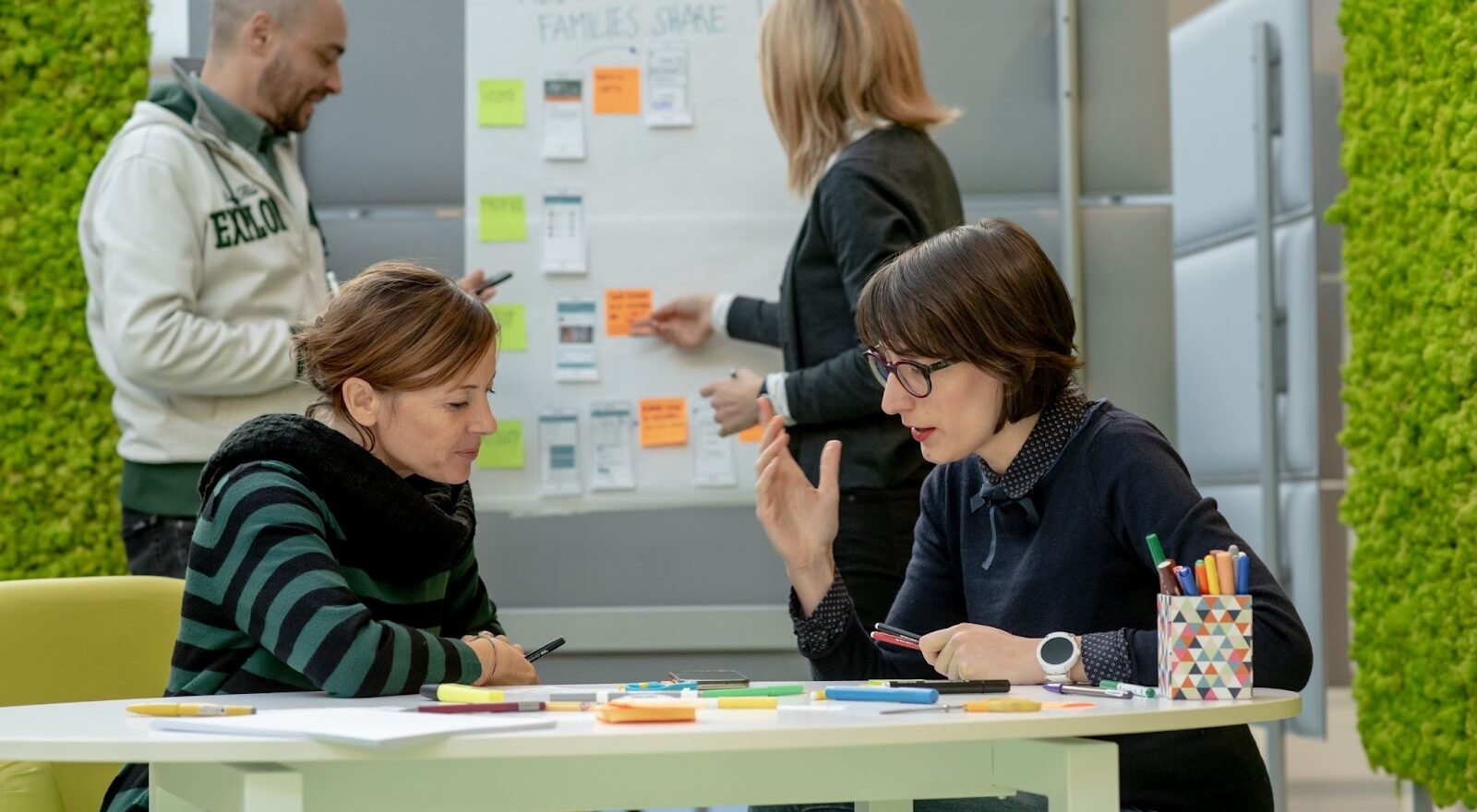
The working group includes around twenty contributors who helped draft the Plan and define detailed objectives, indicators, and timelines for each action across the five areas.
FBK’s Gender Equality Plan is not simply a response to European funding requirements. It is a deliberate tool through which the Foundation pursues its mission by ensuring the full participation of everyone who works and studies at FBK, promoting equal opportunities, and valuing diversity—especially gender diversity.
Through instruments such as the GEP, FBK aims not only to identify inequalities, but also to co-design positive actions together with research center leadership. The goal is to propose concrete measures and career paths that support gender balance. nvesting in empowerment initiatives, mentoring, and parenting support tools means creating the right conditions for everyone to grow professionally.
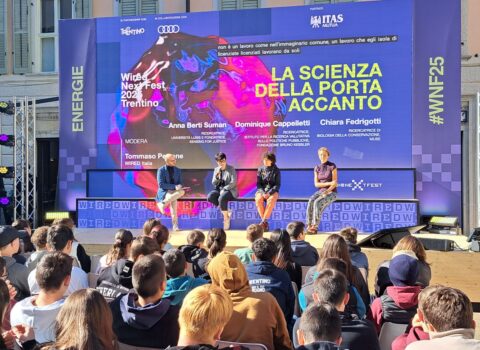
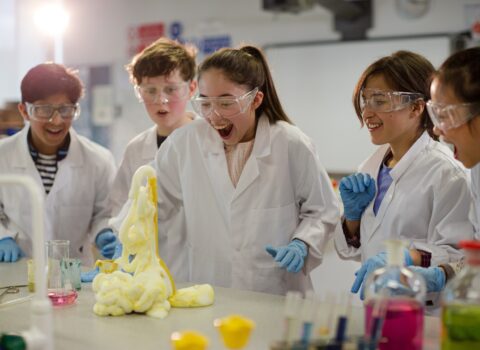
Guided by this commitment, FBK marks the International Day of Women and Girls in Science by organizing outreach activities in schools, helping young students discover the world of research. Cultural change is a slow and challenging process—but one that is deeply worthwhile.
The author/s
Related articles