

The right to stay: new alliances for rural mountainous areas
November 20, 2026
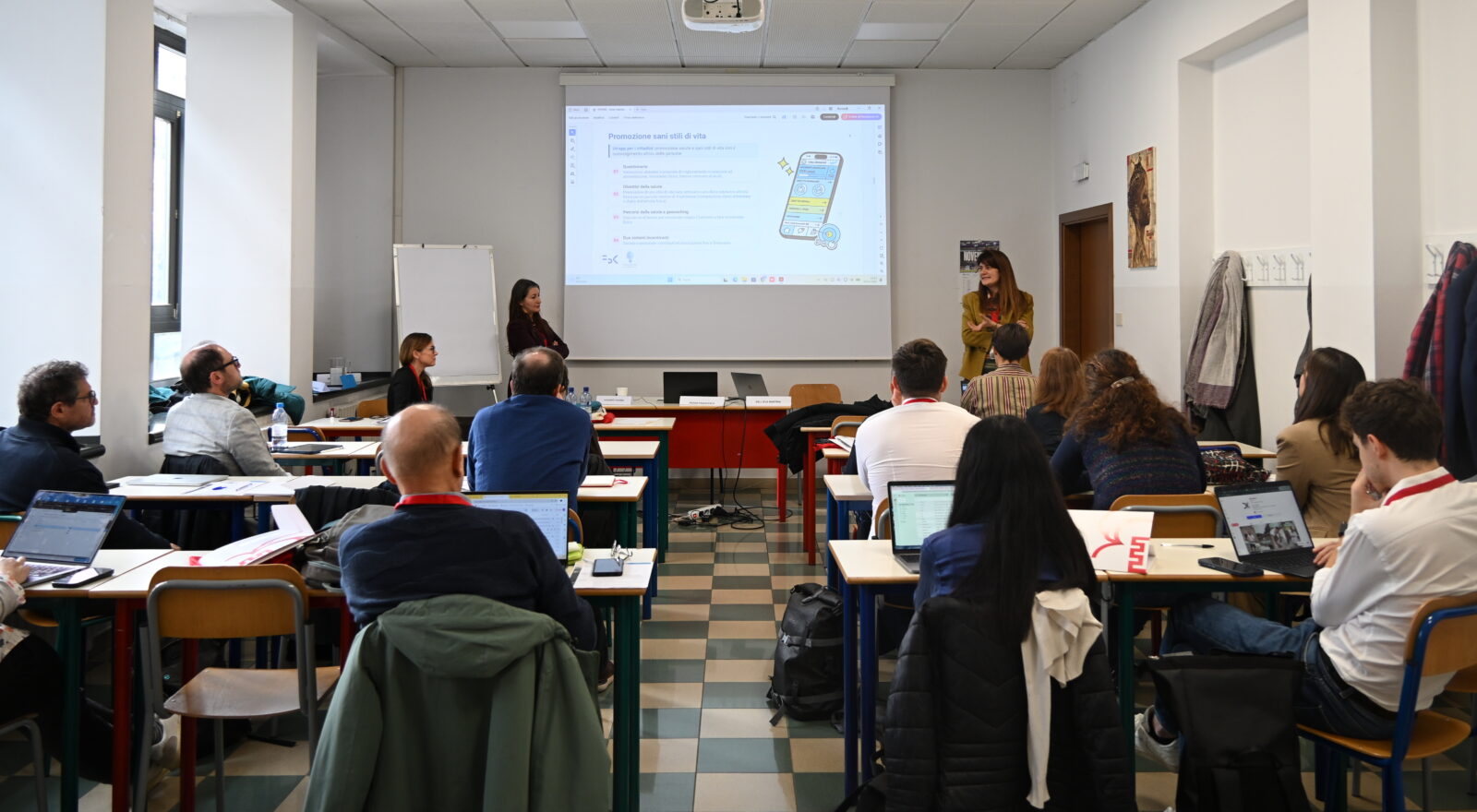
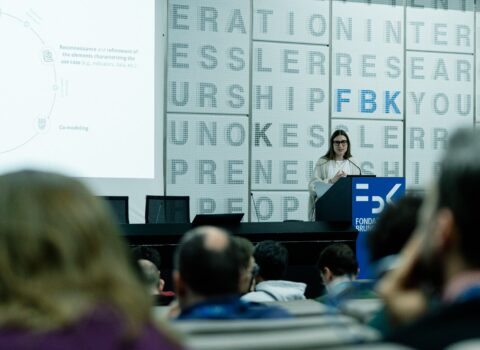
Organized by the Franco Demarchi Foundation (FFD), the sixth edition of the “Arco Alpino 2026” (Alpine Arc 2026) conference was held in Trento on November 12 and 13, 2026, under the title “Innovation at Altitude.” The event addressed social, digital, and housing innovation for the transformation and participatory governance of mountain communities, with the challenging goal of balancing local identity with opportunities for regeneration.
In the context of the polycrisis, innovation serves as a tool for realizing a shared vision: every political decision reflects balances of power and determines who benefits from change and who bears its costs, making it necessary to clarify our underlying vision for mountain regions.
Mauro Varotto (UNIPD) and Paolo Costa (FBK) warned against the myth of modern progress, which risks oversimplifying the territory and dismissing the past as obsolete, thereby precluding the possibility of selectively assimilating its legacy.
True innovation is experienced in “returning to inhabit” the mountains, valuing the oblique dimension and the fragments of mountain civilization—sobriety, multifunctionality, and cooperation—as genuine indicators of the future.
Mountain complexity and cross-community alliances
The mountains appear as a mosaic of micro-territories marked by an aging population and demographic decline. As speakers pointed out, multilocality and new migration patterns make the home a key enabling mechanism. We need to move from welcoming to belonging: dwelling is a social act of care (oikos) that requires trust-based infrastructures capable of generating mutual recognition in order to truly repopulate the mountains.
No community can save itself in isolation: we need networked communities that combine internal cohesion and external openness, capable of both allowing themselves to be transformed and transforming the area. This is where the “smart village” approach presented by Gianluca Lentini (Poliedra/POLIMI), the metro-mountain paradigm, and the collaboration agreements for the shared administration of common assets presented by Daniela Ciaffi (LabSus)—which implement Article 118, paragraph 4 of the Italian Constitution—come into play, having proven to be effective administrative innovations for land management.
The invisible infrastructure of which we are a part
The key shift highlighted by the projects is the transition from lone pioneers to collaborative ecosystems, driven by “people-spaces” and local innovators who identify valuable relationships and communities of practice as their priority needs. Where resources are scarce, trust must act both as internal cohesion (bonding) and as openness to the outside world (bridging). Overcoming fragmentation and bureaucratic constraints requires time, listening, and diligent patience.
Participation and future thinking to guide decisions
Participation is not a mere formality, but a “tailor-made suit” based on grassroots listening, care, and working together. It can be integrated into the framework of shared administration, structured through planning, design, management, and evaluation tools, and strengthens public capacity by moving beyond bureaucracy.
Once presentism and futures colonized by external models have been deconstructed, imagining plural futures through social foresight methods helps reorient the present. This allows communities to choose generative metaphors (such as viewing the mountain as a heritage to be protected rather than a resource to be exploited) by acting as “good ancestors” for future generations—a term that refers precisely to the direction we choose to take.
Enabling conditions for innovation in upland areas
Sociologist Flaviano Zandonai focused on the enabling conditions for innovation in upland areas, starting with institutional stability, which is essential for upland communities to “revive that capacity for governance that, in other historical periods, enabled them to recognize, enhance, and protect common resources.” In recent years, the regional and functional reorganization of local institutions has occurred “through mergers, consolidations, and restructurings involving public bodies, businesses,” and entities from the nonprofit sector and local economy capable of giving substance to social infrastructure.
It is also necessary to “cultivate an as yet unprecedented ability to intelligently act as ‘spokes’ with respect to technological ‘hubs,’” which offer a wealth of opportunities but must be developed without forgetting the urban contexts in which they thrive. To this end, communities must “cultivate the ability to connect” in order to facilitate original forms of proactive adaptation to novelty.
Digital innovation in mountain areas
The session on digital innovation for mountain areas, moderated by Chiara Leonardi (FBK), focused on the role of research in supporting the transformation of mountain territories and inland areas through integrated approaches that consider digital and social aspects, community participation, and local area sustainability.
At the heart of the discussion was the need to move beyond viewing innovation as simply the introduction of new technologies, recognizing instead its capacity to generate tangible and lasting benefits for people and regions. From this perspective, assessing digital readiness and the ability of communities to adopt new solutions is vital, and should be paired with knowledge of local contexts, listening to needs, and leveraging existing regional resources and skills.
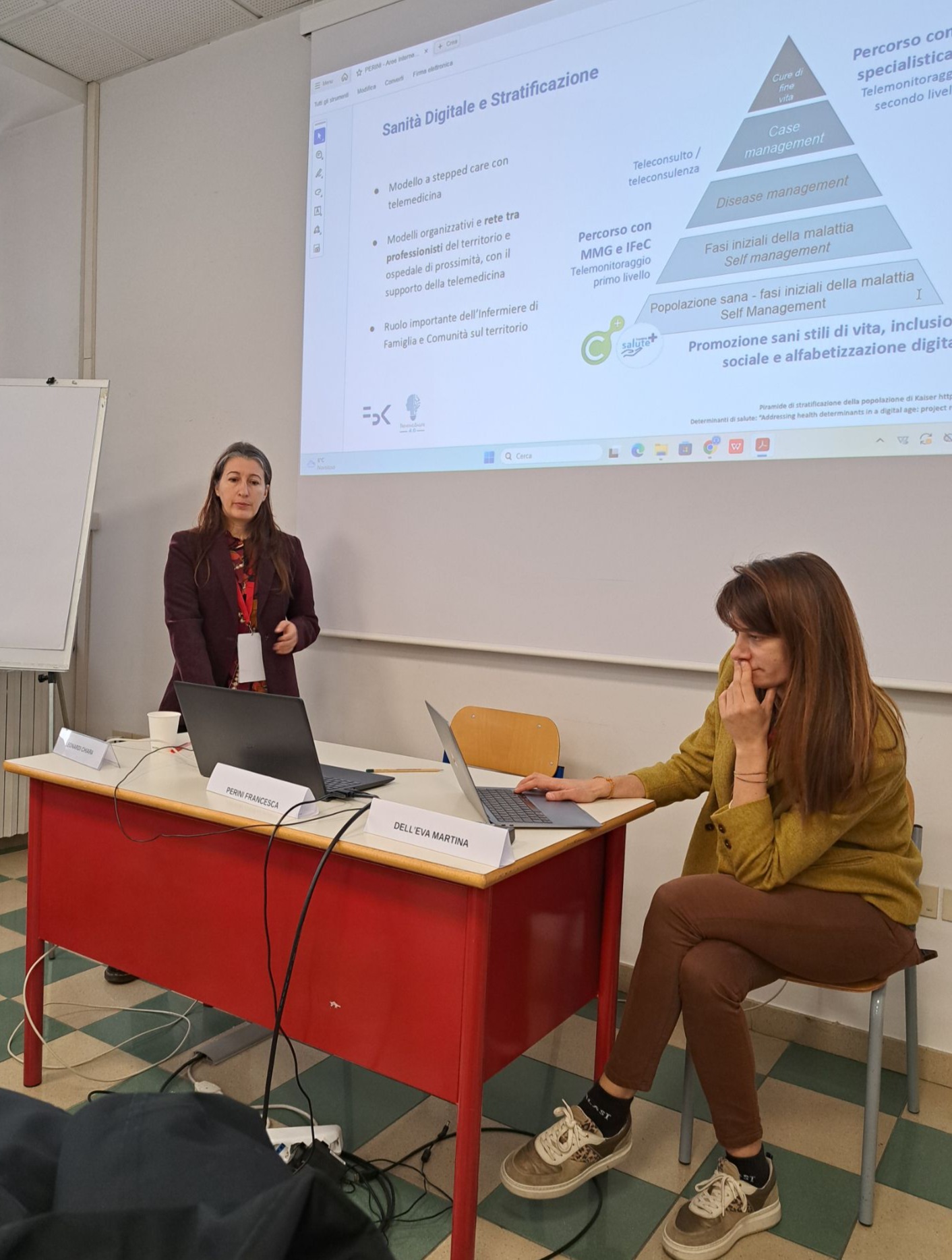
In particular, the analyses presented by FBK project managers Dell’Eva and Perini highlight a key principle: innovation in inland areas should not consist of transferring models designed for urban contexts, but rather of collaboratively developing solutions consistent with the specific characteristics, needs, and potential of local communities.
Technology is an important lever for improving access to services, reducing distances, and expanding opportunities for those living in mountain areas—helping to make the right to stay truly exercisable while investing in skills, relationships of trust, and institutional capacities to support and manage change. Consider health and social care services, which are called upon to respond to an aging population, chronic illness, and inequalities in access to care. Ensuring the continuity of local healthcare and integrating health and social services—as set out in national (Italian Ministerial Decree 77/2022) and Trentino regulatory frameworks—is essential. Telemedicine, prevention, and health promotion can make a tangible contribution to this transformation. This perspective emphasizes integrating technological, organizational, and social innovation and highlights the importance of systemic, interdisciplinary approaches—such as One Health—that recognize the interconnections among human health, the environment, and ecosystems. This vision is particularly relevant in mountain areas, where quality of life, access to services, environmental sustainability, and community development are closely linked.
Open questions and FBK’s proactive role
Public services tailored to cities turn the mountains into places of inequality and denied rights. In an era of pronounced technocratic drift, innovation translates into social impact only through systems thinking and by identifying spaces of freedom (to stay, to leave, and to return) within the confines of increasingly stringent compliance.
The conference raised key questions for understanding and rethinking rural mountainous communities: What vision of the mountains do we intend to pursue, and under what conditions will everyone be guaranteed the right to choose where to live? How can participatory experiences and collaborative pacts be transformed into stable public policies? How can the digital transition and future-oriented exercises translate into real decision-making power for communities?
In this scenario, FBK acts as a strategic innovation partner, supporting institutions and communities in addressing the environmental, social, and economic sustainability challenges facing their regions. By integrating scientific research, innovation, and interdisciplinary participatory approaches, FBK helps develop pathways rooted in contextual knowledge and collaboration among stakeholders.
The value of research certainly lies in developing new technologies, but equally in connecting knowledge, people, and institutions—supporting decision-making processes and translating the opportunities of innovation into concrete, sustainable solutions rooted in local communities.
The author/s
Related articles